
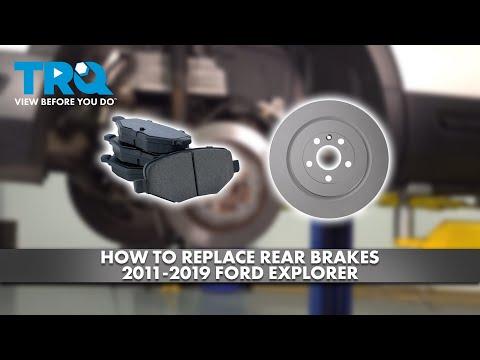






How to Replace Rear Brake Pads on a 2017 Ford Explorer
Step-by-step instructions with tools, parts, torque specs, and safety tips for 2013, 2014, 2015, 2016, 2017, 2018, 2019
How to Replace Rear Brake Pads on a 2017 Ford Explorer
Step-by-step instructions with tools, parts, torque specs, and safety tips for 2013, 2014, 2015, 2016, 2017, 2018, 2019


🔧 Rear Brake Pads - Pad Replacement
Your rear pads wear down over time and need to be replaced in pairs to keep braking even and safe. On your Explorer, the rear brake job is straightforward if the caliper slides freely and the rotors are still usable.
Difficulty Level: Beginner | Estimated Time: 1.5-2.5 hours
⚠️ Safety & Precautions
- Work on a flat surface and chock the front wheels before lifting the rear.
- Use jack stands; never rely on the floor jack alone.
- Brake dust can be harmful. Do not blow it off with compressed air.
- Keep your hands clear when compressing the caliper piston.
- If the brake fluid reservoir is full, remove a little fluid before pushing the piston back.
- No battery disconnect is required for this repair.
🔧 Required Tools
You'll need the following tools for this repair:
- Floor jack (rated 3-ton minimum)
- Jack stands
- Wheel chocks
- 21mm socket
- 15mm socket
- 13mm socket
- Ratchet
- Breaker bar
- Torque wrench
- C-clamp
- Flat blade screwdriver
- Bungee cord or caliper hanger
- Bristle brush
- Brake cleaner
- Gloves
- Safety glasses
🔩 Required Parts
HowToo sells all the parts you need for this repair:
- Rear brake pad set - Qty: 1
- Brake grease - Qty: 1
- Brake hardware kit - Qty: 1
📋 Before You Begin
- Park on level ground and set the parking brake before lifting.
- Loosen the rear wheel lug nuts slightly before raising the vehicle.
- Put the transmission in Park.
- If the parking brake is sticking, release it fully before starting.
🔨 Step-by-Step Instructions
Follow these steps in order:
Step 1: Lift and secure the rear of the vehicle
- Use a 21mm socket and breaker bar to loosen the rear lug nuts about one turn.
- Raise the rear with a floor jack (rated 3-ton minimum) and support it with jack stands.
- Remove the rear wheels.
- Keep both rear wheels off together if space allows.
Step 2: Remove the caliper
- Use a 13mm socket to remove the caliper slide pin bolts.
- Lift the caliper off the bracket.
- Hang the caliper with a bungee cord or caliper hanger so the brake hose is not stretched.
Step 3: Remove the old pads and hardware
- Pull the old inner and outer pads out of the bracket.
- Remove the pad clips and hardware from the bracket.
- Use a flat blade screwdriver if the clips are stuck.
- Clean the bracket with brake cleaner and a bristle brush.
Step 4: Check the caliper and rotor
- Inspect the rotor for deep grooves, cracking, or heavy rust ridges.
- Check the caliper slide pins for smooth movement.
- If the pins are dry, clean and grease them with brake grease.
Step 5: Compress the caliper piston
- Use a C-clamp to slowly push the piston fully back into the caliper.
- Watch the brake fluid reservoir while compressing the piston.
- Go slow to avoid damaging seals.
Step 6: Install the new hardware and pads
- Install the new pad clips from the brake hardware kit.
- Apply a thin layer of brake grease to the contact points where the pads touch the hardware.
- Install the new pads into the bracket.
- Make sure the pad with the wear indicator goes in the same position as the old one.
Step 7: Reinstall the caliper
- Place the caliper back over the new pads.
- Install the slide pin bolts by hand first.
- Use a 13mm socket and torque the bolts to 32 Nm (24 ft-lbs).
Step 8: Reinstall the wheels
- Put the wheels back on and snug the lug nuts by hand.
- Lower the vehicle with the floor jack (rated 3-ton minimum).
- Use a 21mm socket and torque the lug nuts to 135 Nm (100 ft-lbs) in a star pattern.
Step 9: Restore brake pedal feel
- Before moving the vehicle, pump the brake pedal several times until it feels firm.
- Check the brake fluid level and top off if needed.
- Do not drive until the pedal feels normal.
✅ After Repair
- Test the brakes at very low speed in a safe area first.
- Listen for rubbing, clicking, or metal noise.
- Check for brake fluid leaks around the calipers.
- Break in the new pads with several smooth stops from low speed.
💰 DIY vs Shop Cost
Shop Cost: $250-$450 (parts + labor)
DIY Cost: $60-$140 (parts only)
You Save: $190-$310 by doing it yourself!
Shop labor rates vary but typically run $100-$150/hour. This repair takes a shop approximately 1.5-2.5 hours.
🎯 Ready to get started?
HowToo makes it easy: same-day/2-day shipping on every part, plus all the tools and specialty tools you need! Check out the parts and tools sections below to add everything to your cart.