

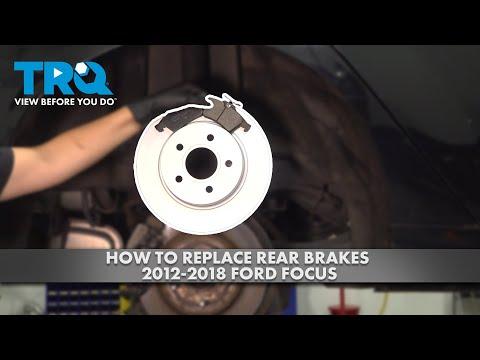






How to Replace Rear Brake Pads on a 2012-2018 Ford Focus (Trim: SE)
Step-by-step rear brake pad guide with tools, parts, torque specs, and safety tips for 2012, 2013, 2014, 2015, 2016, 2017, 2018
How to Replace Rear Brake Pads on a 2012-2018 Ford Focus (Trim: SE)
Step-by-step rear brake pad guide with tools, parts, torque specs, and safety tips for 2012, 2013, 2014, 2015, 2016, 2017, 2018


🔧 Focus - Rear Brake Pad Replacement
This repair replaces the rear brake pads on your Focus. The rear pads must be replaced in pairs so both rear wheels brake evenly.
Difficulty Level: Intermediate | Estimated Time: 1.5-2.5 hours
⚠️ Safety & Precautions
- ⚠️ Work on a flat, solid surface only.
- ⚠️ Use jack stands. Never work under or beside a vehicle supported only by a jack.
- ⚠️ Make sure the parking brake is fully released before removing the rear calipers.
- ⚠️ Do not press the brake pedal while a caliper is removed.
- ⚠️ Rear caliper pistons must be turned while pushed in. Forcing them straight in can damage the parking brake mechanism inside the caliper.
- ⚠️ Battery disconnect is not required.
🔧 Required Tools
You'll need the following tools for this repair:
- Floor jack (rated 2-ton minimum)
- Jack stands (rated 2-ton minimum)
- Wheel chocks
- 19mm lug nut socket
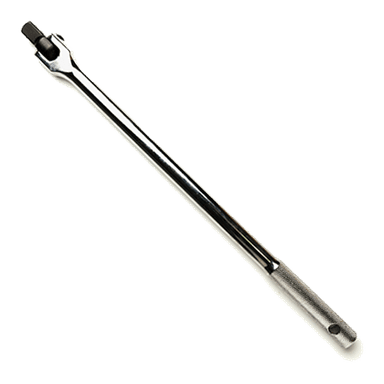
- Breaker bar 1/2-inch drive
- Torque wrench 1/2-inch drive
- Ratchet 3/8-inch drive
- 13mm socket
- 15mm wrench
- Rear disc brake caliper wind-back tool (specialty)
- Flathead screwdriver medium
- Brake caliper hanger hook
- Wire brush small
- Brake parts cleaner
- Nitrile gloves
- Safety glasses
🔩 Required Parts
HowToo sells all the parts you need for this repair:
- Rear brake pad set - Qty: 1
- Rear brake pad hardware kit - Qty: 1
- Brake caliper slide pin grease - Qty: 1
- DOT 4 brake fluid - Qty: 1 small bottle
📋 Before You Begin
- Park your Focus on level ground.
- Put the manual transmission in 1st gear.
- Release the parking brake fully.
- Place wheel chocks in front of the front wheels. Wheel chocks are blocks that stop the car from rolling.
- Open the hood and check the brake fluid level. If it is at the MAX line, remove a small amount before pushing the caliper pistons back.
- No infotainment menu, scan tool, or electronic parking brake service mode is needed for this repair.
🔨 Step-by-Step Instructions
Follow these steps in order:
Step 1: Loosen the Rear Wheel Lug Nuts
- Use the 19mm lug nut socket and breaker bar 1/2-inch drive to loosen each rear lug nut about half a turn.
- Do this while the rear tires are still on the ground so the wheels do not spin.
- Tip: Loosen only, do not remove yet.
Step 2: Raise and Support the Rear
- Use the floor jack to lift the rear of your Focus at an approved rear jacking point.
- Place jack stands under the approved rear support points.
- Lower the car gently onto the jack stands using the floor jack.
- Give the car a careful shake by hand to make sure it is stable.
Step 3: Remove the Rear Wheels
- Use the 19mm lug nut socket and ratchet 3/8-inch drive to remove the rear lug nuts.
- Remove both rear wheels.
- Slide one wheel under the car as an extra safety backup.
Step 4: Clean and Inspect the Brake Area
- Put on safety glasses and nitrile gloves.
- Use brake parts cleaner to rinse dust from the caliper and bracket area.
- Look for brake fluid leaks, torn rubber boots, or heavy rotor damage.
- If the rotor is deeply grooved or cracked, replace the rotors with the pads.
Step 5: Remove the Rear Caliper Bolts
- Use the 15mm wrench to hold the caliper slide pin steady.
- Use the 13mm socket and ratchet 3/8-inch drive to remove the upper and lower caliper bolts.
- A slide pin is a smooth guide pin that lets the caliper move in and out as the brakes apply.
Step 6: Remove the Caliper
- Use the flathead screwdriver medium to gently wiggle the caliper loose if needed.
- Lift the caliper off the brake pads and rotor.
- Hang the caliper with the brake caliper hanger hook.
- Do not let the caliper hang by the rubber brake hose.
Step 7: Remove the Old Pads and Hardware
- Pull the old inner and outer brake pads out of the caliper bracket by hand.
- Use the flathead screwdriver medium if a pad is stuck.
- Remove the old metal pad clips from the bracket.
- Use the wire brush small to clean the bracket where the clips sit.
- Tip: Clean metal helps prevent brake noise.
Step 8: Wind Back the Rear Caliper Piston
- Use the rear disc brake caliper wind-back tool to turn and push the caliper piston inward.
- A wind-back tool is a tool that rotates the piston while pressing it back into the caliper.
- Turn the piston clockwise while applying steady inward pressure.
- Watch the brake fluid reservoir. Stop if the fluid is close to overflowing.
- Fully seat the piston so the caliper will fit over the thicker new pads.
Step 9: Install New Hardware Clips
- Use brake parts cleaner to clean the bracket one more time.
- Install the new rear brake pad hardware kit clips by hand.
- Make sure each clip snaps fully into the bracket.
- Apply a very thin layer of brake caliper slide pin grease to the pad ears only.
- Pad ears are the small tabs at each end of the brake pad backing plate.
Step 10: Install the New Rear Pads
- Slide the new rear brake pad set into the caliper bracket by hand.
- Make sure the friction material faces the rotor.
- The pads should slide smoothly in the clips.
- Do not get grease on the pad friction surface or rotor face.
Step 11: Reinstall the Caliper
- Lower the caliper over the new brake pads by hand.
- If it does not fit, use the rear disc brake caliper wind-back tool to retract the piston more.
- Start both caliper bolts by hand.
- Use the 15mm wrench to hold the slide pin.
- Use the 13mm socket and torque wrench 3/8-inch drive to tighten the caliper bolts to Torque to 35 Nm (26 ft-lbs).
Step 12: Repeat on the Other Side
- Repeat the same process on the other rear brake.
- Always replace both rear sides during the same brake job.
Step 13: Reinstall the Wheels
- Put each rear wheel back on by hand.
- Thread the lug nuts on by hand first.
- Use the 19mm lug nut socket and ratchet 3/8-inch drive to snug the lug nuts in a star pattern.
Step 14: Lower and Torque the Wheels
- Use the floor jack to lift the car slightly off the jack stands.
- Remove the jack stands.
- Lower the car until the tires touch the ground.
- Use the 19mm lug nut socket and torque wrench 1/2-inch drive to tighten the lug nuts in a star pattern to Torque to 135 Nm (100 ft-lbs).
Step 15: Firm Up the Brake Pedal
- Press the brake pedal slowly several times before moving the car.
- The pedal may go low at first. Keep pressing until it feels firm.
- This seats the caliper pistons against the new pads.
✅ After Repair
- ✅ Check the brake fluid level and top off with DOT 4 brake fluid if needed.
- ✅ Apply and release the parking brake several times.
- ✅ Test drive slowly in a safe area first.
- ✅ Listen for grinding, scraping, or clunking noises.
- ✅ Bed in the pads with 8-10 gentle stops from about 30 mph to 5 mph.
- ✅ Recheck lug nut torque after 25-50 miles: Torque to 135 Nm (100 ft-lbs).
💰 DIY vs Shop Cost
Shop Cost: $220-$380 (parts + labor)
DIY Cost: $45-$110 (parts only)
You Save: $175-$270 by doing it yourself!
Shop labor rates vary but typically run $100-$150/hour. This repair takes a shop approximately 1.0-1.5 hours.
🎯 Ready to get started?
HowToo makes it easy: same-day/2-day shipping on every part, plus all the tools and specialty tools you need! Check out the parts and tools sections below to add everything to your cart.