
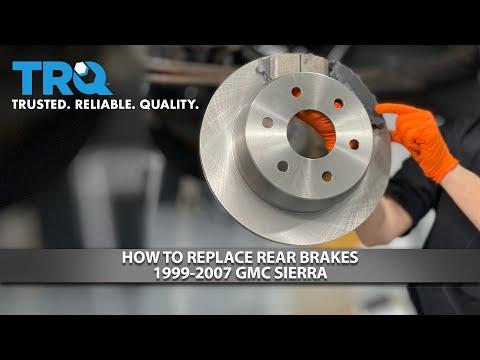






How to Replace Rear Brake Pads and Rotors on a 2007 GMC Sierra 1500
Step-by-step rear brake job with tools, parts list, drum-in-hat parking brake tips, and torque specs for 2007
How to Replace Rear Brake Pads and Rotors on a 2007 GMC Sierra 1500
Step-by-step rear brake job with tools, parts list, drum-in-hat parking brake tips, and torque specs for 2007


🔧 Sierra 1500 - Rear Brake Pads & Rotor Replacement
Replacing the rear brake pads and rotors involves lifting and supporting the rear axle, removing the rear calipers/brackets, swapping rotors, and installing new pads with proper lubrication and torque. On your Sierra, the parking brake is typically a small “drum brake” inside the rear rotor (called drum-in-hat), so we also inspect/clean that area while the rotor is off.
Difficulty Level: Intermediate | Estimated Time: 2.0–3.5 hours
⚠️ Safety & Precautions
- 🛑 Support the truck with jack stands under the axle; never rely on a floor jack.
- 🛑 Chock the front wheels with wheel chocks so the truck can’t roll.
- 🛑 Do not press the brake pedal with a caliper removed; the piston can pop out and leak.
- 🛑 Brake dust is harmful—wear a dust mask and use brake cleaner, not compressed air.
- 🛑 Keep the parking brake released when removing the rotors.
🔧 Required Tools
You'll need the following tools for this repair:
- Floor jack (rated 3-ton minimum)
- Jack stands (rated 3-ton minimum)
- Wheel chocks
- 21mm socket
- 1/2" drive breaker bar
- 1/2" drive torque wrench (30–200 ft-lbs range)
- 3/8" drive ratchet
- Socket set (10mm–21mm)
- 13mm socket
- 18mm socket
- Line wrench 10mm
- Large C-clamp (6" minimum)
- Brake caliper hanger hook (specialty)
- Dead-blow hammer
- Wire brush
- Flat blade screwdriver
- Brake cleaner spray
- Drip pan
- Nitrile gloves
- Safety glasses
- Dust mask
🔩 Required Parts
HowToo sells all the parts you need for this repair:
- Rear brake pad set - Qty: 1
- Rear brake rotors - Replace in pairs - Qty: 2
- Rear brake hardware kit (clips/shims) - Qty: 1
- Brake lubricant (silicone/ceramic) - Qty: 1
- Brake cleaner - Qty: 2
- DOT 3 brake fluid - Qty: 1 quart
📋 Before You Begin
- Park on level ground, shift to PARK, and release the parking brake.
- Chock both front wheels with wheel chocks.
- Pop the hood and remove the brake master cylinder cap (set it loosely on top). This helps the pistons retract.
- Quick questions so I can give you exact torque specs and exact bolt sizes:
- Is your Sierra the 2007 “Classic” body style or the 2007 “New Body” style?
- Do you want to service/adjust the parking brake shoes while the rotors are off, or pads/rotors only?
🔨 Step-by-Step Instructions
Follow these steps in order:
Step 1: Loosen lug nuts and lift the rear
- Use a 21mm socket and breaker bar to loosen the rear lug nuts about 1/2 turn.
- Lift the rear axle with a floor jack (rated 3-ton minimum).
- Set the axle onto jack stands (rated 3-ton minimum) and keep the jack lightly supporting the axle.
- Remove the wheels with a 21mm socket.
Step 2: Access the rear caliper and check the brake hose
- Turn the steering wheel is not applicable—just position yourself for access.
- Inspect the rubber brake hose for cracks or wetness (leaks). Use safety glasses and a flashlight if you have one.
Step 3: Remove the rear caliper (do NOT let it hang)
- Remove the two caliper slide pin bolts using a 13mm socket and 3/8" drive ratchet.
- Lift the caliper off the bracket and hang it from the suspension using a brake caliper hanger hook (specialty).
- Tip: Hanging the caliper protects the brake hose.
Step 4: Remove pads and caliper bracket
- Slide the old pads out of the bracket by hand (use a flat blade screwdriver if stuck).
- Remove the caliper bracket bolts using an 18mm socket and 1/2" drive breaker bar.
- PAUSE HERE: Bracket bolt torque differs between 2007 Classic and 2007 New Body. Reply with the 2 answers above and I’ll give you the exact torque specs and continue with the remaining steps (rotor removal, parking brake “drum-in-hat” cleaning/adjustment, rotor install, caliper piston compression, final torques, and bed-in procedure).
✅ After Repair
- When complete, torque wheels using a torque wrench to Torque to 190 Nm (140 ft-lbs).
- Pump the brake pedal slowly until it feels firm before driving.
- Check brake fluid level and top off with DOT 3 brake fluid if needed.
- Do a cautious test drive and verify no grinding, pulling, or warning lights.
💰 DIY vs Shop Cost
Shop Cost: $450–$900 (parts + labor)
DIY Cost: $160–$450 (parts only)
You Save: $290–$450 by doing it yourself!
Shop labor rates vary but typically run $100-$150/hour. This repair takes a shop approximately 2-3 hours.
🎯 Ready to get started?
HowToo makes it easy: same-day/2-day shipping on every part, plus all the tools and specialty tools you need! Check out the parts and tools sections below to add everything to your cart.