

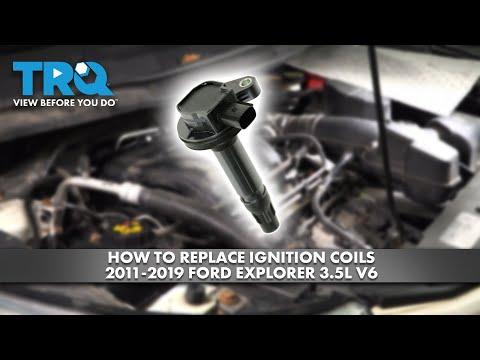





How to Replace Ignition Coils on a 2016 Ford Explorer 3.5L V6 (Front & Rear Bank)
Step-by-step coil-on-plug replacement with tools, parts list, intake removal tips, and torque specs for 2011, 2012, 2013, 2014, 2015, 2016, 2017
How to Replace Ignition Coils on a 2016 Ford Explorer 3.5L V6 (Front & Rear Bank)
Step-by-step coil-on-plug replacement with tools, parts list, intake removal tips, and torque specs for 2011, 2012, 2013, 2014, 2015, 2016, 2017


🔧 Explorer - Ignition Coil Replacement
Your Explorer uses coil-on-plug ignition coils (one coil per spark plug). A bad coil can cause misfires, rough running, and a flashing check-engine light. This job is straightforward on the front bank, but the rear bank is tighter and usually requires removing the upper intake manifold for access.
Difficulty Level: Intermediate | Estimated Time: 1.5-3.5 hours
Assumption: 3.5L NA V6 (transverse) with rear-bank access requiring upper intake manifold removal.
⚠️ Safety & Precautions
- ⚠️ Work on a cool engine to avoid burns (intake and exhaust areas get very hot).
- ⚠️ Disconnect the negative battery cable to prevent accidental shorting while unplugging coils.
- ⚠️ Keep dirt out of the intake ports—cover openings immediately if the intake manifold comes off.
- ⚠️ Do not pull on wiring; release connector locks first to avoid breaking plugs.
🔧 Required Tools
You'll need the following tools for this repair:
- Safety glasses
- Nitrile gloves
- 1/4" drive ratchet
- 3/8" drive ratchet
- 1/4" drive extension set (3" and 6")
- 3/8" drive extension (6")
- 7mm socket
- 8mm socket
- 10mm socket
- 13mm socket
- Torx T20 screwdriver
- Flat trim tool
- Small pick tool
- Torque wrench (in-lb)
- Torque wrench (ft-lb)
- Telescoping magnetic pickup tool
- Shop vacuum
- Flashlight
🔩 Required Parts
HowToo sells all the parts you need for this repair:
- Ignition coil - Qty: 1 (or replace as needed)
- Upper intake manifold gasket set - Qty: 1 (recommended if upper intake is removed)
- Dielectric grease - Qty: 1 (optional but recommended)
📋 Before You Begin
- Park on level ground, shift to Park, and set the parking brake.
- Open the hood and let the engine cool fully.
- Use a 10mm socket to disconnect the negative battery cable and tuck it aside so it can’t spring back.
- If you’re doing multiple coils, label connectors with tape so everything goes back to the same place.
🔨 Step-by-Step Instructions
Follow these steps in order:
Step 1: Remove the engine cover
- Pull up firmly on the engine cover to release the rubber grommets (it snaps on).
- Set it aside where it won’t get stepped on.
Step 2: Remove the air intake tube (for room)
- Use a 7mm socket to loosen the hose clamps at the air box and throttle body.
- Unplug any sensor connectors using a small pick tool to lift the lock tab (a lock tab is a small clip that prevents unplugging).
- Remove the intake tube and set it aside.
Step 3: Replace coils on the front bank (easier side)
- Identify the coil you’re replacing on the front side of the engine (closest to the radiator).
- Unplug the coil electrical connector using a small pick tool to release the lock, then pull the connector straight off.
- Use an 8mm socket with a 1/4" drive ratchet to remove the coil hold-down bolt.
- Twist the coil gently, then pull straight up to remove it.
- Tip: Don’t pry on the plastic coil body.
- Optional: apply a pea-sized amount of dielectric grease inside the new coil boot (dielectric grease helps prevent moisture and eases future removal).
- Push the new coil down until it fully seats on the spark plug.
- Install the hold-down bolt with an 8mm socket and torque wrench (in-lb): Torque to 71 in-lb (8 Nm).
- Reconnect the electrical connector until it clicks.
Step 4: Access the rear bank coils (upper intake manifold removal)
- Use a flat trim tool to release any wiring harness clips attached to the upper intake area.
- Unplug the throttle body connector and any nearby vacuum/EVAP connectors using a small pick tool.
- Remove the throttle body fasteners using an 8mm socket (or 10mm socket depending on hardware), and move it aside if slack allows.
- Disconnect vacuum/PCV hoses carefully; twist hoses to break them free instead of yanking.
- Use an 8mm socket and 1/4" drive extensions to remove the upper intake manifold bolts.
- Lift the upper intake manifold straight up and out.
- Immediately place clean shop towels over the intake openings to prevent anything from falling in.
- Tip: A dropped bolt in an intake port is a big problem.
Step 5: Replace coils on the rear bank
- Use a shop vacuum to clean loose dirt around the coil bases before removal.
- Unplug each coil connector using a small pick tool.
- Remove each coil hold-down bolt using an 8mm socket.
- Twist and pull the coil straight up to remove it.
- Install the new coil(s), pushing down until fully seated.
- Install hold-down bolts and use a torque wrench (in-lb): Torque to 71 in-lb (8 Nm).
- Reconnect coil connectors until they click.
Step 6: Reinstall the upper intake manifold
- Remove the shop towels from the intake openings.
- Replace the intake manifold gaskets if removed; ensure they sit flat and aren’t pinched.
- Set the upper intake manifold in place carefully and start all bolts by hand to avoid cross-threading.
- Tighten bolts evenly in a crisscross pattern using an 8mm socket, then use a torque wrench (in-lb): Torque to 89 in-lb (10 Nm).
- Reconnect all vacuum/PCV hoses and electrical connectors.
Step 7: Reassemble intake tube and engine cover
- Reinstall the air intake tube and tighten clamps with a 7mm socket.
- Reconnect any sensor connectors.
- Snap the engine cover back into place.
Step 8: Reconnect the battery
- Reconnect the negative battery cable using a 10mm socket.
✅ After Repair
- Start the engine and let it idle for 1–2 minutes. It should run smooth with no shaking.
- Listen for hissing (a vacuum leak). If you hear one, re-check intake hoses and manifold seating.
- If the check-engine light stays on, it may need a code clear after the fix (some lights clear on their own after a few drive cycles).
- Road test gently, then recheck for any loose clamps or disconnected plugs.
💰 DIY vs Shop Cost
Shop Cost: $350-$900 (parts + labor, depends on how many coils and rear-bank labor)
DIY Cost: $45-$450 (parts only, depends on 1 coil vs multiple)
You Save: $200-$500+ by doing it yourself!
Shop labor rates vary but typically run $100-$150/hour. This repair takes a shop approximately 1.5-3.0 hours.
🎯 Ready to get started?
HowToo makes it easy: same-day/2-day shipping on every part, plus all the tools and specialty tools you need! Check out the parts and tools sections below to add everything to your cart.