

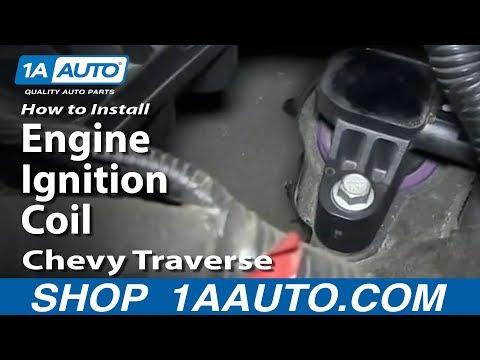







How to Replace Ignition Coils on a 2016 Chevrolet Traverse 3.6L (Fix Misfire)
Step-by-step coil and rear-bank access guide with tools, parts list, intake removal tips, and torque specs for 2012, 2013, 2014, 2015, 2016, 2017, 2018
How to Replace Ignition Coils on a 2016 Chevrolet Traverse 3.6L (Fix Misfire)
Step-by-step coil and rear-bank access guide with tools, parts list, intake removal tips, and torque specs for 2012, 2013, 2014, 2015, 2016, 2017, 2018


🔧 Traverse - Ignition Coil Replacement
On your Traverse, each cylinder has its own ignition coil mounted on the valve covers. Replacing a bad coil restores smooth running, fixes misfires, and prevents catalytic converter damage from unburned fuel.
Difficulty Level: Intermediate | Estimated Time: 1.5-3.0 hours
Assumption: 3.6L with plastic upper intake manifold (rear coils require intake removal).
⚠️ Safety & Precautions
- ⚠️ Work on a fully cool engine to avoid burns.
- ⚠️ Disconnect the negative battery cable to prevent accidental shorting.
- ⚠️ Keep dirt out of the intake ports; cover openings with clean rags.
- ⚠️ Do not pull on wires; always release electrical connectors by the lock tab.
- ⚠️ If the check engine light is flashing, avoid driving until repaired.
🔧 Required Tools
You'll need the following tools for this repair:
- Safety glasses
- Nitrile gloves
- Floor jack (rated 3-ton minimum)
- Jack stands (rated 3-ton minimum)
- Wheel chocks
- 1/4" drive ratchet
- 3/8" drive ratchet
- 1/4" drive extension set (3" and 6")
- 3/8" drive extension set (6" and 10")
- 3/8" drive universal joint
- 8mm socket
- 10mm socket
- 13mm socket
- Flat-blade screwdriver
- Trim clip removal tool
- Small pick tool
- Torque wrench (inch-pound)
- Torque wrench (ft-lb)
- Flashlight
🔩 Required Parts
HowToo sells all the parts you need for this repair:
- Ignition coil - Qty: 1 (or Qty: 6 if replacing all)
- Ignition coil boot - Qty: 1 (or Qty: 6 if replacing all)
- Upper intake manifold gasket set - Qty: 1
- Dielectric grease - Qty: 1
📋 Before You Begin
- Park on level ground, shift to Park, and set the parking brake.
- Open the hood and let the engine cool completely.
- Use a 10mm socket to disconnect the negative battery cable and move it aside so it can’t spring back.
- Plan to replace the rear-bank coils: the upper intake manifold must come off for access.
🔨 Step-by-Step Instructions
Follow these steps in order:
Step 1: Remove the engine appearance cover
- Pull up firmly on the plastic engine cover to release it from the rubber grommets (no tools on most setups).
- Set the cover aside.
Step 2: Remove the air intake duct (to reach the intake manifold area)
- Use an 8mm socket or flat-blade screwdriver to loosen the hose clamps at the throttle body and air box.
- Unplug the intake sensor connector by lifting the lock tab with a small pick tool (a pick is a small hooked tool for releasing tabs).
- Lift the intake duct out.
Step 3: Remove the upper intake manifold (needed for rear ignition coils)
- Unplug any visible intake sensors (MAP/ETC related) by pressing the lock and pulling straight off.
- Disconnect vacuum/PCV hoses by twisting gently, then pulling off. Use a trim clip removal tool if a retaining clip is present.
- Unbolt the intake manifold fasteners using a 10mm socket with a 1/4" drive extension.
- Carefully lift the intake manifold straight up and out.
- Immediately stuff clean rags into the intake ports to keep bolts/dirt out.
- Torque on reassembly: Torque intake manifold bolts to 10 Nm (89 in-lbs)
- Tip: Take a photo before unplugging anything.
Step 4: Identify the coil(s) to replace
- You’ll see individual coils bolted to the valve covers (front bank is near the radiator; rear bank is near the firewall).
- If you’re replacing one failed coil, match its cylinder location to your diagnostic (misfire code like P0302 = cylinder 2).
Step 5: Unplug the ignition coil electrical connector
- Press the connector lock tab and pull the connector straight off the coil.
- If it’s stubborn, use a small pick tool gently on the lock tab (do not break it).
Step 6: Remove the ignition coil
- Remove the coil mounting bolt using a 10mm socket and 1/4" drive ratchet.
- Pull the coil straight up with a small twist to release the boot from the spark plug.
- Torque on reassembly: Torque ignition coil bolt to 10 Nm (89 in-lbs)
Step 7: Transfer/replace the coil boot and apply dielectric grease
- If the new coil does not include a boot, pull the rubber boot off the old coil and install it on the new coil.
- Apply a small dab of dielectric grease inside the boot lip (this helps prevent moisture and makes future removal easier).
- Tip: Only a pea-sized amount is enough.
Step 8: Install the new ignition coil
- Push the coil straight down until you feel the boot fully seat on the spark plug.
- Install the coil bolt by hand first (prevents cross-threading), then tighten using a 10mm socket.
- Torque: Torque ignition coil bolt to 10 Nm (89 in-lbs)
- Reconnect the electrical connector until it clicks.
Step 9: Reinstall the upper intake manifold
- Remove the rags from the intake ports.
- Replace the intake manifold gaskets with the new set (do not reuse flattened gaskets).
- Set the intake manifold in place carefully.
- Start all bolts by hand, then snug evenly using a 10mm socket.
- Torque: Torque intake manifold bolts to 10 Nm (89 in-lbs)
- Reconnect all vacuum hoses and electrical connectors.
Step 10: Reinstall the intake duct and engine cover
- Reinstall the intake duct and tighten clamps using an 8mm socket or flat-blade screwdriver.
- Plug the intake sensor connector back in until it clicks.
- Press the engine cover back onto its grommets.
Step 11: Reconnect the battery
- Reconnect the negative battery cable using a 10mm socket.
✅ After Repair
- Start the engine and let it idle for 1–2 minutes. It should run smooth with no shaking.
- Check for intake air leaks: listen for hissing around the intake manifold and intake duct.
- If the check engine light stays on, use a scan tool to clear codes and confirm the misfire is gone.
- Road test for 10–15 minutes, then recheck for warning lights.
💰 DIY vs Shop Cost
Shop Cost: $300-$850 (parts + labor, depends on 1 coil vs all 6)
DIY Cost: $40-$420 (parts only)
You Save: $260-$430 by doing it yourself!
Shop labor rates vary but typically run $100-$150/hour. This repair takes a shop approximately 1.5-3.0 hours.
🎯 Ready to get started?
HowToo makes it easy: same-day/2-day shipping on every part, plus all the tools and specialty tools you need! Check out the parts and tools sections below to add everything to your cart.