

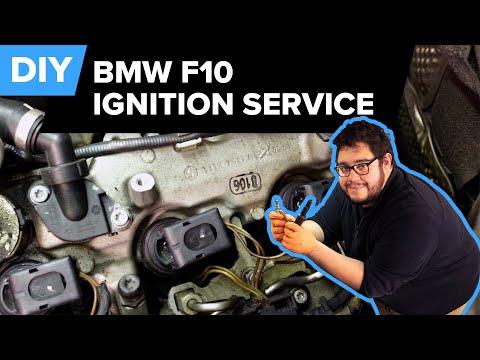






How to Replace Ignition Coils on a 2016 BMW 550i (Fix Misfires & Rough Idle)
Step-by-step DIY guide with tools, parts list, safety tips, and key torque specs for reassembly for 2011, 2012, 2013, 2014, 2015, 2016
How to Replace Ignition Coils on a 2016 BMW 550i (Fix Misfires & Rough Idle)
Step-by-step DIY guide with tools, parts list, safety tips, and key torque specs for reassembly for 2011, 2012, 2013, 2014, 2015, 2016


🔧 550i - Ignition Coil Replacement
Your A4? — Not applicable here. On your 550i, ignition coils sit on top of the spark plugs and create the high-voltage spark that fires each cylinder. Replacing weak coils can fix misfires, rough idle, and loss of power.
Difficulty Level: Intermediate | Estimated Time: 1.5-3.0 hours
Assumption: Stock engine covers/intake parts; coil-on-plug layout.
⚠️ Safety & Precautions
- ⚠️ Let the engine cool fully; turbos and covers get very hot.
- ⚠️ Keep the key away from the car so it can’t “wake up” while unplugging coils.
- ⚠️ Disconnect the negative battery cable if you’ll have multiple connectors unplugged for a while.
- ⚠️ Do not pull on wiring; release the connector lock first.
🔧 Required Tools
You'll need the following tools for this repair:
- Safety glasses
- Nitrile gloves
- 10mm socket
- 1/4" ratchet
- 3/8" ratchet
- 3" extension
- 6" extension
- Torque wrench (5–30 Nm range)
- Torx T20 screwdriver
- Torx T25 screwdriver
- Small flat-blade screwdriver
- Plastic trim tool
- Ignition coil puller (specialty)
- Magnetic pickup tool
- Flashlight
🔩 Required Parts
HowToo sells all the parts you need for this repair:
- Ignition coils - Replace all eight - Qty: 8
- Dielectric grease - Small packet - Qty: 1
- Engine cover grommets/clips - Optional if damaged - Qty: 1 set
📋 Before You Begin
- Park on level ground, set the parking brake, and open the hood.
- Let the engine cool completely.
- If disconnecting the battery: use a 10mm socket to remove the negative cable at the battery and isolate it so it can’t spring back.
- Lay out coils in order (1–8) so you don’t lose track of what you replaced.
🔨 Step-by-Step Instructions
Follow these steps in order:
Step 1: Remove the engine covers
- Use a plastic trim tool to gently pop up any decorative caps, if equipped.
- Remove fasteners (if present) using a 10mm socket or Torx T25 screwdriver.
- Lift the engine cover(s) straight up to release the rubber grommets. Pull straight up; don’t twist hard.
Step 2: Create working room (only if needed)
- If access is tight at the edges, loosen/remove nearby air ducting using a Torx T20 screwdriver and/or 10mm socket.
- Move hoses/ducts aside gently—do not kink or crack them.
Step 3: Unplug the first ignition coil electrical connector
- Pick one coil and work one at a time.
- Use a small flat-blade screwdriver to help lift the connector locking tab if it’s stubborn (do not pry on the wires).
- Pull the connector straight off the coil.
Step 4: Remove the ignition coil
- Use an ignition coil puller (specialty) to lift the coil straight up; this tool hooks the coil and helps pop it out without breaking it (it’s basically a handle made for pulling coils safely).
- If you don’t have the puller, gently wiggle the coil while pulling upward by the coil body (not the connector).
Step 5: Prep and install the new coil
- Put a tiny dab of dielectric grease inside the new coil boot (the rubber end). Use a thin film, not a blob.
- Push the new coil straight down onto the spark plug until you feel it seat firmly.
Step 6: Reconnect the coil connector
- Push the connector on until it clicks/locks.
- Gently tug-check the connector by hand to confirm it’s secure.
Step 7: Repeat for the remaining coils
- Repeat Steps 3–6 for all remaining cylinders.
- Use a flashlight to confirm every coil is fully seated and every connector is locked.
Step 8: Reinstall ducts and engine covers
- Reinstall any ducting you moved using a Torx T20 screwdriver and/or 10mm socket.
- Reinstall engine cover(s) and press down over the grommets.
- If you removed any 10mm nuts/bolts for covers/ducts: Torque to 8 Nm (71 in-lbs).
Step 9: Reconnect the battery (if disconnected)
- Reconnect the negative battery cable using a 10mm socket.
- Tighten securely (snug plus a little); do not overtighten the clamp.
✅ After Repair
- Start the engine and let it idle for 60–90 seconds. It should be smooth and steady.
- Check for a flashing check-engine light (flashing means active misfire—shut it off).
- If you have a scan tool, clear any misfire codes and recheck for returning codes after a short drive.
- Test drive 10–15 minutes with gentle acceleration, then one stronger pull once warm.
💰 DIY vs Shop Cost
Shop Cost: $600-$1,200 (parts + labor)
DIY Cost: $280-$720 (parts only)
You Save: $320-$480 by doing it yourself!
Shop labor rates vary but typically run $100-$150/hour. This repair takes a shop approximately 1.5-3.0 hours.
🎯 Ready to get started?
HowToo makes it easy: same-day/2-day shipping on every part, plus all the tools and specialty tools you need! Check out the parts and tools sections below to add everything to your cart.