

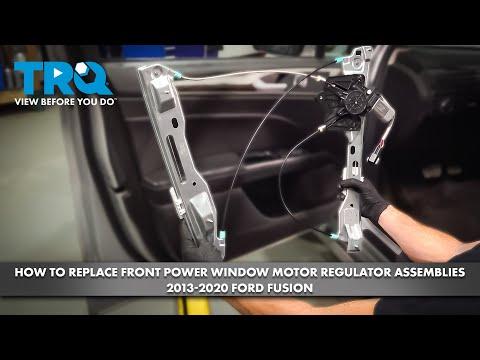





How to Replace Front Window Regulators on a 2013-2020 Ford Fusion
Step-by-step door panel removal, regulator install, tools, parts, torque specs, and relearn tips for 2013, 2014, 2015, 2016, 2017, 2018, 2019, 2020
How to Replace Front Window Regulators on a 2013-2020 Ford Fusion
Step-by-step door panel removal, regulator install, tools, parts, torque specs, and relearn tips for 2013, 2014, 2015, 2016, 2017, 2018, 2019, 2020


🔧 Fusion - Front Window Regulator Replacement
The front window regulator lifts and lowers the door glass. On your Fusion, the regulator is inside the front door and is serviced by removing the door trim panel, separating the glass from the regulator, then replacing the regulator assembly.
Replace the window motor with the regulator if the new part comes as an assembly, or if the motor is weak, noisy, or intermittent.
Difficulty Level: Intermediate | Estimated Time: 1.5-2.5 hours per door
⚠️ Safety & Precautions
- ⚠️ Keep fingers clear of the window tracks. The glass can drop suddenly once detached from the regulator.
- ⚠️ Disconnect the 12V battery before unplugging door connectors or removing the regulator motor.
- ⚠️ Your Fusion is a plug-in hybrid, but this repair is on the 12V door electrical system. Do not touch orange high-voltage cables.
- ⚠️ Wear gloves inside the door shell. The stamped metal edges can be sharp.
- ⚠️ Support the glass with painter's tape before removing regulator bolts.
🔧 Required Tools
You'll need the following tools for this repair:
- 10mm socket
- 7mm socket
- 8mm socket
- Ratchet
- Extension 6-inch
- Torx T20 screwdriver
- Torx T25 screwdriver
- Torx T30 screwdriver
- Plastic trim removal tool set
- Panel clip pliers
- Small flat-blade screwdriver
- Pick tool
- Painter's tape 2-inch
- Torque wrench 20-100 in-lbs
- Nitrile gloves
- Safety glasses
🔩 Required Parts
HowToo sells all the parts you need for this repair:
- Front window regulator assembly - Qty: 1 per door
- Front window regulator motor - Qty: 1 if not included with regulator
- Door panel retaining clips - Qty: As needed
- Butyl sealing tape for door vapor barrier - Qty: 1 roll
📋 Before You Begin
- Park your Fusion on level ground and switch the vehicle fully off.
- If the window still moves, lower it until the glass clamp bolts are visible through the door access openings.
- If the window does not move, leave it where it is and be ready to support the glass by hand once the regulator is loose.
- Open the front door you are repairing and keep it open during the job.
- Disconnect the negative 12V battery cable using a 10mm socket after positioning the glass.
- Wait at least 2 minutes before unplugging door wiring connectors.
🔨 Step-by-Step Instructions
Follow these steps in order:
Step 1: Position the Glass
- If the regulator still works, reconnect the window switch temporarily and move the glass until the clamp bolts line up with the service holes.
- Use the vehicle window switch only long enough to position the glass.
- Switch the vehicle off and disconnect the negative 12V battery cable using a 10mm socket.
- If the regulator is jammed, skip positioning and continue carefully.
- Keep hands away from moving glass.
Step 2: Remove the Front Door Trim Covers
- Use a plastic trim removal tool set to pry off the small cover behind the interior door handle.
- Use a plastic trim removal tool set to remove the cover in the door pull pocket.
- Use a small flat-blade screwdriver only if needed, and wrap the tip with tape first.
- A trim tool is a plastic pry tool that helps remove panels without scratching them.
Step 3: Remove the Door Panel Screws
- Use a 7mm socket with a ratchet to remove the lower door panel screws.
- Use a Torx T20 screwdriver or Torx T25 screwdriver to remove hidden screws behind the trim covers if equipped.
- Use an extension 6-inch if a screw is recessed in the door pull pocket.
- Place screws in a small cup so none are lost.
Step 4: Remove the Door Panel
- Slide a plastic trim removal tool set between the lower edge of the door panel and the metal door shell.
- Pop the retaining clips loose one at a time around the bottom and sides.
- Use panel clip pliers if a clip stays stuck in the metal door.
- Lift the door panel straight upward to unhook it from the window ledge.
- A retaining clip is a plastic snap fastener that holds the panel to the door.
Step 5: Disconnect Door Panel Wiring and Handle Cable
- Support the panel with one hand so it does not hang by the wires.
- Press each connector lock by hand and unplug the window switch and courtesy light connectors.
- Use a pick tool gently if a connector lock is hard to release.
- Use a small flat-blade screwdriver or fingers to release the interior handle cable from the panel.
- Set the panel on a clean towel.
Step 6: Peel Back the Vapor Barrier
- Use a plastic trim removal tool set to slowly peel the vapor barrier away from the door.
- The vapor barrier is the plastic or foam sheet that keeps rainwater away from the interior door trim.
- Peel only enough to access the regulator, motor, and glass clamp bolts.
- If the sealer stretches or stops sticking, plan to reseal it with butyl sealing tape for door vapor barrier.
Step 7: Secure the Door Glass
- Use painter's tape 2-inch to tape the glass to the upper door frame.
- Run several strips from the outside glass surface over the top of the door frame to the inside glass surface.
- Press the tape firmly so the glass cannot slide down.
- If the glass is low in the door, carefully lift it by hand while wearing nitrile gloves, then tape it fully up.
- Use extra tape. Glass is heavy.
Step 8: Loosen the Glass Clamp Bolts
- Look through the access openings and locate the glass clamp bolts.
- Use an 8mm socket with a ratchet to loosen the clamp bolts.
- Do not fully remove the clamp bolts unless the replacement regulator requires it.
- Confirm the glass is free from the regulator and still securely taped in the fully raised position.
- Torque glass clamp bolts to 8 Nm (71 in-lbs) during installation.
Step 9: Disconnect the Window Motor Connector
- Find the electrical connector at the window motor on the regulator.
- Press the connector lock by hand and unplug it.
- Use a pick tool gently if the connector lock is stuck.
- Inspect the connector for water, corrosion, or loose terminals.
Step 10: Remove the Regulator Mounting Bolts
- Use a 10mm socket with a ratchet to remove the regulator rail mounting bolts.
- Use an 8mm socket if your replacement design uses smaller motor or guide bolts.
- Hold the regulator with one hand while removing the last bolt.
- The regulator is the metal cable-and-track mechanism that moves the window glass.
- Torque regulator mounting bolts to 10 Nm (89 in-lbs) during installation.
Step 11: Remove the Old Regulator Assembly
- Fold the regulator slightly by hand and guide it out through the largest door access opening.
- Use safety glasses because cable regulators can have sharp broken strands.
- If the motor is separate, use a Torx T30 screwdriver or 8mm socket to transfer it only if the replacement part requires reuse.
- Compare the old and new regulator before installing.
Step 12: Install the New Regulator Assembly
- Guide the new front window regulator assembly into the door through the access opening.
- Start all regulator bolts by hand before tightening.
- Use a 10mm socket with a torque wrench 20-100 in-lbs to tighten the regulator bolts.
- Torque regulator mounting bolts to 10 Nm (89 in-lbs).
- Plug in the window motor connector by hand until it clicks.
Step 13: Attach the Glass to the Regulator
- Carefully remove enough painter's tape 2-inch to lower the glass by hand into the regulator clamps.
- Make sure the glass sits evenly in both clamps.
- Use an 8mm socket with a torque wrench 20-100 in-lbs to tighten the clamp bolts.
- Torque glass clamp bolts to 8 Nm (71 in-lbs).
- Reapply tape lightly until the window has been tested.
Step 14: Test Window Operation Before Reassembly
- Reconnect the negative 12V battery cable using a 10mm socket.
- Temporarily plug in the window switch connector by hand.
- Turn the vehicle to accessory mode and operate the window slowly.
- Watch the glass travel up and down to confirm it stays straight in the tracks.
- If the glass tilts, stop immediately and loosen the 8mm socket clamp bolts to reseat it.
- Disconnect the negative 12V battery cable again using a 10mm socket before final reassembly.
Step 15: Reseal the Vapor Barrier
- Press the vapor barrier back onto the door by hand.
- Use butyl sealing tape for door vapor barrier anywhere the original sealer no longer sticks.
- Make sure the bottom edge is sealed well to prevent water from reaching the door panel.
- A good seal prevents wet carpet.
Step 16: Reinstall the Door Panel
- Reconnect the handle cable by hand and confirm it is seated.
- Reconnect all wiring connectors by hand until they click.
- Hang the top of the door panel over the window ledge.
- Align the retaining clips and press around the panel by hand until each clip snaps in.
- Replace broken door panel retaining clips before installing the panel.
Step 17: Reinstall Screws and Trim Covers
- Use a 7mm socket with a ratchet to reinstall the lower and pocket screws.
- Use a Torx T20 screwdriver or Torx T25 screwdriver to reinstall hidden trim screws if equipped.
- Torque small door panel screws to 2-3 Nm (18-27 in-lbs).
- Snap the trim covers back on by hand.
- Reconnect the negative 12V battery cable using a 10mm socket.
Step 18: Relearn the One-Touch Window Function
- Turn the vehicle to accessory mode.
- Using the repaired door's window switch, lower the window fully and keep holding the switch down for 2 seconds.
- Raise the window fully and keep holding the switch up for 2 seconds.
- Test one-touch up and one-touch down from the switch.
- If it does not work, repeat the relearn once more.
✅ After Repair
- ✅ Test the window from the repaired door switch and the driver master switch.
- ✅ Confirm one-touch up, one-touch down, and pinch protection work correctly.
- ✅ Listen for scraping, popping, or cable noises while the glass moves.
- ✅ Check that the door lock, mirror switch, speaker, courtesy light, and handle still work.
- ✅ After a car wash or rain, check the lower door panel and carpet for moisture.
💰 DIY vs Shop Cost
Shop Cost: $350-$700 (parts + labor)
DIY Cost: $80-$250 (parts only)
You Save: $200-$450 by doing it yourself!
Shop labor rates vary but typically run $100-$150/hour. This repair takes a shop approximately 1.0-2.0 hours per door.
🎯 Ready to get started?
HowToo makes it easy: same-day/2-day shipping on every part, plus all the tools and specialty tools you need! Check out the parts and tools sections below to add everything to your cart.