







How to Replace Front Wheel Bearing Hubs on a 2011-2017 Jeep Wrangler
Step-by-step DIY guide with tools, parts, torque specs, ABS tips, and safety checks for 2011, 2012, 2013, 2014, 2015, 2016, 2017
How to Replace Front Wheel Bearing Hubs on a 2011-2017 Jeep Wrangler
Step-by-step DIY guide with tools, parts, torque specs, ABS tips, and safety checks for 2011, 2012, 2013, 2014, 2015, 2016, 2017


🔧 Wrangler - Front Wheel Bearing Hub Replacement
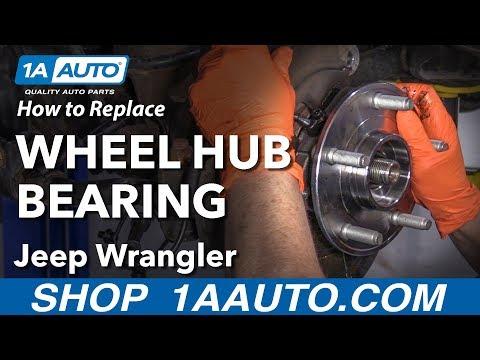
The front wheel bearing on your Wrangler is serviced as a complete hub and bearing assembly. Replacing it restores smooth wheel rotation and can fix growling noise, vibration, ABS warnings, or looseness at the wheel.
Difficulty Level: Intermediate | Estimated Time: 2-3 hours per side
Assumption: This procedure covers the front hub and bearing assembly on your Wrangler’s solid front axle.
⚠️ Safety & Precautions
- ⚠️ Support your Wrangler with jack stands under the axle. Never work under a vehicle supported only by a jack.
- ⚠️ Wear safety glasses and gloves. Rust and brake dust can fall during removal.
- ⚠️ Do not let the brake caliper hang by the brake hose. Support it with wire or a bungee cord.
- ⚠️ Avoid pulling or twisting the ABS wheel speed sensor wire.
- ⚠️ The axle nut is very tight. Use a proper breaker bar and keep your body balanced.
- ⚠️ If the hub is stuck from rust, use penetrating oil and patience. Do not damage the steering knuckle.
🔧 Required Tools
You'll need the following tools for this repair:
- Floor jack (rated 3-ton minimum)
- Jack stands (rated 3-ton minimum)
- Wheel chocks
- Safety glasses
- Mechanic gloves
- 19mm lug nut socket
- 13mm 12-point socket
- 21mm socket
- 36mm axle nut socket
- 1/2-inch drive breaker bar
- 1/2-inch drive ratchet
- 3/8-inch drive ratchet
- Torque wrench (10-150 ft-lbs)
- Torque wrench (50-250 ft-lbs)
- Flat blade screwdriver
- Needle-nose pliers
- Dead blow hammer
- Brass punch
- Wire brush
- Bungee cord
- Brake cleaner spray
🔩 Required Parts
HowToo sells all the parts you need for this repair:
- Front wheel bearing hub assembly - Qty: 1 per side
- Axle nut - Qty: 1 per side
- Brake cleaner - Qty: 1 can
- Penetrating oil - Qty: 1 can
- Anti-seize compound - Qty: 1 tube
📋 Before You Begin
- 🅿️ Park your Wrangler on level ground, shift into 1st gear, and set the parking brake.
- 🛞 Place wheel chocks behind the rear tires.
- 🔓 Before raising the vehicle, slightly loosen the front lug nuts and axle nut while the tire is still on the ground.
- 🧰 A 12-point socket has 12 internal points and is required for the factory hub bolts on this Wrangler.
🔨 Step-by-Step Instructions
Follow these steps in order:
Step 1: Loosen the Lug Nuts and Axle Nut
- Use a 19mm lug nut socket and 1/2-inch drive breaker bar to loosen the front wheel lug nuts about half a turn.
- Use a 36mm axle nut socket and 1/2-inch drive breaker bar to loosen the axle nut while the tire is still on the ground.
- Do not fully remove the lug nuts or axle nut yet.
- Ground contact keeps the hub from spinning.
Step 2: Raise and Support the Front Axle
- Use a floor jack (rated 3-ton minimum) under the front axle tube near the side being repaired.
- Raise your Wrangler until the tire is off the ground.
- Place jack stands (rated 3-ton minimum) under the front axle tube.
- Lower the axle onto the jack stands and gently shake the vehicle to confirm it is stable.
Step 3: Remove the Wheel
- Use a 19mm lug nut socket and 1/2-inch drive ratchet to remove the lug nuts.
- Remove the wheel and place it flat under the frame as an extra safety backup.
Step 4: Remove the Brake Caliper
- Use a 21mm socket and 1/2-inch drive ratchet to remove the two brake caliper bracket bolts.
- Lift the caliper and bracket assembly off the brake rotor.
- Use a bungee cord to hang the caliper from the spring or frame.
- Do not let the caliper hang by the rubber brake hose.
Step 5: Remove the Brake Rotor
- Slide the brake rotor straight off the wheel studs by hand.
- If it is stuck, spray the hub area with brake cleaner spray first, then tap the rotor hat with a dead blow hammer.
- A dead blow hammer is a soft-faced hammer that reduces bounce and helps avoid damage.
Step 6: Remove the Axle Nut
- Use a 36mm axle nut socket and 1/2-inch drive ratchet to fully remove the axle nut.
- If the axle shaft is stuck in the hub splines, thread the old nut back on a few turns.
- Use a brass punch and dead blow hammer to lightly tap the axle inward.
- A brass punch is a soft metal drift that helps move parts without damaging steel threads.
Step 7: Disconnect the ABS Wheel Speed Sensor Wire
- Follow the sensor wire from the hub toward the frame by hand.
- Use a flat blade screwdriver to gently open the plastic retaining clips.
- Disconnect the ABS connector by pressing the lock tab and pulling the connector apart.
- Use needle-nose pliers only if a clip is stuck. Do not crush the connector.
Step 8: Remove the Hub Bearing Bolts
- From the back side of the steering knuckle, use a 13mm 12-point socket and 3/8-inch drive ratchet to remove the three hub bearing bolts.
- If the bolts are tight or rusty, use the 1/2-inch drive breaker bar with the 13mm 12-point socket.
- Keep the bolts organized. Inspect them for heavy rust or stretched threads.
Step 9: Remove the Old Hub Assembly
- Pull the hub assembly straight outward by hand while guiding the axle shaft through the center.
- If the hub is stuck, apply penetrating oil around the hub-to-knuckle seam.
- Use a dead blow hammer to tap around the hub flange evenly.
- Do not pry hard against the steering knuckle sealing surface.
- Work slowly around the hub in a circle.
Step 10: Clean the Mounting Surface
- Use a wire brush to clean rust and debris from the steering knuckle where the hub sits.
- Spray the area with brake cleaner spray and wipe it clean.
- Apply a very thin layer of anti-seize compound by hand to the knuckle bore.
- Do not get anti-seize on the brake rotor or wheel studs.
Step 11: Install the New Hub Assembly
- Guide the axle shaft through the center of the new hub by hand.
- Seat the hub squarely into the steering knuckle.
- Start all three hub bolts by hand first.
- Use a 13mm 12-point socket and 3/8-inch drive ratchet to snug the bolts evenly.
- Use a torque wrench (10-150 ft-lbs) and 13mm 12-point socket to tighten the hub bolts to Torque to 102 Nm (75 ft-lbs).
Step 12: Reconnect the ABS Sensor Wire
- Route the new ABS wire exactly like the old one.
- Use your hands to snap the wire into the factory retaining clips.
- Connect the ABS connector until it clicks.
- Use a flat blade screwdriver only to help seat stubborn clips gently.
- Make sure the wire cannot touch the tire, axle shaft, or brake rotor.
Step 13: Install the New Axle Nut
- Thread the new axle nut on by hand first.
- Use a 36mm axle nut socket and 1/2-inch drive ratchet to snug the axle nut.
- Final torque will be done after the wheel is installed and the tire is on the ground.
Step 14: Reinstall the Brake Rotor
- Clean both sides of the rotor hat with brake cleaner spray.
- Slide the rotor onto the wheel studs by hand.
- If needed, hold it in place with one lug nut installed finger-tight.
Step 15: Reinstall the Brake Caliper
- Remove the bungee cord and lower the caliper bracket assembly over the rotor.
- Start both caliper bracket bolts by hand.
- Use a 21mm socket and torque wrench (10-150 ft-lbs) to tighten the caliper bracket bolts to Torque to 169 Nm (125 ft-lbs).
Step 16: Reinstall the Wheel
- Install the wheel by hand onto the studs.
- Start all lug nuts by hand.
- Use a 19mm lug nut socket and 1/2-inch drive ratchet to snug the lug nuts in a star pattern.
Step 17: Lower the Wrangler and Torque the Fasteners
- Use the floor jack (rated 3-ton minimum) to raise the axle slightly.
- Remove the jack stands (rated 3-ton minimum).
- Lower your Wrangler until the tire touches the ground and cannot spin.
- Use a torque wrench (50-250 ft-lbs) and 36mm axle nut socket to tighten the axle nut to Torque to 237 Nm (175 ft-lbs).
- Use a torque wrench (10-150 ft-lbs) and 19mm lug nut socket to tighten the lug nuts in a star pattern to Torque to 130 Nm (95 ft-lbs).
Step 18: Final Visual Check
- Use a flashlight if available to check that the ABS wire is clipped in and clear of moving parts.
- Use your hands to confirm the brake hose is not twisted.
- Spin the tire by hand before fully lowering if possible. It should turn smoothly without grinding.
✅ After Repair
- ✅ Pump the brake pedal several times before driving. The pedal should feel firm.
- ✅ Start with a slow test drive under 25 mph and listen for grinding, clicking, or rubbing.
- ✅ Watch for ABS or traction control lights on the dash.
- ✅ Recheck lug nut torque after 25-50 miles.
- ✅ If there is still growling noise, check the opposite front hub and the rear axle bearings.
💰 DIY vs Shop Cost
Shop Cost: $350-$650 per side (parts + labor)
DIY Cost: $90-$220 per side (parts only)
You Save: $260-$430 by doing it yourself!
Shop labor rates vary but typically run $100-$150/hour. This repair takes a shop approximately 1.5-2.5 hours.
🎯 Ready to get started?
HowToo makes it easy: same-day/2-day shipping on every part, plus all the tools and specialty tools you need! Check out the parts and tools sections below to add everything to your cart.