















How to Replace Front Struts on a 2005-2015 Toyota Tacoma (Trim: Base)
Step-by-step loaded strut assembly guide with tools, parts, torque specs, and safety tips for 2005, 2006, 2007, 2008, 2009, 2010, 2011, 2012, 2013, 2014, 2015
How to Replace Front Struts on a 2005-2015 Toyota Tacoma (Trim: Base)
Step-by-step loaded strut assembly guide with tools, parts, torque specs, and safety tips for 2005, 2006, 2007, 2008, 2009, 2010, 2011, 2012, 2013, 2014, 2015


🔧 Tacoma - Front Strut Assembly Replacement
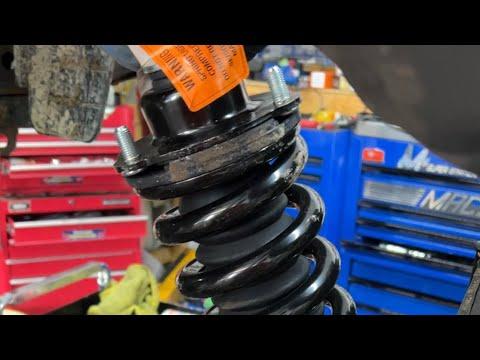
This repair replaces the front strut assemblies on your Tacoma. The strut assembly supports vehicle weight, controls bouncing, and keeps the front tires planted on the road.
For a first-time DIYer, the safest approach is to install complete loaded strut assemblies, which come with the spring already installed. This avoids using a coil spring compressor, which can be dangerous if used incorrectly.
Difficulty Level: Intermediate | Estimated Time: 3-5 hours
⚠️ Safety & Precautions
- ⚠️ Support your Tacoma with jack stands before working underneath. Never rely on a floor jack alone.
- ⚠️ Replace front struts in pairs. Replacing only one side can cause uneven handling and braking.
- ⚠️ Do not loosen the center nut on the top of a strut assembly unless the spring is safely compressed by the correct equipment.
- ⚠️ The coil spring stores a large amount of energy. Use complete loaded struts if you are not experienced with spring compressors.
- ⚠️ Wear safety glasses and gloves. Suspension parts can shift suddenly when bolts are removed.
- ⚠️ A wheel alignment is required after replacing the struts.
🔧 Required Tools
You'll need the following tools for this repair:
- Floor jack (rated 3-ton minimum)
- Jack stands (rated 3-ton minimum)
- Wheel chocks
- 21mm lug nut socket
- 1/2-inch drive breaker bar
- 1/2-inch drive torque wrench
- 3/8-inch drive ratchet
- 1/2-inch drive ratchet
- 14mm socket
- 17mm socket
- 19mm socket
- 22mm socket
- 14mm wrench
- 17mm wrench
- 19mm wrench
- 22mm wrench
- 12-inch socket extension
- Trim clip removal tool
- Pry bar 18-inch
- Ball-peen hammer 16 oz
- Paint marker
- Penetrating oil spray
- Safety glasses
- Mechanic gloves
🔩 Required Parts
HowToo sells all the parts you need for this repair:
- Front loaded strut assembly - Left: Qty: 1
- Front loaded strut assembly - Right: Qty: 1
- Front sway bar end link nuts - Qty: 2
- Front lower strut mounting nuts - Qty: 2
- Front upper strut mounting nuts - Qty: 6
Note: Loaded strut means the shock, coil spring, upper mount, and related pieces are already assembled as one unit.
📋 Before You Begin
- Park your Tacoma on flat, solid ground.
- Set the parking brake and place wheel chocks behind the rear tires.
- Loosen the front lug nuts slightly before lifting the truck.
- Spray penetrating oil on the lower strut bolts, upper strut nuts, and sway bar end link nuts. Let it soak for 10-15 minutes.
- Take a photo of each front strut before removal. This helps you compare the new part orientation.
🔨 Step-by-Step Instructions
Follow these steps in order:
Step 1: Loosen the Front Wheel Lug Nuts
- Use a 21mm lug nut socket and 1/2-inch drive breaker bar to loosen each front lug nut about one turn.
- Do not remove the lug nuts yet. The tire touching the ground keeps the wheel from spinning.
- Tip: Loosen before lifting.
Step 2: Lift and Support the Front of the Truck
- Use a floor jack rated 3-ton minimum to lift the front of your Tacoma from a solid front frame or crossmember lift point.
- Place jack stands rated 3-ton minimum under the frame rails.
- Slowly lower the truck onto the jack stands.
- Lightly shake the truck by hand to confirm it is stable before removing the wheels.
Step 3: Remove the Front Wheels
- Use the 21mm lug nut socket to remove the front lug nuts.
- Remove both front wheels and place them flat under the frame as an extra safety backup.
Step 4: Mark the Strut Position
- Use a paint marker to mark the position of the lower strut mount and bolt direction.
- This does not replace an alignment, but it helps keep the truck close enough to drive carefully to an alignment shop.
Step 5: Remove the Sway Bar End Link Nuts
- The sway bar helps reduce body roll when turning.
- Use a 17mm socket and 17mm wrench to remove the sway bar end link nut from each side if the bar limits strut movement.
- Move the sway bar slightly out of the way by hand.
- If the stud spins, hold it with the correct wrench while turning the nut with the 17mm socket.
Step 6: Support the Lower Control Arm
- The lower control arm is the large suspension arm under the strut.
- Place the floor jack under the lower control arm and raise it just enough to support the arm.
- Do not lift the truck off the jack stands.
Step 7: Remove the Lower Strut Mounting Bolt
- Use a 19mm socket and 19mm wrench to loosen and remove the lower strut mounting nut and bolt.
- If the bolt is tight, use the 1/2-inch drive breaker bar for extra leverage.
- Tap the bolt out carefully with a ball-peen hammer 16 oz if needed.
- Keep your hands clear of pinch points around the control arm.
Step 8: Remove the Upper Strut Mount Nuts
- Open the hood.
- Locate the three upper strut mounting nuts at the top of the strut tower.
- Use a 14mm socket, 3/8-inch drive ratchet, and 12-inch socket extension to remove the three upper mounting nuts.
- Do not remove or loosen the large center nut on the strut.
- Hold the strut with one hand while removing the last nut so it does not drop suddenly.
Step 9: Remove the Old Strut Assembly
- Lower the floor jack under the lower control arm slightly to create room.
- Use a pry bar 18-inch only if needed to gently guide the lower control arm downward.
- Pull the strut assembly out through the wheel opening.
- Do not stretch the brake hose or ABS wheel speed sensor wire.
Step 10: Compare the New Loaded Strut
- Place the old and new struts side by side.
- Confirm the upper studs, lower mount, spring direction, and left/right labeling match.
- Use your earlier photo to confirm the new loaded strut is clocked the same way.
Step 11: Install the New Strut Assembly
- Guide the new loaded strut into the wheel opening by hand.
- Line up the upper studs with the holes in the strut tower.
- Install the new upper strut mounting nuts by hand first.
- Use a 14mm socket and 3/8-inch drive ratchet to snug the upper nuts evenly.
- Do not fully tighten them yet.
Step 12: Install the Lower Strut Bolt
- Use the floor jack to slowly raise or lower the lower control arm until the lower strut hole lines up.
- Slide the lower strut bolt through by hand.
- Install the new nut by hand.
- Use a 19mm socket and 19mm wrench to snug the lower strut bolt.
Step 13: Tighten the Strut Fasteners
- Use a 14mm socket and 1/2-inch drive torque wrench to tighten the upper strut mounting nuts to Torque to 64 Nm (47 ft-lbs).
- Use a 19mm socket, 19mm wrench, and 1/2-inch drive torque wrench to tighten the lower strut mounting bolt to Torque to 100 Nm (74 ft-lbs).
- If your lower hardware uses a larger head, use the matching 22mm socket and 22mm wrench.
Step 14: Reinstall the Sway Bar End Links
- Move the sway bar back into position by hand.
- Install the sway bar end link nuts by hand.
- Use a 17mm socket, 17mm wrench, and 1/2-inch drive torque wrench to tighten the sway bar end link nuts to Torque to 70 Nm (52 ft-lbs).
Step 15: Repeat on the Other Side
- Repeat Steps 4 through 14 on the other front strut.
- Work slowly and compare each side as you go.
- Tip: Finish one side before starting the other.
Step 16: Reinstall the Front Wheels
- Install the wheels by hand.
- Thread each lug nut by hand first to avoid cross-threading.
- Use a 21mm lug nut socket and 1/2-inch drive ratchet to snug the lug nuts in a star pattern.
Step 17: Lower the Truck and Torque the Lug Nuts
- Use the floor jack rated 3-ton minimum to lift the truck slightly off the jack stands.
- Remove the jack stands rated 3-ton minimum.
- Lower the truck until the tires touch the ground.
- Use a 21mm lug nut socket and 1/2-inch drive torque wrench to tighten the lug nuts in a star pattern to Torque to 113 Nm (83 ft-lbs).
Step 18: Bounce and Recheck
- Push down firmly on the front bumper a few times to help the suspension settle.
- Use a 1/2-inch drive torque wrench to recheck the lug nut torque after the truck is fully on the ground.
- Visually confirm the brake hoses and ABS wires are not twisted or stretched.
✅ After Repair
- ✅ Drive slowly around the block and listen for clunks, rubbing, or pulling.
- ✅ If the steering wheel is off-center or the truck pulls, stop driving except to reach an alignment shop.
- ✅ Get a professional front wheel alignment as soon as possible.
- ✅ Recheck lug nut torque after 25-50 miles.
- ✅ Reinspect the lower strut bolts and sway bar links after the first short drive.
💰 DIY vs Shop Cost
Shop Cost: $650-$1,100 (parts + labor)
DIY Cost: $250-$600 (parts only)
You Save: $300-$500 by doing it yourself!
Shop labor rates vary but typically run $100-$150/hour. This repair takes a shop approximately 2-3 hours, plus alignment time.
🎯 Ready to get started?
HowToo makes it easy: same-day/2-day shipping on every part, plus all the tools and specialty tools you need! Check out the parts and tools sections below to add everything to your cart.