

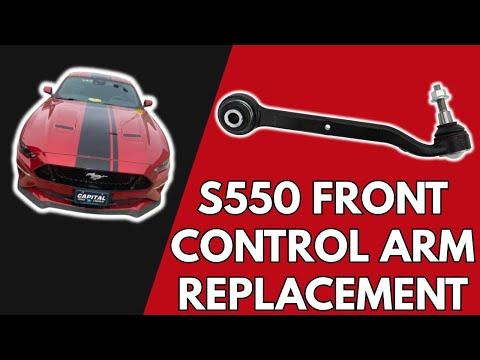







How to Replace Front Lower Control Arms on a 2015-2023 Ford Mustang (Engine: V8 5.0L)
Step-by-step suspension repair guide with tools, parts, torque specs, and alignment tips for 2015, 2016, 2017, 2018, 2019, 2020, 2021, 2022, 2023
How to Replace Front Lower Control Arms on a 2015-2023 Ford Mustang (Engine: V8 5.0L)
Step-by-step suspension repair guide with tools, parts, torque specs, and alignment tips for 2015, 2016, 2017, 2018, 2019, 2020, 2021, 2022, 2023


🔧 Mustang - Front Control Arm Replacement
This job replaces the front lower control arms on your Mustang. The control arms locate the front wheels and hold key suspension bushings and ball joints, so worn arms can cause clunks, wandering, uneven tire wear, or loose steering feel.
Difficulty Level: Advanced | Estimated Time: 3-5 hours
⚠️ Safety & Precautions
- ⚠️ Suspension parts are under load. Support your Mustang securely with jack stands before working underneath.
- ⚠️ Never rely on a floor jack alone. A floor jack lifts the car; jack stands hold it safely.
- ⚠️ Wear safety glasses and mechanic gloves. Rust, dirt, and spring-loaded suspension movement can injure you.
- ⚠️ Do not loosen the front cradle/subframe unless a service procedure requires it. This repair should not require subframe removal.
- ⚠️ Tighten final control arm bushing bolts with the suspension at normal ride height. This prevents twisting and premature bushing failure.
- ⚠️ A wheel alignment is required after replacing control arms.
🔧 Required Tools
You'll need the following tools for this repair:
- Floor jack (rated 3-ton minimum)
- Jack stands (rated 3-ton minimum)
- Wheel chocks
- Safety glasses
- Mechanic gloves
- 1/2-inch drive breaker bar
- 1/2-inch drive torque wrench
- 3/8-inch drive ratchet
- 1/2-inch drive ratchet
- 13mm socket
- 15mm socket
- 18mm socket
- 21mm socket
- 22mm socket
- 24mm socket
- 18mm wrench
- 21mm wrench
- 22mm wrench
- Trim clip removal tool
- Ball joint separator (specialty)
- Dead blow hammer
- Pry bar set
- Paint marker
- Penetrating oil
- Wire brush
🔩 Required Parts
HowToo sells all the parts you need for this repair:
- Front lower control arm - Left: Qty: 1
- Front lower control arm - Right: Qty: 1
- Front lower control arm ball joint nuts - Qty: 2
- Front lower control arm mounting bolts and nuts - Qty: 1 set
- Front wheel alignment service - Qty: 1
Note: Replace control arms in pairs when possible. This keeps handling and braking balanced side-to-side.
📋 Before You Begin
- Park your Mustang on level ground.
- Set the parking brake and place wheel chocks behind the rear tires.
- Loosen the front wheel lug nuts slightly before lifting the car.
- Spray penetrating oil on the control arm mounting bolts and ball joint nuts. Let it soak for 10-15 minutes.
- Use a paint marker to mark the position of the original control arm hardware before removal. This helps keep the alignment close enough to drive to an alignment shop.
- A ball joint separator is a tool that presses the tapered ball joint stud out of the steering knuckle without hammering directly on the joint.
🔨 Step-by-Step Instructions
Follow these steps in order:
Step 1: Loosen the Front Wheels
- Use a 21mm socket and breaker bar to loosen the front lug nuts about half a turn.
- Do not remove the lug nuts yet.
- Loosen wheels before lifting.
Step 2: Raise and Support the Front of the Car
- Use a floor jack to lift the front of your Mustang at a safe front jacking point.
- Place jack stands under the proper front support points.
- Lower the car gently onto the jack stands.
- Give the car a light shake with both hands to confirm it is stable.
Step 3: Remove the Front Wheels
- Use a 21mm socket to remove the loosened lug nuts.
- Remove both front wheels and set them flat on the ground.
Step 4: Inspect and Mark the Control Arm Mounts
- Use a paint marker to mark the position of each control arm mounting bolt and washer before removal.
- Use a wire brush to clean exposed bolt threads.
- Apply penetrating oil to the ball joint nut and inner control arm mounting nuts.
Step 5: Remove Any Splash Shield or Access Panel Blocking the Arm
- Use a trim clip removal tool to remove plastic push clips if a lower shield blocks access.
- Use a 7mm, 8mm, or 10mm socket only if your installed lower panel uses small screws instead of clips.
- Set the panel and clips aside in order.
Step 6: Support the Steering Knuckle
- Use the floor jack under the outer edge of the front suspension to lightly support the steering knuckle area.
- Do not lift the car off the jack stands.
- This keeps the knuckle from dropping suddenly when the ball joint is released.
Step 7: Remove the Lower Ball Joint Nut
- Use a 21mm or 22mm socket and ratchet to remove the lower ball joint nut at the steering knuckle.
- If the stud spins, use light upward pressure with the floor jack under the control arm while loosening the nut.
- Discard the old ball joint nut if the replacement arm includes a new one.
Step 8: Separate the Ball Joint from the Steering Knuckle
- Install the ball joint separator between the lower control arm ball joint and steering knuckle.
- Use the correct socket or wrench for your separator tool and tighten it slowly until the taper pops free.
- Do not strike the aluminum knuckle directly with a steel hammer.
- The pop sound is normal.
Step 9: Remove the Inner Control Arm Mounting Hardware
- Use an 18mm, 21mm, 22mm, or 24mm socket and matching wrench as needed to remove the inner control arm mounting bolts and nuts.
- Keep track of bolt direction and washer position.
- Use a breaker bar if the bolts are tight.
- Do not force the bolt at an angle. Support the arm with one hand as the bolt comes out.
Step 10: Remove the Old Control Arm
- Use a pry bar to gently work the control arm out of its mounting pocket.
- Lower the arm away from the steering knuckle.
- Compare the old and new control arms side by side before installation.
- Make sure the ball joint angle, bushing locations, and mounting points match.
Step 11: Install the New Control Arm
- Position the new control arm into the inner mounting pockets by hand.
- Use a dead blow hammer only if light tapping is needed.
- Install the inner bolts and nuts finger-tight only.
- Do not fully tighten the bushing bolts yet.
- Finger-tight means snug by hand.
Step 12: Reconnect the Ball Joint
- Guide the new ball joint stud into the steering knuckle by hand.
- Install the new ball joint nut.
- Use a 21mm or 22mm socket to tighten the nut.
- Torque to 115 Nm (85 ft-lbs) unless the replacement part instructions specify a different value.
Step 13: Set the Suspension at Ride Height
- Use the floor jack under the lower control arm or knuckle area to raise the suspension until the control arm sits close to its normal driving angle.
- Do not lift the car off the jack stands.
- This step prevents damaging the new control arm bushings.
Step 14: Tighten the Inner Control Arm Mounting Bolts
- Use the correct socket and wrench to tighten the inner control arm mounting bolts while the suspension is held at ride height.
- Torque to 175 Nm (129 ft-lbs) for large inner control arm fasteners unless the supplied hardware instructions specify otherwise.
- If your replacement arm uses new hardware, follow the torque sheet included with the parts.
Step 15: Repeat on the Other Side
- Repeat Steps 4-14 on the opposite front control arm.
- Use the same tools and the same safety steps.
- Replace in pairs for the best steering feel and tire wear.
Step 16: Reinstall Any Removed Panels
- Use the trim clip removal tool by hand to reinstall plastic clips.
- Use the correct small socket if screws were removed.
- Make sure no shield is rubbing the suspension or tire.
Step 17: Reinstall the Front Wheels
- Install the front wheels by hand.
- Use a 21mm socket to snug the lug nuts in a star pattern.
- A star pattern means tightening across the wheel, not around in a circle.
Step 18: Lower the Car and Torque the Wheels
- Use the floor jack to lift the car slightly off the jack stands.
- Remove the jack stands.
- Lower your Mustang fully to the ground.
- Use a 21mm socket and torque wrench to tighten the lug nuts in a star pattern.
- Torque to 204 Nm (150 ft-lbs).
✅ After Repair
- ✅ Turn the steering wheel lock-to-lock while parked and listen for rubbing, popping, or binding.
- ✅ Test drive slowly at first. Listen for clunks and confirm the steering wheel returns smoothly.
- ✅ Get a professional four-wheel alignment immediately after the repair.
- ✅ Recheck the lug nut torque after 25-50 miles. Use a 21mm socket and torque wrench: Torque to 204 Nm (150 ft-lbs).
- ✅ If the steering wheel is off-center or the car pulls, do not ignore it. Alignment is required.
💰 DIY vs Shop Cost
Shop Cost: $700-$1,200 (parts + labor + alignment)
DIY Cost: $250-$600 (parts only, alignment not included)
You Save: $350-$600 by doing it yourself!
Shop labor rates vary but typically run $100-$150/hour. This repair takes a shop approximately 2.5-4.0 hours.
🎯 Ready to get started?
HowToo makes it easy: same-day/2-day shipping on every part, plus all the tools and specialty tools you need! Check out the parts and tools sections below to add everything to your cart.