

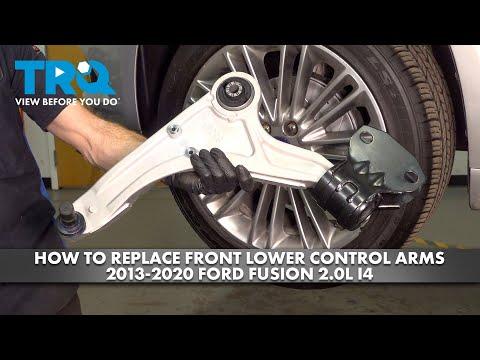





How to Replace Front Lower Control Arms on a 2013-2020 Ford Fusion
Step-by-step suspension repair guide with tools, parts, safety tips, and alignment notes for 2013, 2014, 2015, 2016, 2017, 2018, 2019, 2020
How to Replace Front Lower Control Arms on a 2013-2020 Ford Fusion
Step-by-step suspension repair guide with tools, parts, safety tips, and alignment notes for 2013, 2014, 2015, 2016, 2017, 2018, 2019, 2020


🔧 Fusion - Front Lower Control Arm Replacement
This repair replaces the front lower control arms on your Fusion. The control arm connects the front wheel hub area to the body and holds the wheel in the correct position while the suspension moves.
Difficulty Level: Advanced | Estimated Time: 3-5 hours
⚠️ Safety & Precautions
- ⚠️ Support your Fusion with jack stands only. Never work under a vehicle held by a jack alone.
- ⚠️ The front suspension is heavy and can shift suddenly when bolts are removed.
- ⚠️ Do not loosen or tighten final control arm bushing bolts while the suspension is hanging. Final tightening should be done at normal ride height to prevent bushing damage.
- ⚠️ An alignment is required after replacing control arms.
- ⚠️ Battery disconnect is not required for this repair.
🔧 Required Tools
You'll need the following tools for this repair:
- Floor jack (rated 3-ton minimum)
- Jack stands (rated 3-ton minimum)
- Wheel chocks
- 19mm lug nut socket
- 1/2-inch drive breaker bar
- 1/2-inch drive torque wrench
- 3/8-inch drive ratchet
- 13mm socket
- 15mm socket
- 18mm socket
- 21mm socket
- 18mm wrench
- 21mm wrench
- Ball joint separator (specialty)
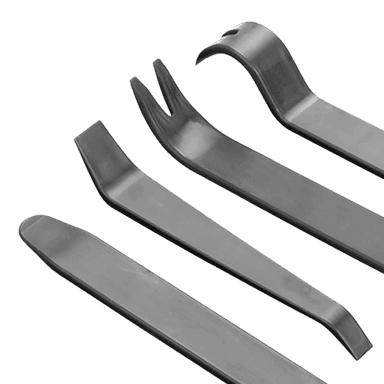
- Pry bar
- Rubber mallet
- Paint marker
- Penetrating oil
- Safety glasses
- Mechanic gloves
🔩 Required Parts
HowToo sells all the parts you need for this repair:
- Front lower control arm assembly - Qty: 1 per side
- Front lower control arm assemblies - Replace in pairs - Qty: 2
- Lower ball joint pinch bolt and nut - Qty: 1 per side
- Front lower control arm mounting bolts - Qty: as required
- Front wheel alignment - Qty: 1
📋 Before You Begin
- Park your Fusion on level ground.
- Set the parking brake.
- Place wheel chocks behind the rear wheels.
- Spray the control arm mounting bolts and lower ball joint pinch bolt with penetrating oil.
- A ball joint separator is a tool that separates the ball joint from the steering knuckle without hammering directly on the joint.
- Use a paint marker to mark bolt positions before removal. This helps keep the alignment close enough to drive to an alignment shop.
🔨 Step-by-Step Instructions
Follow these steps in order:
Step 1: Loosen the front wheel lug nuts
- Use a 19mm lug nut socket and 1/2-inch drive breaker bar to loosen the front lug nuts about one turn.
- Do not remove the lug nuts yet.
Step 2: Raise and support the front of the vehicle
- Use a floor jack (rated 3-ton minimum) to lift the front of your Fusion at the front subframe jacking area.
- Place jack stands (rated 3-ton minimum) under solid front support points.
- Lower the vehicle gently onto the jack stands.
- Shake the vehicle lightly by hand to confirm it is stable before working underneath.
Step 3: Remove the front wheel
- Use the 19mm lug nut socket and 3/8-inch drive ratchet to remove the lug nuts.
- Remove the wheel by hand and place it flat under the rocker area as an extra safety backup.
Step 4: Inspect the control arm layout
- Use safety glasses and mechanic gloves.
- Identify the lower ball joint connection at the steering knuckle.
- Identify the front and rear inner control arm mounting points at the subframe.
- Use a paint marker to mark the position of the control arm brackets and bolts before removal.
Step 5: Remove the lower ball joint pinch bolt
- Use an 18mm socket and 18mm wrench to remove the lower ball joint pinch bolt and nut at the steering knuckle.
- If corrosion is present, apply penetrating oil and allow it to soak for a few minutes.
- Do not reuse a badly corroded or stretched pinch bolt.
Step 6: Separate the ball joint from the steering knuckle
- Use a ball joint separator (specialty) to separate the lower ball joint stud from the steering knuckle.
- Use a pry bar to gently push the control arm downward if needed.
- Do not pull hard on the CV axle or brake hose while separating the joint.
- Go slow and protect the boot.
Step 7: Remove the control arm mounting bolts
- Support the control arm by hand or with the floor jack (rated 3-ton minimum).
- Use a 15mm socket, 18mm socket, or 21mm socket as fitted to remove the inner control arm mounting bolts.
- Use an 18mm wrench or 21mm wrench to hold the nut if the bolt spins.
- Remove the bolts and note their positions for reassembly.
Step 8: Remove the old control arm
- Use a pry bar to gently work the old control arm out of the subframe pockets.
- Use a rubber mallet only if light tapping is needed.
- Do not bend the subframe brackets.
Step 9: Position the new control arm
- Slide the new front lower control arm assembly into the subframe pockets by hand.
- Install the inner mounting bolts by hand first.
- Do not fully tighten the bushing bolts yet.
- The rubber bushing is the flexible mount where the control arm bolts to the vehicle body.
Step 10: Reconnect the lower ball joint
- Use the pry bar carefully to align the lower ball joint stud with the steering knuckle.
- Push the ball joint fully into the knuckle by hand.
- Install the new lower ball joint pinch bolt and nut by hand.
- Use an 18mm socket, 18mm wrench, and 1/2-inch drive torque wrench to tighten the pinch bolt snugly.
- Torque to manufacturer specification for your Fusion.
Step 11: Pre-tighten the inner control arm bolts
- Use the correct size 15mm socket, 18mm socket, or 21mm socket with the 3/8-inch drive ratchet to lightly snug the inner bolts.
- Do not final torque the inner bushing bolts while the suspension is hanging.
Step 12: Reinstall the wheel
- Install the wheel by hand.
- Use the 19mm lug nut socket and 3/8-inch drive ratchet to snug the lug nuts in a star pattern.
Step 13: Load the suspension to ride height
- Use the floor jack (rated 3-ton minimum) to carefully raise the control arm area until the suspension sits near normal ride height.
- Keep the vehicle safely supported by the jack stands (rated 3-ton minimum).
- This step prevents twisting the new rubber bushings at rest.
Step 14: Final tighten the control arm mounting bolts
- Use the correct size 15mm socket, 18mm socket, or 21mm socket with the 1/2-inch drive torque wrench.
- Final tighten the inner control arm mounting bolts with the suspension loaded at ride height.
- Torque to manufacturer specification for your Fusion.
Step 15: Lower the vehicle and torque the wheel
- Use the floor jack (rated 3-ton minimum) to lift slightly and remove the jack stands (rated 3-ton minimum).
- Lower your Fusion to the ground.
- Use the 19mm lug nut socket and 1/2-inch drive torque wrench to tighten the lug nuts in a star pattern.
- Torque to 135 Nm (100 ft-lbs).
✅ After Repair
- ✅ Bounce the front of your Fusion gently and listen for clunks.
- ✅ Test drive slowly at first and avoid highway speeds until the steering feels stable.
- ✅ Schedule a front wheel alignment immediately after the repair.
- ✅ Recheck the area for loose hardware after the first short drive.
- ✅ If the steering wheel is off-center, the tires squeal, or the vehicle pulls, do not keep driving before alignment.
💰 DIY vs Shop Cost
Shop Cost: $600-$1,100 for both front lower control arms including alignment
DIY Cost: $180-$450 for parts, plus alignment
You Save: $300-$600 by doing it yourself!
Shop labor rates vary but typically run $100-$150/hour. This repair takes a shop approximately 2.5-4.0 hours.
🎯 Ready to get started?
HowToo makes it easy: same-day/2-day shipping on every part, plus all the tools and specialty tools you need! Check out the parts and tools sections below to add everything to your cart.