

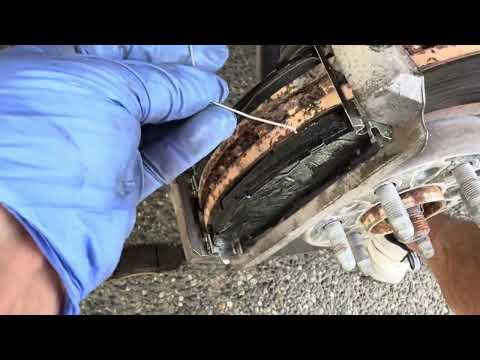







How to Replace Front Brake Pads on a 2018-2021 Chevrolet Traverse
Step-by-step DIY guide with tools, parts, torque specs, safety tips, and bedding procedure for 2018, 2019, 2020, 2021
How to Replace Front Brake Pads on a 2018-2021 Chevrolet Traverse
Step-by-step DIY guide with tools, parts, torque specs, safety tips, and bedding procedure for 2018, 2019, 2020, 2021


🔧 Traverse - Front Brake Pad Replacement
This repair replaces the front brake pads on your Traverse. Worn pads can cause squealing, longer stopping distance, brake dust, or grinding if ignored.
Difficulty Level: Beginner | Estimated Time: 1.5-2.5 hours
⚠️ Safety & Precautions
- ⚠️ Work on a flat, solid surface and never rely on a jack alone.
- ⚠️ Use jack stands before putting any part of your body near the wheel well.
- ⚠️ Brake dust can be harmful; avoid blowing it with compressed air.
- ⚠️ Brake fluid can damage paint, so wipe spills immediately with a clean shop towel.
- ⚠️ Do not press the brake pedal while the caliper is removed.
- ⚠️ Battery disconnect is not required for front brake pad replacement on your Traverse.
🔧 Required Tools
You'll need the following tools for this repair:
- Floor jack (rated 3-ton minimum)
- Jack stands (rated 3-ton minimum)
- Wheel chocks
- 22mm lug nut socket
- Ratchet wrench
- Breaker bar 1/2-inch drive
- Torque wrench 1/2-inch drive
- 14mm socket
- 18mm socket
- Flathead screwdriver
- C-clamp or disc brake piston compressor (specialty)
- Brake caliper hanger hook (specialty)
- Wire brush
- Brake cleaner spray
- Shop towels
- Nitrile gloves
- Safety glasses
🔩 Required Parts
HowToo sells all the parts you need for this repair:
- Front brake pad set - Qty: 1
- Front brake pad hardware kit - Qty: 1
- Brake lubricant - Qty: 1
- DOT 3 brake fluid - Qty: 1 small bottle
📋 Before You Begin
- 🅿️ Park your Traverse on level ground and shift to Park.
- 🧱 Place wheel chocks behind the rear wheels.
- 🚫 Do not set the parking brake if you are only doing the front brakes, unless needed to stabilize the vehicle.
- 🧤 Put on safety glasses and gloves before removing the wheels.
- 📌 Open the hood and check the brake fluid level. If the reservoir is very full, remove a small amount with a clean suction tool before compressing caliper pistons.
- 📘 A caliper is the clamp-shaped brake part that squeezes the pads against the rotor.
- 📘 A rotor is the round metal disc behind the wheel.
🔨 Step-by-Step Instructions
Follow these steps in order:
Step 1: Loosen the Front Lug Nuts
- Use the 22mm lug nut socket and breaker bar 1/2-inch drive to loosen each front lug nut about 1/2 turn.
- Do this while the tires are still on the ground so the wheels do not spin.
- Tip: Loosen, do not remove yet.
Step 2: Lift and Support the Front of the Vehicle
- Use the floor jack at the front subframe lift area to raise the front of your Traverse.
- Place jack stands under the approved front support points on both sides.
- Slowly lower the vehicle onto the jack stands.
- Lightly shake the vehicle by hand to confirm it is stable before working.
Step 3: Remove the Front Wheels
- Use the 22mm lug nut socket and ratchet wrench to remove the loosened lug nuts.
- Remove both front wheels and set them flat on the ground away from your work area.
Step 4: Inspect the Brake Assembly
- Use a flashlight if available and look at the pad thickness, rotor surface, caliper, and brake hose.
- Use safety glasses and check for fluid leaks or torn rubber parts.
- If the rotor is deeply grooved, cracked, or below minimum thickness, replace the rotors with the pads.
Step 5: Remove the Lower Caliper Guide Pin Bolt
- Turn the steering wheel slightly to give yourself more room on the side you are working on.
- Use the 14mm socket and ratchet wrench to remove the lower caliper guide pin bolt.
- A guide pin bolt holds the sliding caliper to its bracket and lets it move smoothly as the pads wear.
Step 6: Swing the Caliper Up
- Use a flathead screwdriver to gently pry the caliper upward if it is snug.
- Swing the caliper up and support it with a brake caliper hanger hook.
- Do not let the caliper hang by the rubber brake hose.
- Tip: Protect the brake hose.
Step 7: Remove the Old Brake Pads
- Use your hands or a flathead screwdriver to slide the old inner and outer brake pads out of the caliper bracket.
- Note the position of any wear indicator clip before removing the pads.
- A wear indicator is a small metal tab that squeals when pads get thin.
Step 8: Remove and Clean the Pad Hardware
- Use the flathead screwdriver to remove the old metal pad clips from the caliper bracket.
- Use the wire brush to clean rust and brake dust from the bracket where the clips sit.
- Spray the bracket area with brake cleaner spray and wipe it with shop towels.
Step 9: Install New Pad Hardware
- Use your hands to snap the new front brake pad hardware kit clips into the caliper bracket.
- Apply a thin layer of brake lubricant to the contact points where the brake pad ears slide in the clips.
- Do not put lubricant on the pad friction material or rotor face.
Step 10: Compress the Caliper Piston
- Place one old brake pad against the caliper piston.
- Use a C-clamp or disc brake piston compressor to slowly push the piston fully back into the caliper.
- Watch the brake fluid reservoir under the hood while compressing the piston.
- If fluid rises near the top, remove a small amount with a clean suction tool and wipe spills with shop towels.
- A piston is the round part inside the caliper that pushes the brake pad.
Step 11: Install the New Brake Pads
- Use your hands to slide the new inner and outer front brake pads into the bracket.
- Make sure the pad ears sit fully in the new metal clips.
- If the pads do not slide smoothly, remove them and recheck clip position and rust buildup.
- Tip: Pads should move freely.
Step 12: Lower the Caliper and Reinstall the Bolt
- Remove the brake caliper hanger hook and carefully swing the caliper down over the new pads.
- Use the 14mm socket and ratchet wrench to reinstall the lower caliper guide pin bolt.
- Torque to 28 Nm (21 ft-lbs) using the torque wrench 1/2-inch drive with the 14mm socket.
Step 13: Repeat on the Other Front Side
- Use the same 14mm socket, flathead screwdriver, wire brush, brake cleaner spray, and C-clamp or disc brake piston compressor on the other front brake.
- Always replace front brake pads as a full axle set, meaning both front wheels.
Step 14: Reinstall the Front Wheels
- Use your hands to start all lug nuts by threading them clockwise.
- Use the 22mm lug nut socket and ratchet wrench to snug the lug nuts in a star pattern.
- Do not fully torque the lug nuts while the wheels are off the ground.
Step 15: Lower the Vehicle and Torque the Lug Nuts
- Use the floor jack to raise the vehicle slightly off the jack stands.
- Remove the jack stands, then lower your Traverse to the ground.
- Use the torque wrench 1/2-inch drive and 22mm lug nut socket to tighten the lug nuts in a star pattern.
- Torque to 190 Nm (140 ft-lbs).
Step 16: Pump the Brake Pedal
- Before driving, sit in the driver seat and slowly press the brake pedal 5-10 times.
- The pedal may go low at first, then become firm as the caliper pistons move back into position.
- Use your eyes to recheck the brake fluid reservoir and top off with DOT 3 brake fluid if needed.
✅ After Repair
- ✅ Start your Traverse and press the brake pedal again. It should feel firm, not spongy.
- ✅ Check around both front calipers for leaks.
- ✅ Test drive slowly in a safe area and make several gentle stops.
- ✅ Bed in the pads with 8-10 moderate stops from about 30 mph to 5 mph, allowing a short cool-down between stops.
- ✅ Avoid hard braking for the first 100-200 miles unless it is an emergency.
- ✅ Recheck lug nut torque after the first short drive: 190 Nm (140 ft-lbs).
💰 DIY vs Shop Cost
Shop Cost: $250-$450 (parts + labor)
DIY Cost: $45-$120 (parts only)
You Save: $130-$330 by doing it yourself!
Shop labor rates vary but typically run $100-$150/hour. This repair takes a shop approximately 1.0-1.5 hours.
🎯 Ready to get started?
HowToo makes it easy: same-day/2-day shipping on every part, plus all the tools and specialty tools you need! Check out the parts and tools sections below to add everything to your cart.