

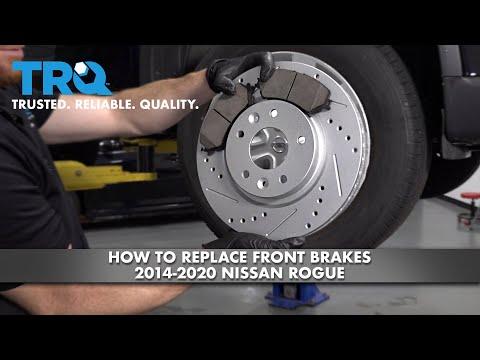






How to Replace Front Brake Pads on a 2014 Nissan Rogue
Step-by-step instructions with tools, parts, torque specs, and safety tips for 2014, 2015, 2016, 2017, 2018, 2019, 2020
How to Replace Front Brake Pads on a 2014 Nissan Rogue
Step-by-step instructions with tools, parts, torque specs, and safety tips for 2014, 2015, 2016, 2017, 2018, 2019, 2020


🔧 Front Brake Pads - Replacement
The front brake pads on your Rogue are replaced by removing the caliper, swapping the pads, and reinstalling everything with the correct torque. This is a straightforward brake job, but you need to work carefully and keep grease off the rotor and pad surfaces.
Difficulty Level: Beginner | Estimated Time: 1.5-2.5 hours
⚠️ Safety & Precautions
- Work on a flat surface and set the parking brake before lifting the vehicle.
- Use jack stands. Never rely on a floor jack alone.
- Brake dust can be harmful. Wear safety glasses and gloves.
- Do not press the brake pedal with the caliper removed.
- Keep grease, oil, and brake fluid off the rotor and pad friction surfaces.
- If the brake fluid reservoir is full, compress the caliper piston slowly and watch for overflow.
🔧 Required Tools
You'll need the following tools for this repair:
- Floor jack (rated 3-ton minimum)
- Jack stands (rated 3-ton minimum)
- Wheel chocks
- 21mm lug wrench
- 14mm socket
- 17mm socket
- Ratchet
- Torque wrench
- Brake caliper compression tool (specialty)
- Flat-blade screwdriver
- Wire brush
- Brake cleaner
- Shop towels
- Safety glasses
- Nitrile gloves
🔩 Required Parts
HowToo sells all the parts you need for this repair:
- Front brake pad set - Qty: 1
- Brake pad hardware kit - Qty: 1
- Brake caliper grease - Qty: 1
- Brake cleaner - Qty: 1
📋 Before You Begin
- Park on level ground and chock the rear wheels.
- Loosen the front lug nuts before lifting the vehicle.
- Raise the front and support it securely on jack stands.
- Remove the front wheel.
🔨 Step-by-Step Instructions
Follow these steps in order:
Step 1: Remove the wheel
- Use a 21mm lug wrench to loosen and remove the wheel nuts.
- Set the wheel aside where it will not roll away.
Step 2: Remove the caliper
- Use a 14mm socket and ratchet to remove the caliper slide pin bolts.
- Lift the caliper off the bracket carefully.
- Support the caliper with wire or a hook so the brake hose is not stretched.
Step 3: Remove the old pads and hardware
- Pull the old brake pads out of the caliper bracket.
- Remove the pad clips and hardware from the bracket.
- Use a wire brush to clean rust from the pad contact points.
- Clean grooves help the new pads slide smoothly.
Step 4: Compress the caliper piston
- Use a brake caliper compression tool (specialty) to slowly push the piston back into the caliper.
- Watch the brake fluid reservoir while compressing the piston.
- If fluid is near the top, remove a small amount before continuing.
Step 5: Install the new hardware and pads
- Install the new pad clips from the brake pad hardware kit.
- Apply a thin layer of brake caliper grease to the pad ears and contact points only.
- Install the new brake pads into the bracket.
Step 6: Reinstall the caliper
- Slide the caliper over the new pads.
- Install the caliper slide pin bolts by hand first.
- Tighten the caliper slide pin bolts with a 14mm socket.
- Torque to 32 Nm (24 ft-lbs).
Step 7: Reinstall the wheel
- Put the wheel back on and hand-tighten the lug nuts.
- Lower the vehicle to the ground.
- Use a torque wrench and 21mm socket or lug tool to tighten the lug nuts.
- Torque to 108 Nm (80 ft-lbs).
Step 8: Repeat on the other side
- Replace the pads on the other front wheel the same way.
- Front pads should always be replaced in pairs.
✅ After Repair
- Press the brake pedal several times before driving to seat the pads.
- Check brake fluid level and top off only if needed.
- Test the brakes at low speed in a safe area.
- Listen for rubbing or clunking noises.
- New brake pads may need a short break-in period for best stopping power.
💰 DIY vs Shop Cost
Shop Cost: $250-$450 (parts + labor)
DIY Cost: $60-$140 (parts only)
You Save: $190-$310 by doing it yourself!
Shop labor rates vary but typically run $100-$150/hour. This repair takes a shop approximately 1-2 hours.
🎯 Ready to get started?
HowToo makes it easy: same-day/2-day shipping on every part, plus all the tools and specialty tools you need! Check out the parts and tools sections below to add everything to your cart.