

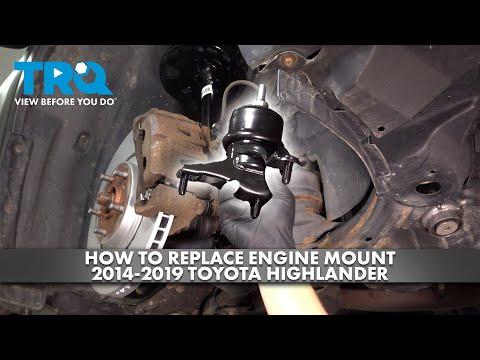



How to Replace Engine Mounts on a 2019 Toyota Highlander
Step-by-step DIY guide with required tools, parts, torque specs, and safety tips for 2009, 2010, 2011, 2012, 2013, 2014, 2015, 2016, 2017, 2018, 2019
How to Replace Engine Mounts on a 2019 Toyota Highlander
Step-by-step DIY guide with required tools, parts, torque specs, and safety tips for 2009, 2010, 2011, 2012, 2013, 2014, 2015, 2016, 2017, 2018, 2019


🔧 Highlander - Engine Mount Replacement
This repair replaces the mounts that hold the engine and transaxle steady in your Highlander. Bad mounts can cause vibration, clunking, or a heavy thump when shifting between Reverse and Drive.
Difficulty Level: Advanced | Estimated Time: 4-7 hours
Assumption: This covers replacing the right engine mount, left transaxle mount, front engine mount, and rear engine mount as a set.
⚠️ Safety & Precautions
- ⚠️ Support the engine before removing any mount. The engine can shift suddenly if it is not supported.
- ⚠️ Never work under your Highlander with only a floor jack holding it up. Always use jack stands.
- ⚠️ Disconnect the negative battery cable before moving wiring brackets or working near starter wiring.
- ⚠️ Let the engine and exhaust cool fully before working underneath.
- ⚠️ Replace one mount at a time when possible. This helps keep the engine aligned.
- ⚠️ A torque wrench is required. It tightens bolts to the correct measured tightness.
🔧 Required Tools
You'll need the following tools for this repair:
- 10mm socket
- 12mm socket
- 14mm socket
- 17mm socket
- 19mm socket
- 21mm socket
- 10mm wrench
- 12mm wrench
- 14mm wrench
- 17mm wrench
- 19mm wrench
- 3/8-inch drive ratchet
- 1/2-inch drive ratchet
- 1/2-inch drive breaker bar
- 3-inch extension
- 6-inch extension
- 12-inch extension
- Universal joint socket adapter
- Torque wrench 10-150 ft-lb
- Trim clip removal tool
- Flat blade screwdriver
- Needle nose pliers
- Floor jack rated 3-ton minimum
- Jack stands rated 3-ton minimum
- Wood block 2x6-inch
- Engine support bar 1,000-lb capacity (specialty)
- Wheel chocks
- Safety glasses
- Mechanic gloves
- Shop light
🔩 Required Parts
HowToo sells all the parts you need for this repair:
- Right engine mount - Qty: 1
- Left transaxle mount - Qty: 1
- Front engine mount - Qty: 1
- Rear engine mount - Qty: 1
- Engine mount bolts - Qty: As needed
- Transaxle mount bolts - Qty: As needed
- Underbody splash shield clips - Qty: As needed
📋 Before You Begin
- Park your Highlander on level ground.
- Shift to Park and set the parking brake.
- Place wheel chocks behind the rear wheels.
- Use a 10mm wrench to disconnect the negative battery cable.
- Use a floor jack rated 3-ton minimum to raise the front of your Highlander.
- Place jack stands rated 3-ton minimum under the front support points.
- Use an engine support bar 1,000-lb capacity across the engine bay if available. An engine support bar holds the engine from above while mounts are removed.
- If using a floor jack to help support the engine, place a wood block 2x6-inch between the jack and oil pan.
- Only support the engine. Do not lift it hard.
🔨 Step-by-Step Instructions
Follow these steps in order:
Step 1: Remove Intake Parts For Access
- Use your hands to pull the plastic engine cover straight up.
- Use a 10mm socket to loosen the air intake tube clamps.
- Use a 10mm socket to remove air box or intake duct bolts blocking the passenger-side mount.
- Use needle nose pliers to release small hose clamps if a hose must be moved.
- Use a flat blade screwdriver to gently help loosen stuck rubber intake ducts.
- Take photos before moving hoses.
Step 2: Remove The Lower Splash Shields
- Put on safety glasses and mechanic gloves.
- Use a trim clip removal tool to remove plastic splash shield clips.
- Use a 10mm socket to remove the splash shield bolts.
- Lower the shields and set them aside.
Step 3: Support The Engine
- Install the engine support bar 1,000-lb capacity across the top of the engine bay.
- Attach the support hooks to the factory engine lift points.
- Turn the support bar adjuster until the chain is lightly tight.
- Place the floor jack rated 3-ton minimum with a wood block 2x6-inch under the engine oil pan as backup support.
- Raise the jack only until the wood touches the oil pan.
- Do not crush or dent the oil pan.
Step 4: Replace The Right Engine Mount
- Use a shop light to locate the right mount on the passenger side of the engine bay.
- Use a 14mm socket and 17mm socket to remove any brackets blocking the mount.
- Use a 17mm socket and 1/2-inch drive breaker bar to loosen the mount through-bolt. A breaker bar is a long handle that gives extra leverage on tight bolts.
- Use a 17mm socket to remove the mount-to-engine bracket bolts.
- Use a 17mm socket or 19mm socket to remove the mount-to-body bolts.
- Use the floor jack rated 3-ton minimum to raise or lower the engine slightly until the old mount comes out easily.
- Install the new right engine mount in the same direction as the old mount.
- Start all bolts by hand before using tools. This prevents cross-threading.
- Use a torque wrench 10-150 ft-lb to tighten mount-to-body bolts to Torque to 64 Nm (47 ft-lbs).
- Use a torque wrench 10-150 ft-lb to tighten mount-to-engine bracket bolts to Torque to 64 Nm (47 ft-lbs).
- Use a torque wrench 10-150 ft-lb to tighten the mount through-bolt to Torque to 95 Nm (70 ft-lbs).
Step 5: Replace The Left Transaxle Mount
- Use a shop light to locate the left transaxle mount on the driver side. The transaxle is the transmission and front differential assembly.
- Use a 10mm socket to remove small wiring brackets from the work area.
- Use a 17mm socket, 12-inch extension, and 1/2-inch drive ratchet to loosen the mount through-bolt.
- Use a 17mm socket to remove the mount-to-body bolts.
- Use a 17mm socket or 19mm socket to remove mount bracket bolts from the transaxle if needed.
- Use the engine support bar 1,000-lb capacity or floor jack rated 3-ton minimum to slightly shift the engine/transaxle until the mount is free.
- Install the new left transaxle mount.
- Start all bolts by hand first.
- Use a torque wrench 10-150 ft-lb to tighten mount-to-body bolts to Torque to 64 Nm (47 ft-lbs).
- Use a torque wrench 10-150 ft-lb to tighten transaxle bracket bolts to Torque to 64 Nm (47 ft-lbs).
- Use a torque wrench 10-150 ft-lb to tighten the through-bolt to Torque to 95 Nm (70 ft-lbs).
Step 6: Replace The Front Engine Mount
- Move underneath the front of your Highlander and use a shop light to find the front mount near the radiator side of the subframe.
- Use a 17mm socket and 1/2-inch drive breaker bar to loosen the front mount through-bolt.
- Use a 17mm socket to remove the mount-to-subframe bolts.
- Use a universal joint socket adapter if the socket needs to work at an angle. A universal joint lets the socket bend slightly to reach awkward bolts.
- Use the floor jack rated 3-ton minimum to slightly adjust engine height until the mount slides out.
- Install the new front engine mount.
- Start all bolts by hand first.
- Use a torque wrench 10-150 ft-lb to tighten mount-to-subframe bolts to Torque to 64 Nm (47 ft-lbs).
- Use a torque wrench 10-150 ft-lb to tighten the through-bolt to Torque to 95 Nm (70 ft-lbs).
Step 7: Replace The Rear Engine Mount
- Use a shop light to locate the rear mount at the firewall side of the engine/transaxle assembly.
- Use a 17mm socket, 6-inch extension, and universal joint socket adapter to loosen the rear mount through-bolt.
- Use a 17mm socket and 12-inch extension to remove the mount-to-subframe bolts.
- Use a 14mm socket to remove a heat shield or small bracket if it blocks access.
- Use the floor jack rated 3-ton minimum to make tiny height adjustments until the rear mount comes out.
- Install the new rear engine mount in the same orientation as the old one.
- Start all bolts by hand first.
- Use a torque wrench 10-150 ft-lb to tighten rear mount-to-subframe bolts to Torque to 64 Nm (47 ft-lbs).
- Use a torque wrench 10-150 ft-lb to tighten the through-bolt to Torque to 95 Nm (70 ft-lbs).
Step 8: Reinstall Removed Parts
- Use a 14mm socket or 17mm socket to reinstall any removed mount braces.
- Use a torque wrench 10-150 ft-lb to tighten medium support bracket bolts to Torque to 49 Nm (36 ft-lbs).
- Use a 10mm socket to reinstall the air box and intake duct fasteners.
- Use a 10mm socket to tighten the intake tube clamps snugly.
- Use your hands to push the plastic engine cover back onto its rubber mounts.
- Use a trim clip removal tool and your hands to reinstall splash shield clips.
- Use a 10mm socket to reinstall splash shield bolts.
Step 9: Lower Your Highlander And Reconnect Battery
- Confirm every mount bolt is torqued before removing support.
- Remove the engine support bar 1,000-lb capacity.
- Use the floor jack rated 3-ton minimum to raise the front slightly.
- Remove the jack stands rated 3-ton minimum.
- Lower your Highlander slowly to the ground.
- Use a 10mm wrench to reconnect the negative battery cable.
✅ After Repair
- Start the engine and let it idle for 1-2 minutes.
- Listen for rattles, knocking, or parts touching the body.
- With your foot firmly on the brake, shift from Park to Reverse, then Neutral, then Drive.
- The engine should move slightly, not jump or slam.
- Take a short, gentle test drive.
- After the drive, look under the hood and under the vehicle for anything loose or rubbing.
- If idle feels odd after battery disconnect, let the engine idle with all accessories off for several minutes.
💰 DIY vs Shop Cost
Shop Cost: $900-$1,800 (parts + labor)
DIY Cost: $350-$850 (parts only)
You Save: $550-$950 by doing it yourself!
Shop labor rates vary but typically run $100-$150/hour. This repair takes a shop approximately 4-7 hours.
🎯 Ready to get started?
HowToo makes it easy: same-day/2-day shipping on every part, plus all the tools and specialty tools you need! Check out the parts and tools sections below to add everything to your cart.