

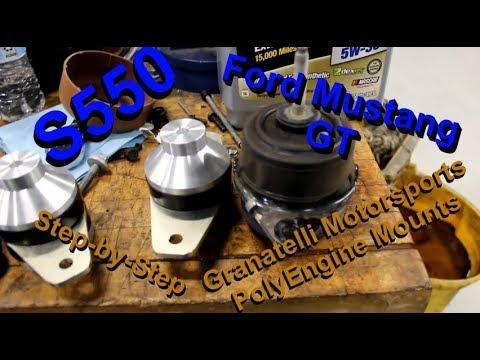





How to Replace Engine Mounts on a 2015-2021 Ford Mustang (Engine: Inline 4 2.3L)
Step-by-step DIY guide with tools, parts, safety tips, and engine support instructions for 2015, 2016, 2017, 2018, 2019, 2020, 2021
How to Replace Engine Mounts on a 2015-2021 Ford Mustang (Engine: Inline 4 2.3L)
Step-by-step DIY guide with tools, parts, safety tips, and engine support instructions for 2015, 2016, 2017, 2018, 2019, 2020, 2021


🔧 Mustang - Engine Mount Replacement
Replacing the engine mounts on your Mustang means supporting the engine, removing the worn mounts, and installing new mounts so the engine sits correctly again. Bad mounts can cause vibration, clunking, harsh shifting feel, or excessive engine movement under throttle.
Difficulty Level: Advanced | Estimated Time: 3-5 hours
⚠️ Safety & Precautions
- ⚠️ The engine must be safely supported before any engine mount fasteners are removed.
- ⚠️ Never place any part of your body under an unsupported engine.
- ⚠️ Use jack stands on solid lift points; never rely on a floor jack alone.
- 🔋 Disconnect the negative battery cable before working near the starter, wiring, or engine harness brackets.
- 🔥 Let the exhaust, turbocharger, catalytic converter, and engine cool fully before starting.
- 🧤 Wear safety glasses and mechanic gloves; engine bay edges and underbody shields can be sharp.
- 📌 This repair is much easier with the vehicle on a lift. A beginner should have an experienced helper nearby.
🔧 Required Tools
You'll need the following tools for this repair:
- Floor jack rated 3-ton minimum
- Jack stands rated 3-ton minimum
- Engine support bar 1,000 lb minimum (specialty)
- Wood block 2x6-inch
- 8mm socket
- 10mm socket
- 13mm socket
- 15mm socket
- 18mm socket
- 21mm socket
- Ratchet handle 3/8-inch drive
- Ratchet handle 1/2-inch drive
- Breaker bar 1/2-inch drive
- Torque wrench 3/8-inch drive
- Torque wrench 1/2-inch drive
- Socket extension 3-inch
- Socket extension 6-inch
- Socket extension 12-inch
- Universal joint socket adapter 3/8-inch drive
- Combination wrench 15mm
- Combination wrench 18mm
- Trim clip removal tool
- Flat-blade screwdriver 1/4-inch
- Paint marker white
- Work light LED
- Safety glasses
- Mechanic gloves
🔩 Required Parts
HowToo sells all the parts you need for this repair:
- Left engine mount - Qty: 1
- Right engine mount - Qty: 1
- Engine mount fastener kit - Qty: 1
- Underbody shield clips - Qty: As needed
Replace in pairs: Engine mounts should be replaced as a left/right set to keep engine height and vibration control even.
📋 Before You Begin
- 🚗 Park your Mustang on level ground, set the parking brake, and place the transmission in Park or 1st gear.
- ❄️ Let the engine cool completely before working near the turbocharger and exhaust.
- 🔋 Use a 10mm socket to disconnect the negative battery cable.
- ⬆️ Raise the front of the car with a floor jack rated 3-ton minimum and support it with jack stands rated 3-ton minimum.
- 🧠 An engine support bar is a beam that rests across the upper body structure and holds the engine from above.
- 🧠 If you do not have an engine support bar, use a floor jack with a wood block under the oil pan only to support weight gently, not to lift the car.
- 📌 Mark the original mount bracket positions with a paint marker white before loosening fasteners.
🔨 Step-by-Step Instructions
Follow these steps in order:
Step 1: Raise and Secure the Front of the Car
- Use a floor jack rated 3-ton minimum to lift the front of your Mustang at the front center jacking point.
- Place jack stands rated 3-ton minimum under the approved front pinch weld or frame support points.
- Gently shake the car by hand to confirm it is stable before going underneath.
- Keep the floor jack nearby, but do not rely on it as the only support.
Step 2: Disconnect the Battery
- Open the hood.
- Use a 10mm socket to loosen the negative battery terminal clamp.
- Move the negative cable away from the battery post so it cannot spring back.
Step 3: Remove the Lower Underbody Shield
- Use an 8mm socket to remove the lower shield screws.
- Use a trim clip removal tool to remove any plastic push clips.
- Lower the shield and set it aside.
- Keep clips grouped by location.
Step 4: Support the Engine
- Preferred method: install the engine support bar 1,000 lb minimum across the upper body support points.
- Attach the support hook or chain to a factory engine lifting eye and take up light tension.
- Alternate method: place a wood block 2x6-inch on a floor jack rated 3-ton minimum and position it under the flat reinforced area of the oil pan.
- Raise the jack only until it lightly contacts and supports the engine.
- Do not crush the oil pan or lift the vehicle off the jack stands.
Step 5: Mark Mount and Bracket Positions
- Use a paint marker white to mark where each engine mount bracket sits against the frame and engine bracket.
- This helps keep the engine aligned during reassembly.
Step 6: Remove Components Blocking Access
- Use a 10mm socket to remove any small harness brackets attached near the mounts.
- Use a 13mm socket to remove any brace or shield fasteners blocking access to the mount nuts.
- Move wiring gently by hand; do not pull hard on connectors.
- Use a flat-blade screwdriver 1/4-inch only to release clips, not to pry on wiring.
Step 7: Loosen the Left Engine Mount Fasteners
- Use an 18mm socket, socket extension 6-inch, and breaker bar 1/2-inch drive to loosen the lower left mount-to-frame fasteners.
- Use a 15mm socket and socket extension 12-inch to loosen the upper left mount-to-engine bracket fasteners.
- Use a universal joint socket adapter 3/8-inch drive if access is angled.
- Do not fully remove all fasteners until the engine is supported.
Step 8: Remove the Left Engine Mount
- Confirm the engine support bar or floor jack is holding light engine weight.
- Use an 18mm socket to remove the lower mount fasteners.
- Use a 15mm socket to remove the upper mount fasteners.
- Lift the engine slightly with the engine support bar adjuster or floor jack just enough to slide the mount out.
- Remove the left engine mount from the vehicle.
- Lift only as much as needed.
Step 9: Install the New Left Engine Mount
- Position the new left engine mount in the same orientation as the old mount.
- Start all fasteners by hand first to avoid cross-threading.
- Use a 15mm socket to snug the upper mount fasteners.
- Use an 18mm socket to snug the lower mount fasteners.
- Do not final-torque yet; leave the mount slightly adjustable.
Step 10: Loosen and Remove the Right Engine Mount
- Use an 18mm socket, socket extension 6-inch, and breaker bar 1/2-inch drive to loosen the lower right mount-to-frame fasteners.
- Use a 15mm socket and socket extension 12-inch to loosen the upper right mount-to-engine bracket fasteners.
- Use a universal joint socket adapter 3/8-inch drive where access is tight.
- Use the engine support bar adjuster or floor jack to slightly shift engine height if needed.
- Remove the right engine mount from the vehicle.
Step 11: Install the New Right Engine Mount
- Position the new right engine mount in the same orientation as the old mount.
- Start all fasteners by hand first.
- Use a 15mm socket to snug the upper fasteners.
- Use an 18mm socket to snug the lower fasteners.
- Make sure both mounts align with the paint marks made earlier.
Step 12: Settle the Engine onto the Mounts
- Slowly lower the engine support bar adjuster or floor jack until the engine weight rests fully on both new mounts.
- Check that no wiring, hoses, or brackets are pinched.
- Use a work light LED to inspect both sides closely.
Step 13: Final-Tighten the Engine Mount Fasteners
- Use a torque wrench 1/2-inch drive with the correct socket to tighten the mount-to-frame fasteners.
- Use a torque wrench 3/8-inch drive with the correct socket to tighten the mount-to-engine bracket fasteners.
- Torque specs vary by fastener position and fastener type; use the exact service information supplied with the replacement mount fastener kit.
- If using torque-to-yield bolts, replace them and do not reuse the old bolts.
Step 14: Reinstall Removed Brackets and Shields
- Use a 10mm socket to reinstall any wiring harness brackets.
- Use a 13mm socket to reinstall any braces or shields removed for access.
- Use an 8mm socket to reinstall the lower underbody shield screws.
- Use a trim clip removal tool or your fingers to reinstall plastic push clips.
Step 15: Reconnect the Battery and Lower the Car
- Use a 10mm socket to reconnect the negative battery cable.
- Use a floor jack rated 3-ton minimum to raise the car slightly off the jack stands.
- Remove the jack stands rated 3-ton minimum.
- Lower your Mustang slowly to the ground.
✅ After Repair
- ✅ Start the engine and let it idle while you listen for rattles, clunks, or unusual vibration.
- 👀 With the hood open, watch the engine while a helper gently shifts from Park to Drive and Reverse, or lightly loads the drivetrain with the brake held firmly.
- ⚠️ Keep hands, tools, and clothing away from belts, fans, and hot parts while the engine runs.
- 🚗 Take a short test drive and listen for clunks during acceleration, braking, and low-speed turns.
- 🔍 Recheck the mount area for shifted brackets, loose shields, or contact between the engine and body.
💰 DIY vs Shop Cost
Shop Cost: $650-$1,100 (parts + labor)
DIY Cost: $180-$450 (parts only)
You Save: $470-$650 by doing it yourself!
Shop labor rates vary but typically run $100-$150/hour. This repair takes a shop approximately 3-5 hours.
🎯 Ready to get started?
HowToo makes it easy: same-day/2-day shipping on every part, plus all the tools and specialty tools you need! Check out the parts and tools sections below to add everything to your cart.