

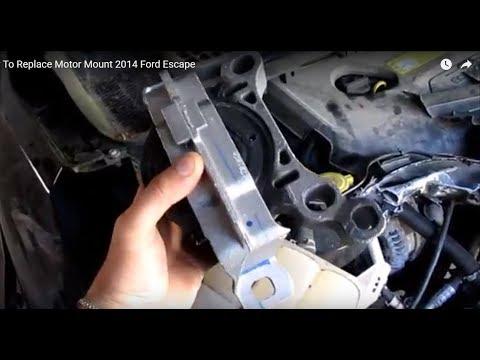



How to Replace Engine Mounts on a 2014 Ford Escape
Step-by-step guide with tools, parts, torque specs, safety tips, and cost savings for 2013, 2014, 2015, 2016, 2017, 2018, 2019
How to Replace Engine Mounts on a 2014 Ford Escape
Step-by-step guide with tools, parts, torque specs, safety tips, and cost savings for 2013, 2014, 2015, 2016, 2017, 2018, 2019


🔧 Escape - Engine Mount Replacement
Engine mounts hold the engine in position and reduce vibration inside the cabin. On your Escape, the main DIY-serviceable mounts are the passenger-side upper engine mount and the lower torque mount; replace one mount at a time so the engine stays controlled.
Difficulty Level: Intermediate | Estimated Time: 2-4 hours
⚠️ Safety & Precautions
- ⚠️ Support the engine before removing mount bolts. The engine can shift when a mount is removed.
- ⚠️ Never work under your Escape with only a floor jack holding it up. Use jack stands.
- ⚠️ Use a wood block between the jack and oil pan so the jack does not dent or crack the pan.
- ⚠️ Keep fingers away from the gap between the mount, bracket, and body.
- ⚠️ Disconnect the negative battery cable before working near wiring and metal brackets.
- ⚠️ Do not remove multiple mounts at the same time unless the engine and transmission are fully supported.
🔧 Required Tools
You'll need the following tools for this repair:
- 7mm socket
- 8mm socket
- 10mm socket
- 13mm socket
- 15mm socket
- 18mm socket
- 21mm socket
- 10mm wrench
- 1/4-inch ratchet
- 3/8-inch ratchet
- 1/2-inch ratchet
- 3-inch extension
- 6-inch extension
- Breaker bar
- Torque wrench rated 10-150 ft-lbs
- Floor jack rated 2-ton minimum
- Jack stands rated 2-ton minimum
- Wheel chocks
- Wood block 2x6
- Trim clip removal tool
- Flat-blade screwdriver
- Paint marker
- Work light
- Mechanic gloves
- Safety glasses
🔩 Required Parts
HowToo sells all the parts you need for this repair:
- Passenger-side upper engine mount - Qty: 1
- Lower engine torque mount - Qty: 1
- Engine mount bolts - Qty: as needed if stretched, rusted, or damaged
- Underbody splash shield clips - Qty: as needed if broken
📋 Before You Begin
- Park your Escape on flat, solid ground.
- Shift to Park and set the parking brake.
- Place wheel chocks behind the rear wheels.
- Let the engine cool completely.
- Use a 10mm wrench to disconnect the negative battery cable.
- A torque wrench is a tool that tightens bolts to the correct measured tightness.
- A breaker bar is a long handle used to safely loosen very tight bolts.
🔨 Step-by-Step Instructions
Follow these steps in order:
Step 1: Open the Engine Bay
- Use mechanic gloves and safety glasses.
- Use a work light to see the passenger-side upper mount area clearly.
- If equipped, lift the plastic engine cover straight up by hand.
Step 2: Move the Air Intake Tube Aside
- Use an 8mm socket and 1/4-inch ratchet to loosen the air intake hose clamp.
- Use a flat-blade screwdriver to gently release any plastic retaining tabs.
- Move the intake tube aside by hand to improve access.
- Take a photo first.
Step 3: Raise the Front of the Vehicle
- Use a floor jack rated 2-ton minimum to raise the front of your Escape.
- Place jack stands rated 2-ton minimum under the approved front support points.
- Lower the vehicle gently onto the jack stands.
- Leave the floor jack free so it can support the engine next.
Step 4: Remove the Lower Splash Shield
- Use a 7mm socket or 8mm socket with a 1/4-inch ratchet to remove the splash shield screws.
- Use a trim clip removal tool to remove plastic push clips. A trim clip tool lifts plastic clips without breaking them.
- Lower the shield by hand and set it aside.
Step 5: Support the Engine
- Place a wood block 2x6 on the pad of the floor jack rated 2-ton minimum.
- Position the wood block under the engine oil pan.
- Raise the jack slowly until the wood just contacts the oil pan.
- Lift only enough to support the engine. Do not raise the vehicle off the jack stands.
- Small jack movements only.
Step 6: Mark the Upper Mount Location
- Use a paint marker to outline the passenger-side upper engine mount position on the body bracket.
- This gives you a simple guide when placing the new mount.
Step 7: Remove the Passenger-Side Upper Mount Fasteners
- Use a 15mm socket, 3/8-inch ratchet, and 6-inch extension to loosen the mount-to-engine bracket fasteners.
- Use an 18mm socket, 1/2-inch ratchet, and breaker bar to loosen the body-side mount fasteners if tight.
- Remove the fasteners by hand after they are loose.
- If a bolt binds, use the floor jack rated 2-ton minimum to raise or lower the engine slightly until the bolt slides out easily.
Step 8: Remove the Passenger-Side Upper Mount
- Lift the old mount out by hand.
- If it feels stuck, use the floor jack rated 2-ton minimum to make a very small height adjustment.
- Do not force it with a pry bar against aluminum brackets.
Step 9: Install the New Passenger-Side Upper Mount
- Set the new passenger-side upper engine mount into place by hand.
- Start every nut and bolt by hand first to avoid cross-threading.
- Use the floor jack rated 2-ton minimum to slightly adjust engine height until all holes line up naturally.
- Use a 15mm socket, 18mm socket, 3/8-inch ratchet, and 1/2-inch ratchet to snug the fasteners evenly.
- Use a torque wrench rated 10-150 ft-lbs for final tightening.
- Torque mount-to-engine bracket fasteners to 80 Nm (59 ft-lbs).
- Torque mount-to-body fasteners to 90 Nm (66 ft-lbs).
Step 10: Remove the Lower Torque Mount
- Move under the front of your Escape with safety glasses on.
- Locate the lower torque mount between the engine/transmission assembly and the subframe.
- Use a 15mm socket or 18mm socket with a 1/2-inch ratchet to loosen the torque mount bolts.
- Use a breaker bar if the bolts are tight.
- Remove the bolts by hand and pull the lower mount out.
Step 11: Install the New Lower Torque Mount
- Place the new lower engine torque mount into position by hand.
- Start all bolts by hand first.
- Use the floor jack rated 2-ton minimum to make tiny engine position changes if the bolt holes do not line up.
- Use a 15mm socket or 18mm socket with a 1/2-inch ratchet to snug the bolts.
- Use a torque wrench rated 10-150 ft-lbs for final tightening.
- Torque lower torque mount bolts to 103 Nm (76 ft-lbs).
Step 12: Reinstall the Lower Splash Shield
- Lift the splash shield into place by hand.
- Use a trim clip removal tool to help align plastic clips.
- Use a 7mm socket or 8mm socket with a 1/4-inch ratchet to reinstall the screws.
- Tighten the small screws snug only.
Step 13: Lower the Vehicle
- Use the floor jack rated 2-ton minimum to raise the vehicle slightly off the jack stands.
- Remove the jack stands rated 2-ton minimum.
- Lower your Escape slowly to the ground.
Step 14: Reconnect the Intake and Battery
- Reinstall the air intake tube by hand.
- Use an 8mm socket and 1/4-inch ratchet to tighten the intake clamp.
- Push the engine cover back into place by hand if equipped.
- Use a 10mm wrench to reconnect the negative battery cable.
- Torque battery terminal nut to 5 Nm (44 in-lbs).
✅ After Repair
- ✅ Start your Escape and let it idle for 1-2 minutes.
- ✅ Listen for clunks, rattles, or new vibration.
- ✅ With your foot firmly on the brake, shift from Park to Reverse, then Drive.
- ✅ A little engine movement is normal. A hard jump or loud clunk means something is loose or misaligned.
- ✅ Take a short, gentle test drive.
- ✅ Recheck the mount area for shifted parts, loose fasteners, or contact marks.
💰 DIY vs Shop Cost
Shop Cost: $450-$900 (parts + labor)
DIY Cost: $120-$350 (parts only)
You Save: $330-$550 by doing it yourself!
Shop labor rates vary but typically run $100-$150/hour. This repair takes a shop approximately 2-4 hours.
🎯 Ready to get started?
HowToo makes it easy: same-day/2-day shipping on every part, plus all the tools and specialty tools you need! Check out the parts and tools sections below to add everything to your cart.