

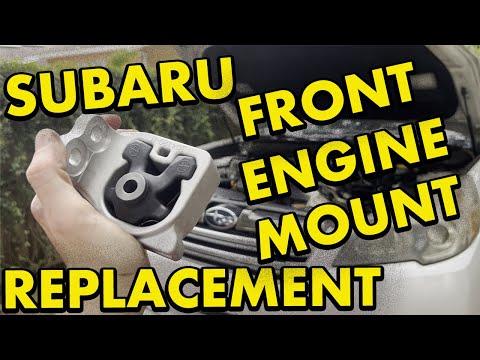



How to Replace Engine Mounts on a 2010-2014 Subaru Outback 3.6L (Engine: Flat 6 3.6L)
Step-by-step DIY guide with tools, parts, torque specs, safety tips, and cost savings for 2010, 2011, 2012, 2013, 2014
How to Replace Engine Mounts on a 2010-2014 Subaru Outback 3.6L (Engine: Flat 6 3.6L)
Step-by-step DIY guide with tools, parts, torque specs, safety tips, and cost savings for 2010, 2011, 2012, 2013, 2014


🔧 Outback - Engine Mount Replacement
Replacing the engine mounts on your Outback involves safely supporting the 3.6L engine, removing the lower mount fasteners, slightly lifting the engine, and swapping the mounts one side at a time. Worn mounts can cause vibration, clunks on acceleration, or excessive engine movement.
Difficulty Level: Advanced | Estimated Time: 3-5 hours
⚠️ Safety & Precautions
- ⚠️ Always support the Outback on jack stands before working underneath it. Never rely on a floor jack alone.
- ⚠️ The engine must be supported before removing mount fasteners. An unsupported engine can shift suddenly.
- ⚠️ Do not lift the engine by the oil pan directly. Use a wide wood block to spread the load.
- ⚠️ Work on a cool engine to avoid burns from the exhaust and engine parts.
- ⚠️ Disconnect the negative battery cable before working near the starter, wiring, or engine brackets.
🔧 Required Tools
You'll need the following tools for this repair:
- 10mm socket
- 12mm socket
- 14mm socket
- 17mm socket
- 19mm socket
- 3/8-inch drive ratchet
- 1/2-inch drive ratchet
- 1/2-inch drive breaker bar
- 3-inch socket extension
- 6-inch socket extension
- 14mm combination wrench
- 17mm combination wrench
- Torque wrench rated 10-100 ft-lbs
- Floor jack rated 3-ton minimum
- Jack stands rated 3-ton minimum
- Wheel chocks
- Wood block 2x6-inch minimum
- Trim clip remover
- Flathead screwdriver
- Needle-nose pliers
- Penetrating oil
- Paint marker
- Safety glasses
- Mechanic gloves
🔩 Required Parts
HowToo sells all the parts you need for this repair:
- Left engine mount - Qty: 1
- Right engine mount - Qty: 1
- Engine mount lower nuts - Qty: 2
- Engine mount bracket bolts - Qty: 4
- Undercover clips - Qty: As needed
📋 Before You Begin
- 🚗 Park your Outback on level ground and set the parking brake.
- 🧱 Place wheel chocks behind the rear wheels.
- 🔋 Use a 10mm socket to disconnect the negative battery cable.
- ⏱️ Let the engine and exhaust cool completely before working underneath.
- 🧰 Spray penetrating oil on the engine mount nuts and bracket bolts before removal.
- 📝 Use a paint marker to mark the mount and bracket positions before loosening anything. This helps alignment during reassembly.
🔨 Step-by-Step Instructions
Follow these steps in order:
Step 1: Raise and Support the Outback
- Use a floor jack rated 3-ton minimum to lift the front of your Outback at the front center jacking point.
- Place jack stands rated 3-ton minimum under the front side support points.
- Gently lower the vehicle onto the jack stands.
- Keep the floor jack nearby for supporting the engine later.
- Shake test before crawling underneath.
Step 2: Remove the Lower Engine Undercover
- Use a trim clip remover to remove the plastic clips from the lower engine undercover.
- Use a 12mm socket to remove any undercover bolts.
- Lower the undercover and set it aside.
- A trim clip remover is a fork-shaped tool that lifts plastic retainers without breaking them.
Step 3: Disconnect the Negative Battery Cable
- Use a 10mm socket to loosen the negative battery terminal clamp.
- Move the cable away from the battery post so it cannot spring back and touch.
Step 4: Locate the Engine Mounts
- Look from underneath the engine crossmember area.
- The left and right engine mounts sit between the engine brackets and the front subframe.
- Use a flashlight and paint marker to mark each mount’s position before loosening bolts.
- The subframe is the heavy steel frame section that supports the engine and suspension.
Step 5: Support the Engine
- Place a wood block 2x6-inch minimum on the saddle of the floor jack.
- Position the wood block under a strong, flat area of the engine near the lower engine case, not directly on a thin pan edge.
- Raise the floor jack just until the wood block lightly supports the engine.
- Do not lift the vehicle off the jack stands.
- Support only, do not force upward.
Step 6: Remove the Lower Engine Mount Nuts
- Use a 14mm socket, 6-inch socket extension, and ratchet to remove the lower nut from the left engine mount.
- Use a 14mm socket, 6-inch socket extension, and ratchet to remove the lower nut from the right engine mount.
- If a nut is tight, use penetrating oil and a 1/2-inch drive breaker bar carefully.
Step 7: Loosen the Upper Mount-to-Bracket Fasteners
- Use a 14mm socket or 14mm combination wrench to loosen the upper mount fasteners on one side.
- Use a paint marker to mark bolt positions before removal.
- Remove only one mount at a time. This keeps the engine easier to control.
Step 8: Lift the Engine Slightly
- Use the floor jack to raise the engine slowly, about 1/2 inch to 1 inch.
- Watch the radiator hoses, wiring harnesses, intake duct, and exhaust clearance while lifting.
- Stop immediately if anything stretches or binds.
- Small movements are safest.
Step 9: Remove the First Engine Mount
- Use a 14mm socket and ratchet to remove the remaining mount-to-engine bracket bolts.
- Use a flathead screwdriver only if needed to gently help free the mount from the bracket.
- Remove the engine mount from below.
- Compare the old and new mount before installation. The studs and bracket angles must match.
Step 10: Install the First New Engine Mount
- Place the new engine mount into position by hand.
- Start all bolts and nuts by hand first. This prevents cross-threading.
- Use a 14mm socket to snug the upper mount-to-bracket bolts, but do not fully tighten yet.
- Use the floor jack to slightly adjust engine height until the lower stud lines up with the subframe hole.
Step 11: Replace the Opposite Engine Mount
- Repeat the same process on the other side using a 14mm socket, 14mm combination wrench, and floor jack.
- Remove the old mount, position the new mount, and start all fasteners by hand.
- Keep both mounts slightly loose until all fasteners are started.
Step 12: Lower the Engine onto the New Mounts
- Use the floor jack to slowly lower the engine until both mounts sit fully in the subframe.
- Check that the lower studs are centered in their holes.
- Use a paint marker reference mark to verify the mounts are aligned like the originals.
Step 13: Tighten the Engine Mount Fasteners
- Use a torque wrench rated 10-100 ft-lbs and 14mm socket to tighten the upper engine mount bracket fasteners to Torque to 50 Nm (37 ft-lbs).
- Use a torque wrench rated 10-100 ft-lbs and 14mm socket to tighten the lower engine mount nuts to Torque to 70 Nm (52 ft-lbs).
- If any fastener size differs due to replacement hardware, tighten only after confirming thread engagement is smooth by hand.
Step 14: Reinstall the Lower Engine Undercover
- Lift the undercover into place by hand.
- Use a 12mm socket to reinstall the undercover bolts.
- Use a trim clip remover or needle-nose pliers to reinstall the plastic clips.
- Snug the undercover bolts by hand. Do not overtighten plastic panel hardware.
Step 15: Reconnect the Battery and Lower the Vehicle
- Use a 10mm socket to reconnect the negative battery cable.
- Use the floor jack to raise the vehicle slightly off the jack stands.
- Remove the jack stands.
- Lower your Outback slowly to the ground.
✅ After Repair
- ✅ Start the engine and let it idle. Check for unusual vibration, knocking, or movement.
- ✅ With your foot firmly on the brake, shift from Park to Reverse, then Drive. The engine should move only slightly.
- ✅ Test drive gently at first. Listen for clunks during takeoff and braking.
- ✅ Recheck the lower mount nuts after the first short drive if accessible.
- ✅ If the battery was disconnected, reset the clock and auto window function if needed.
💰 DIY vs Shop Cost
Shop Cost: $650-$1,050 parts + labor
DIY Cost: $180-$420 parts only
You Save: $470-$630 by doing it yourself!
Shop labor rates vary but typically run $100-$150/hour. This repair takes a shop approximately 3-5 hours.
🎯 Ready to get started?
HowToo makes it easy: same-day/2-day shipping on every part, plus all the tools and specialty tools you need! Check out the parts and tools sections below to add everything to your cart.