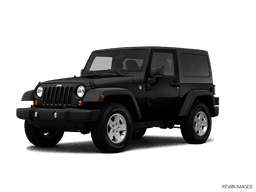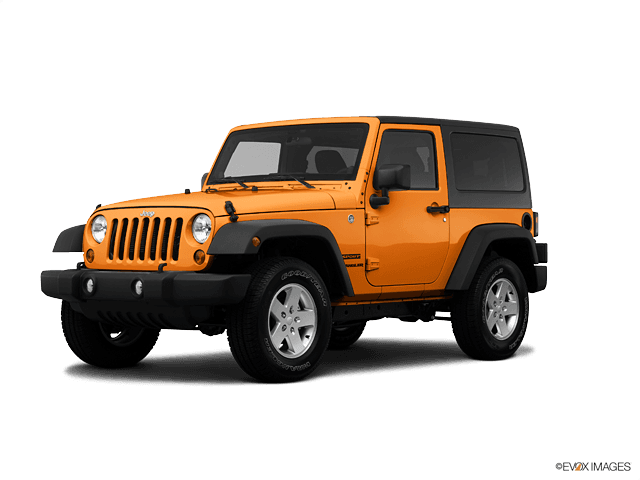

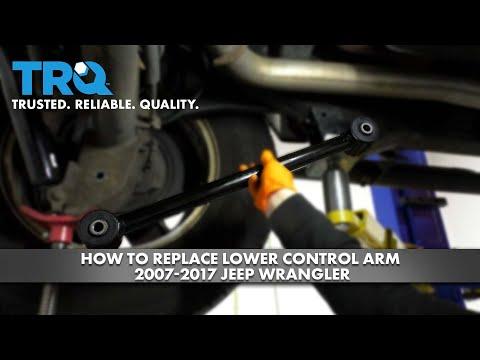




How to Replace Control Arms on a 2007-2017 Jeep Wrangler
Step-by-step suspension repair guide with tools, parts, torque specs, and safety tips for 2007, 2008, 2009, 2010, 2011, 2012, 2013, 2014, 2015, 2016, 2017
How to Replace Control Arms on a 2007-2017 Jeep Wrangler
Step-by-step suspension repair guide with tools, parts, torque specs, and safety tips for 2007, 2008, 2009, 2010, 2011, 2012, 2013, 2014, 2015, 2016, 2017


🔧 Wrangler - Control Arm Replacement
Replacing the control arms on your Wrangler restores proper axle location, ride control, and alignment stability. Your Wrangler uses solid axles with front and rear upper/lower control arms, so the basic process is similar, but replace only one arm at a time so the axle does not shift out of position.
Difficulty Level: Intermediate | Estimated Time: 2-4 hours for one pair
⚠️ Safety & Precautions
- ⚠️ Work on level, solid ground only. Never rely on a jack alone.
- ⚠️ Use jack stands under the frame, then use the floor jack to lightly support the axle.
- ⚠️ Replace control arms one at a time. Removing multiple arms can let the axle rotate or shift.
- ⚠️ Do not fully tighten the control arm bolts while the suspension is hanging. Final tightening must be done at normal ride height.
- ⚠️ Wear safety glasses and gloves. Rust, dirt, and metal flakes can fall while working underneath.
- ⚠️ Battery disconnect is not required for this repair.
🔧 Required Tools
You'll need the following tools for this repair:
- 18mm socket
- 21mm socket
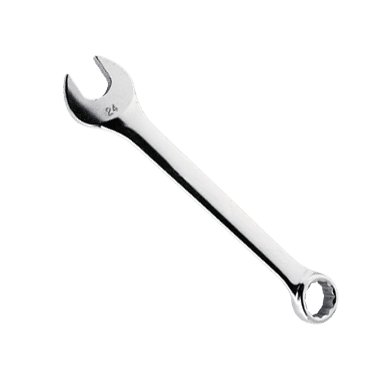
- 18mm wrench
- 21mm wrench
- 1/2-inch drive ratchet
- 1/2-inch drive breaker bar
- 1/2-inch drive torque wrench rated to 150 ft-lbs
- Floor jack rated 3-ton minimum
- Jack stands rated 3-ton minimum
- Wheel chocks
- Rubber mallet
- Pry bar 18-inch
- Paint marker
- Tape measure
- Penetrating oil
- Wire brush
- Safety glasses
- Mechanic gloves
🔩 Required Parts
HowToo sells all the parts you need for this repair:
- Front lower control arm - Qty: 2 if replacing both front lowers
- Front upper control arm - Qty: 2 if replacing both front uppers
- Rear lower control arm - Qty: 2 if replacing both rear lowers
- Rear upper control arm - Qty: 2 if replacing both rear uppers
- Control arm mounting bolt and nut kit - Qty: 1 if bolts are rusty or damaged
📋 Before You Begin
- 🅿️ Park your Wrangler on flat ground, shift into 1st gear, and set the parking brake.
- 🧱 Place wheel chocks in front of and behind the tires that stay on the ground.
- 🛞 You usually do not need to remove the wheels, but removing them can give more room.
- 🧴 Spray penetrating oil on the control arm bolts and nuts at least 10-15 minutes before removal.
- 🖊️ Use a paint marker to mark the position of the old control arm bolts before loosening them.
- 📏 A control arm locates the axle. It is a strong metal link with rubber bushings at both ends.
- 🔩 A bushing is the rubber part inside the arm end. It lets the arm move quietly without metal-on-metal contact.
🔨 Step-by-Step Instructions
Follow these steps in order:
Step 1: Lift and Support Your Wrangler
- Use wheel chocks to secure the wheels that will stay on the ground.
- Use a floor jack rated 3-ton minimum to lift the frame near the control arm you are replacing.
- Place jack stands rated 3-ton minimum under the frame rails.
- Lower your Wrangler gently onto the jack stands.
- Use the floor jack to lightly support the axle near the control arm being replaced.
- Keep the axle lightly supported.
Step 2: Identify the Control Arm Being Replaced
- Use a flashlight and safety glasses to inspect the control arm.
- The lower control arms are the longer, lower links between the frame and axle.
- The upper control arms are shorter and mounted higher on the axle.
- Use a tape measure to compare the new control arm length to the old one before removal.
- If the new arm is adjustable, set it to the same length as the old arm using a tape measure.
Step 3: Mark the Bolt Positions
- Use a paint marker to mark the bolt head, washer, and bracket position at both ends of the control arm.
- This helps you return the hardware close to its original position.
- Marks make reassembly easier.
Step 4: Loosen the First Control Arm Bolt
- Use an 18mm socket and 18mm wrench on upper control arm hardware if equipped with 18mm fasteners.
- Use a 21mm socket and 21mm wrench on lower control arm hardware if equipped with 21mm fasteners.
- Use a 1/2-inch drive breaker bar if the bolts are tight.
- Loosen the axle-side bolt first, but do not remove it yet.
- If rust is heavy, clean exposed threads with a wire brush and apply penetrating oil.
Step 5: Loosen the Second Control Arm Bolt
- Use the matching 18mm or 21mm socket and wrench to loosen the frame-side bolt.
- Keep the floor jack lightly touching the axle so the bolt does not bind.
- If the bolt is hard to slide out, use the floor jack to raise or lower the axle slightly.
- Do not force the bolt with excessive prying because the bracket can bend.
Step 6: Remove the Old Control Arm
- Use the correct 18mm or 21mm socket and wrench to remove the nuts completely.
- Slide the bolts out by hand.
- If a bolt sticks, tap it gently with a rubber mallet.
- Use an 18-inch pry bar only if the arm needs slight movement to come free.
- Remove the old control arm from the brackets.
- Do one arm at a time.
Step 7: Install the New Control Arm
- Place the new control arm into the frame and axle brackets by hand.
- Install the original bolts by hand through the brackets and bushings.
- If the holes do not line up, use the floor jack to slightly raise or lower the axle.
- Use an 18-inch pry bar carefully to nudge the axle bracket only if needed.
- Install the nuts by hand first to avoid cross-threading.
Step 8: Snug the Bolts, Do Not Final Torque Yet
- Use the correct 18mm or 21mm socket and wrench to snug the bolts until the arm is seated.
- Do not fully tighten the bolts while the suspension is hanging.
- The rubber bushings must be tightened at normal ride height to avoid twisting and early failure.
Step 9: Repeat for the Matching Side
- If replacing a pair, move to the opposite side and repeat Steps 2-8.
- Use the same 18mm or 21mm socket and wrench sizes as needed.
- Replace left and right control arms in pairs when possible for even suspension behavior.
Step 10: Set the Suspension at Ride Height
- Use the floor jack to raise the axle until your Wrangler is near normal ride height.
- If the wheels were removed, reinstall them and lower your Wrangler onto the ground before final torque.
- Use jack stands carefully if you need working space while keeping the suspension loaded.
- Loaded suspension means the vehicle weight is sitting on the axle like it does while driving.
Step 11: Final Torque the Control Arm Bolts
- Use a 1/2-inch drive torque wrench rated to 150 ft-lbs with the matching 18mm or 21mm socket.
- For front lower control arm bolts: Torque to 169 Nm (125 ft-lbs).
- For rear lower control arm bolts: Torque to 169 Nm (125 ft-lbs).
- For front upper control arm bolts: Torque to 102 Nm (75 ft-lbs).
- For rear upper control arm bolts: Torque to 102 Nm (75 ft-lbs).
- Use a wrench on the nut side while torquing the bolt side if the nut turns.
Step 12: Final Visual Check
- Use a flashlight and safety glasses to inspect every control arm bracket.
- Confirm each bolt is fully seated through the bracket and bushing.
- Confirm the paint marks are close to their original positions.
- Make sure no brake hoses, ABS wires, or parking brake cables are stretched or pinched.
✅ After Repair
- ✅ Test drive slowly at first and listen for clunks, pops, or steering pull.
- ✅ Recheck the control arm bolts after the first short drive.
- ✅ Get a professional alignment check if steering wheel position changed, tires show uneven wear, or adjustable arms were installed.
- ✅ If replacing front lower arms or adjustable arms, caster angle may change. Caster is the steering angle that helps your Wrangler track straight.
- ✅ Re-torque the hardware after 50-100 miles, especially if new bushings or aftermarket adjustable arms were installed.
💰 DIY vs Shop Cost
Shop Cost: $350-$900 per pair (parts + labor)
DIY Cost: $120-$450 per pair (parts only)
You Save: $230-$450 by doing it yourself!
Shop labor rates vary but typically run $100-$150/hour. This repair takes a shop approximately 1.5-3.0 hours.
🎯 Ready to get started?
HowToo makes it easy: same-day/2-day shipping on every part, plus all the tools and specialty tools you need! Check out the parts and tools sections below to add everything to your cart.