

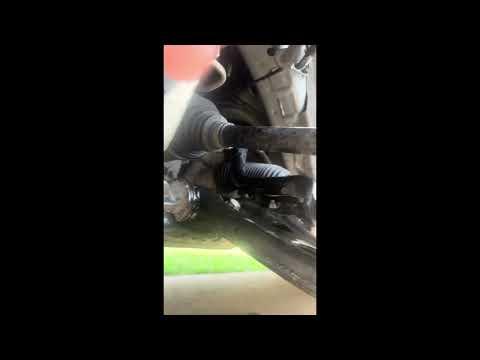







How to Replace Both Front Lower Control Arms on a 2019 Chevrolet Equinox
Step-by-step instructions with tools, parts, torque specs, safety tips, and wheel alignment info for 2018, 2019
How to Replace Both Front Lower Control Arms on a 2019 Chevrolet Equinox
Step-by-step instructions with tools, parts, torque specs, safety tips, and wheel alignment info for 2018, 2019


🔧 Control Arms - Front Lower Control Arm Replacement
This guide covers replacing both front lower control arms on your Equinox. Because the front suspension will be disturbed, a wheel alignment is required after the repair to keep the steering straight and prevent tire wear.
Difficulty Level: Advanced | Estimated Time: 3-5 hours
⚠️ Safety & Precautions
- Support the vehicle with jack stands before removing any suspension parts.
- Do not work under a vehicle supported only by a floor jack.
- The steering knuckle can shift suddenly when the control arm is removed.
- Use caution around the brake hose and ABS wire so they are not stretched or damaged.
- If the suspension is loaded, some bolts may be hard to remove; never force the knuckle into a twisted position.
- No battery disconnect is required for this repair.
🔧 Required Tools
You'll need the following tools for this repair:
- Floor jack (rated 3-ton minimum)
- Jack stands (rated 3-ton minimum)
- Wheel chocks
- Breaker bar
- Metric socket set
- Metric wrench set
- Torque wrench
- Ball joint separator (specialty)
- Pry bar
- Rubber mallet
- Penetrating oil
- Safety glasses
- Mechanic gloves
🔩 Required Parts
HowToo sells all the parts you need for this repair:
- Front lower control arm, left - Qty: 1
- Front lower control arm, right - Qty: 1
- Front lower control arm hardware kit - Qty: 2
- Wheel alignment - Qty: 1
📋 Before You Begin
- Park on level ground and set the parking brake.
- Loosen the front lug nuts slightly before lifting the vehicle.
- Raise the front end and support it securely on jack stands.
- Remove both front wheels.
- Spray penetrating oil on the control arm bolts and ball joint area if rust is present.
🔨 Step-by-Step Instructions
Follow these steps in order:
Step 1: Remove the front wheels
- Use a lug wrench or the correct metric socket to loosen and remove the front wheel nuts.
- Set the wheels aside flat so they do not roll away.
Step 2: Disconnect the lower control arm from the steering knuckle
- Use the correct metric socket and metric wrench to remove the lower ball joint fastener at the knuckle.
- Use a ball joint separator (specialty) if the taper is stuck.
- Support the knuckle so it does not pull on the brake hose or ABS wire.
- Torque to factory specification during reassembly.
Step 3: Remove the control arm rear and front mounting bolts
- Use the correct metric socket and breaker bar to remove the control arm mounting bolts.
- If the arm is tight in the subframe, use a pry bar carefully to shift it free.
- Remove the control arm from the vehicle.
- Torque to factory specification on installation.
Step 4: Install the new control arm
- Position the new control arm in the subframe by hand.
- Start all bolts by hand first using the correct metric socket and metric wrench.
- Do not fully tighten the mounting bolts yet if the suspension is hanging.
- Make sure the ball joint stud seats correctly in the knuckle.
Step 5: Reconnect the ball joint to the knuckle
- Use the correct metric socket and metric wrench to install the ball joint fastener.
- Use a torque wrench to tighten it to factory specification.
- Keep the knuckle centered.
Step 6: Tighten the control arm bolts at ride height
- Raise the lower suspension with a floor jack under the knuckle or lower arm until the vehicle sits at normal ride height.
- Use a torque wrench to tighten the control arm mounting bolts to factory specification.
- This prevents the rubber bushings from being preloaded and failing early.
Step 7: Reinstall the wheels and lower the vehicle
- Reinstall both front wheels and hand-tighten the lug nuts.
- Lower the vehicle to the ground.
- Use a torque wrench to tighten the lug nuts to factory specification in a star pattern.
✅ After Repair
- Start the vehicle and turn the steering wheel lock-to-lock to check for binding or noise.
- Inspect both sides for loose hardware, torn boots, or interference.
- Schedule a front wheel alignment right away.
- Test drive slowly at first and listen for clunks or pulling.
💰 DIY vs Shop Cost
Shop Cost: $800-$1,400 (parts + labor)
DIY Cost: $220-$520 (parts only)
You Save: $580-$880 by doing it yourself!
Shop labor rates vary but typically run $100-$150/hour. This repair takes a shop approximately 3-5 hours.
🎯 Ready to get started?
HowToo makes it easy: same-day/2-day shipping on every part, plus all the tools and specialty tools you need! Check out the parts and tools sections below to add everything to your cart.