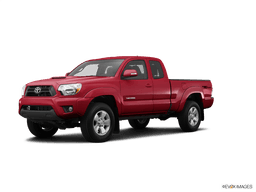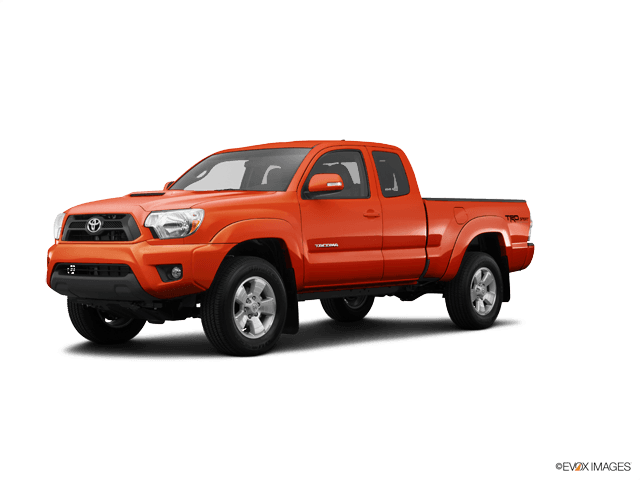

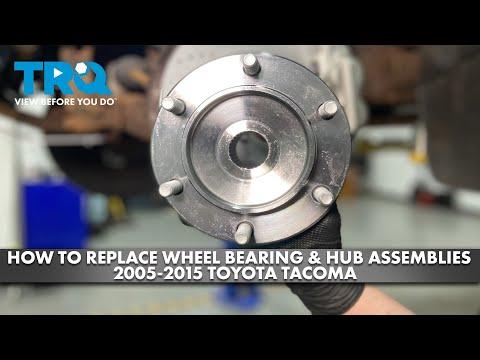







How to Replace All Wheel Bearings on a 2005-2015 Toyota Tacoma (Trim: Base | Engine: V6 4.0L)
Step-by-step front hub and rear axle bearing guide with tools, parts, torque specs, and safety tips for 2005, 2006, 2007, 2008, 2009, 2010, 2011, 2012, 2013, 2014, 2015
How to Replace All Wheel Bearings on a 2005-2015 Toyota Tacoma (Trim: Base | Engine: V6 4.0L)
Step-by-step front hub and rear axle bearing guide with tools, parts, torque specs, and safety tips for 2005, 2006, 2007, 2008, 2009, 2010, 2011, 2012, 2013, 2014, 2015


🔧 Tacoma - Wheel Bearing Replacement
This job covers replacing all four wheel bearings on your Tacoma. The front wheel bearings are serviced as hub-and-bearing assemblies; the rear axle bearings are pressed onto the axle shafts and require a hydraulic press, so the rear portion is advanced work.
Difficulty Level: Advanced | Estimated Time: 6-10 hours
⚠️ Safety & Precautions
- ⚠️ Support your Tacoma only on jack stands; never work under a vehicle held by a jack alone.
- ⚠️ Wear safety glasses and gloves when removing brakes, axle parts, and pressed bearings.
- ⚠️ Rear axle bearing removal uses a hydraulic press. A press applies high force and can launch parts if used incorrectly.
- ⚠️ Do not breathe brake dust. Use brake cleaner, not compressed air.
- ⚠️ Brake calipers must be hung with wire or a bungee cord. Do not let them hang by the brake hose.
- ⚠️ Replace rear axle seals during rear bearing service to prevent gear oil leaks.
- ⚠️ ABS speed sensors are fragile. Remove them gently and keep metal debris away from the sensor tips.
- ⚠️ Battery disconnect is not normally required for this repair.
🔧 Required Tools
You'll need the following tools for this repair:
- Floor jack (rated 3-ton minimum)
- Jack stands (rated 3-ton minimum)
- Wheel chocks
- Safety glasses
- Mechanic gloves
- Breaker bar 1/2-inch drive
- Torque wrench 1/2-inch drive
- Torque wrench 3/8-inch drive
- Impact wrench 1/2-inch drive
- 21mm socket
- 19mm socket
- 17mm socket
- 14mm socket
- 12mm socket
- 10mm socket
- 35mm axle nut socket
- Ratchet 1/2-inch drive
- Ratchet 3/8-inch drive
- Box-end wrench set 10mm-19mm
- Flathead screwdriver
- Needle-nose pliers
- Snap ring pliers
- Pry bar 18-inch
- Dead blow hammer
- Ball peen hammer
- Hub puller kit (specialty)
- Slide hammer hub adapter (specialty)
- Hydraulic shop press 20-ton (specialty)
- Bearing separator set (specialty)
- Bearing driver set (specialty)
- Seal driver set (specialty)
- Dial indicator with magnetic base (specialty)
- Brake caliper hanger hooks
- Drain pan
- Brake cleaner
- Shop towels
- Wire brush
- Anti-seize compound
- High-temperature wheel bearing grease
🔩 Required Parts
HowToo sells all the parts you need for this repair:
- Front wheel hub and bearing assembly - Qty: 2
- Rear axle bearing - Qty: 2
- Rear axle bearing retainer collar - Qty: 2
- Rear axle oil seal - Qty: 2
- Rear axle outer seal or O-ring - Qty: 2
- Rear axle snap ring - Qty: 2
- Axle shaft lock nut or stake nut - Qty: 2 if 4WD front
- Brake cleaner - Qty: 2 cans
- Differential gear oil - Qty: as needed for top-off
📋 Before You Begin
- Park your Tacoma on level ground and place wheel chocks behind the wheels that stay on the ground.
- Loosen the lug nuts 1/2 turn with a 21mm socket before lifting the truck.
- If your Tacoma is 4WD, loosen the front axle nuts with a 35mm axle nut socket before lifting the front.
- A hydraulic press is a machine that pushes bearings on and off using controlled pressure. If you do not have one, remove the rear axle shafts and have a machine shop press the bearings.
- Take photos of brake hose routing, ABS wire routing, and parking brake parts before removal.
- Assumption: this procedure covers both 2WD and 4WD front layouts. Follow the step labeled for your front hub style.
🔨 Step-by-Step Instructions
Follow these steps in order:
Step 1: Lift and Support the Truck
- Use a 21mm socket to loosen all lug nuts 1/2 turn while the tires are still on the ground.
- Use a floor jack to lift the front of your Tacoma at the front crossmember.
- Place jack stands under the frame rails and gently lower the truck onto them.
- Use the floor jack to lift the rear axle housing, then place jack stands under the frame rails.
- Use a 21mm socket to remove the wheels.
- Shake the truck gently to confirm stability.
Step 2: Remove the Front Brake Calipers and Rotors
- Use a 17mm socket to remove the two front brake caliper bracket bolts.
- Lift the caliper and bracket off as one assembly, then support it with brake caliper hanger hooks.
- Slide the rotor off by hand. If stuck, tap the rotor hat with a dead blow hammer.
- Use brake cleaner and shop towels to clean dust from the work area.
Step 3: Remove the Front ABS Sensor
- Use a 10mm socket to remove the ABS sensor retaining bolt from the steering knuckle.
- Gently twist and pull the sensor out by hand.
- Use a flathead screwdriver carefully if the sensor is stuck, but do not pry against the sensor tip.
- Move the sensor and wire out of the way.
Step 4: Remove the Front Hub Assembly
- For 4WD models, use a 35mm axle nut socket and breaker bar 1/2-inch drive to remove the front axle nut.
- For 4WD models, push the CV axle inward by hand. If stuck, use a dead blow hammer lightly on the axle end with the nut threaded on flush.
- Use a 17mm socket to remove the four hub-to-knuckle bolts from the rear of the steering knuckle.
- Use a hub puller kit or slide hammer hub adapter to pull the hub assembly out of the steering knuckle.
- Use a wire brush to clean the hub bore in the steering knuckle.
- Clean metal surfaces prevent crooked installation.
Step 5: Install the New Front Hub Assembly
- Apply a thin coat of anti-seize compound to the steering knuckle hub bore using a gloved finger.
- Slide the new front wheel hub and bearing assembly into the knuckle by hand.
- Use a 17mm socket to install the four hub bolts evenly.
- Torque to 59 Nm (44 ft-lbs) using a torque wrench 1/2-inch drive.
- For 4WD models, install a new axle nut with a 35mm axle nut socket.
- Torque to 235 Nm (173 ft-lbs) using a torque wrench 1/2-inch drive.
- If using a staked axle nut, use a flathead screwdriver and hammer to stake the nut into the axle groove.
Step 6: Reinstall the Front ABS Sensor, Rotor, and Caliper
- Install the ABS sensor by hand and tighten its bolt with a 10mm socket.
- Torque to 8 Nm (71 in-lbs) using a torque wrench 3/8-inch drive.
- Slide the brake rotor onto the hub by hand.
- Set the caliper bracket back over the rotor.
- Use a 17mm socket to install the caliper bracket bolts.
- Torque to 123 Nm (91 ft-lbs) using a torque wrench 1/2-inch drive.
- Repeat Steps 2-6 on the other front wheel.
Step 7: Remove the Rear Brake Drum or Rear Rotor
- If equipped with rear drum brakes, release the parking brake fully.
- Pull the drum off by hand. If stuck, tap around the drum face with a dead blow hammer.
- If equipped with rear disc brakes, use a 14mm socket to remove the rear caliper bolts.
- Support the caliper with brake caliper hanger hooks.
- Use a 17mm socket to remove the rear caliper bracket bolts, then slide off the rotor.
Step 8: Disconnect the Rear ABS Sensor and Parking Brake Connections
- Use a 10mm socket to remove the rear ABS sensor bolt from the axle housing.
- Pull the sensor straight out by hand and move it aside.
- Use needle-nose pliers to disconnect parking brake cable clips or retaining springs as needed.
- Use a 12mm socket or 14mm socket to remove any parking brake cable brackets attached to the axle backing plate.
Step 9: Remove the Rear Axle Shaft Assembly
- Place a drain pan under the axle end because gear oil may drip out.
- Use a 14mm socket to remove the four axle retainer nuts behind the backing plate.
- Pull the axle shaft straight outward by hand.
- If the axle shaft is stuck, use a slide hammer hub adapter attached to the wheel studs to pull it out evenly.
- Keep the axle shaft level to avoid damaging the inner axle seal surface.
Step 10: Press Off the Rear Bearing and Retainer
- Use snap ring pliers to remove the rear axle snap ring.
- Set the axle shaft in a hydraulic shop press 20-ton with a bearing separator set supporting the bearing area.
- Press the old retainer collar and bearing off the axle shaft using the hydraulic shop press 20-ton.
- Remove the old outer seal or O-ring from the backing plate by hand or with a flathead screwdriver.
- Press slowly and keep everything square.
Step 11: Press On the New Rear Bearing
- Clean the axle shaft bearing seat with brake cleaner and shop towels.
- Lightly coat the axle shaft bearing seat with high-temperature wheel bearing grease.
- Install the new rear bearing, backing plate, seal parts, and retainer in the same order as removed.
- Use a bearing driver set and hydraulic shop press 20-ton to press the new bearing fully onto the axle shaft.
- Use the hydraulic shop press 20-ton to press the new retainer collar into place.
- Install the new snap ring with snap ring pliers.
- Use a dial indicator with magnetic base to check that the axle shaft flange is not bent before reinstallation.
Step 12: Replace the Rear Axle Oil Seal
- Use a flathead screwdriver carefully to pry the old axle oil seal out of the axle housing.
- Wipe the seal bore clean with shop towels.
- Apply a thin coat of high-temperature wheel bearing grease to the new seal lip.
- Use a seal driver set and dead blow hammer to drive the new seal squarely into the axle housing.
Step 13: Reinstall the Rear Axle Shaft
- Slide the axle shaft straight into the axle housing by hand.
- Be gentle as the axle passes through the new oil seal.
- Install the four axle retainer nuts using a 14mm socket.
- Torque to 66 Nm (49 ft-lbs) using a torque wrench 3/8-inch drive.
- Reconnect parking brake brackets using a 12mm socket or 14mm socket.
- Install the ABS sensor using a 10mm socket.
- Torque to 8 Nm (71 in-lbs) using a torque wrench 3/8-inch drive.
- Repeat Steps 7-13 on the other rear wheel.
Step 14: Reinstall Rear Brakes and Wheels
- If equipped with rear drum brakes, slide the drum on by hand.
- If equipped with rear disc brakes, install the rotor by hand.
- Use a 17mm socket to install rear caliper bracket bolts.
- Torque to 88 Nm (65 ft-lbs) using a torque wrench 1/2-inch drive.
- Use a 14mm socket to install rear caliper bolts.
- Torque to 34 Nm (25 ft-lbs) using a torque wrench 3/8-inch drive.
- Install all wheels and snug the lug nuts with a 21mm socket.
- Lower the truck with the floor jack.
- Torque wheel lug nuts to 113 Nm (83 ft-lbs) in a star pattern using a 21mm socket and torque wrench 1/2-inch drive.
Step 15: Check Rear Differential Fluid Level
- Use a 24mm socket or correct-size wrench if your fill plug differs to remove the rear differential fill plug.
- Check that gear oil is level with the lower edge of the fill hole.
- Add differential gear oil if needed until it just begins to seep from the fill hole.
- Reinstall the fill plug using the same tool.
- Torque to 49 Nm (36 ft-lbs) using a torque wrench 1/2-inch drive.
✅ After Repair
- ✅ Pump the brake pedal several times before moving the truck. This seats the brake pads or shoes.
- ✅ Drive slowly in a safe area and listen for grinding, humming, clicking, or scraping.
- ✅ Confirm the ABS warning light stays off after driving.
- ✅ Recheck for gear oil leaks at both rear axle seals after the first drive.
- ✅ Recheck lug nut torque after 25-50 miles: 113 Nm (83 ft-lbs).
- ✅ If the brake pedal feels soft or warning lights appear, stop driving and inspect the work before continuing.
💰 DIY vs Shop Cost
Shop Cost: $1,400-$2,400 (parts + labor)
DIY Cost: $450-$900 (parts only)
You Save: $950-$1,500 by doing it yourself!
Shop labor rates vary but typically run $100-$150/hour. This repair takes a shop approximately 6-9 hours.
🎯 Ready to get started?
HowToo makes it easy: same-day/2-day shipping on every part, plus all the tools and specialty tools you need! Check out the parts and tools sections below to add everything to your cart.