

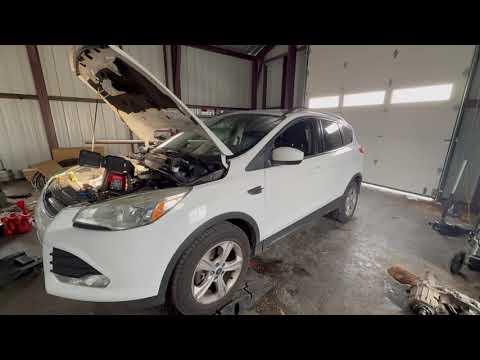







How to Replace a Radiator Hose on a 2019 Ford Escape
Step-by-step cooling system repair guide with tools, coolant, clamps, and safety tips
How to Replace a Radiator Hose on a 2019 Ford Escape
Step-by-step cooling system repair guide with tools, coolant, clamps, and safety tips


🔧 Escape - Radiator Hose Replacement
Replacing a radiator hose on your Escape means draining some coolant, removing the old hose, installing the new hose, and refilling/bleeding the cooling system. The upper and lower radiator hoses are serviced similarly, but access differs because the lower hose is closer to the bottom of the radiator.
Difficulty Level: Beginner to Intermediate | Estimated Time: 1-2 hours
⚠️ Safety & Precautions
- ⚠️ Never open the coolant reservoir cap when the engine is hot. Hot coolant is pressurized and can cause severe burns.
- 🧤 Wear gloves and safety glasses because coolant is slippery, toxic, and irritating to skin and eyes.
- 🐾 Keep used coolant away from children and pets. It can be deadly if swallowed.
- 🚗 Support your Escape with jack stands if raising the front. Never work under a vehicle supported only by a jack.
- 🔋 Battery disconnect is not required for this repair.
🔧 Required Tools
You'll need the following tools for this repair:
- Safety glasses
- Nitrile gloves
- Wheel chocks
- Floor jack (rated 2-ton minimum)
- Jack stands (rated 2-ton minimum)
- Drain pan (2-gallon minimum)
- Flat-blade screwdriver
- Hose clamp pliers
- Slip-joint pliers
- 8mm socket
- 10mm socket
- Ratchet
- Plastic trim clip remover
- Pick tool
- Funnel
- Clean shop towels
- Torque wrench (inch-pound)
🔩 Required Parts
HowToo sells all the parts you need for this repair:
- Radiator hose - Qty: 1
- Coolant hose clamps - Qty: 2
- Motorcraft Yellow coolant or Ford-approved equivalent pre-mixed 50/50 - Qty: 1-2 gallons
- Radiator drain plug seal - Qty: 1
📋 Before You Begin
- 🅿️ Park your Escape on level ground, shift to Park, and set the parking brake.
- ❄️ Let the engine cool completely. A safe wait is at least 2-3 hours after driving.
- 🧱 Place wheel chocks behind the rear wheels.
- 🚗 If replacing the lower radiator hose, raise the front with a floor jack and support it with jack stands.
- 🧪 A hose clamp pliers is a tool that squeezes spring clamps open so you can slide them off the hose.
- 🔧 A pick tool is a small hooked tool used to gently break a stuck hose loose without prying against plastic fittings.
🔨 Step-by-Step Instructions
Follow these steps in order:
Step 1: Let the Cooling System Cool
- Use your hand near the coolant reservoir, without touching hot parts, to confirm the engine bay feels cool.
- Use safety glasses and nitrile gloves before opening anything.
- Slowly loosen the coolant reservoir cap by hand to release any remaining pressure, then remove it.
- Cold engine only.
Step 2: Raise the Front if Needed
- If replacing the upper hose, you may be able to work from above without lifting your Escape.
- If replacing the lower hose, use a floor jack to lift the front at the approved front jacking point.
- Place jack stands under the approved front support points, then gently lower your Escape onto the stands.
- Use wheel chocks at the rear wheels before going underneath.
Step 3: Remove the Lower Shield for Access
- Use an 8mm socket and ratchet to remove the fasteners from the lower engine splash shield if equipped.
- Use a plastic trim clip remover to release any plastic push clips.
- Set the shield and fasteners aside in order so reassembly is easier.
Step 4: Drain Some Coolant
- Place a drain pan under the radiator drain area.
- Use a flat-blade screwdriver or your fingers, depending on drain plug style, to carefully open the radiator drain plug.
- Drain enough coolant so the level drops below the hose you are replacing.
- If the drain plug is hard to access, use hose clamp pliers to loosen the lower hose clamp and carefully drain from the hose end instead.
- Close the radiator drain plug by hand until seated. Do not overtighten plastic parts.
Step 5: Locate the Hose Ends
- For the upper radiator hose, follow the large hose from the top area of the radiator to the engine coolant outlet.
- For the lower radiator hose, follow the large hose from the lower radiator outlet toward the engine/water pump area.
- Use a shop towel to wipe around both hose connections so dirt does not enter the cooling system.
Step 6: Move the Hose Clamps Back
- Use hose clamp pliers to squeeze the spring clamp tabs together.
- Slide each clamp several inches back onto the hose.
- If your replacement hose uses worm-drive clamps, use a flat-blade screwdriver or 8mm socket to loosen them.
- Take a photo first.
Step 7: Remove the Old Hose
- Use your hand to twist the hose gently at each end to break it loose.
- If the hose is stuck, use a pick tool carefully between the hose and metal/plastic fitting to loosen the seal.
- Do not pry hard against plastic radiator or thermostat housing fittings because they can crack.
- Pull the hose off slowly and aim any remaining coolant into the drain pan.
Step 8: Compare the New Hose
- Use your hands to place the old and new radiator hoses side by side.
- Confirm the bends, length, and end diameters match.
- Transfer any protective sleeve or positioning clip from the old hose if the new hose does not include it.
Step 9: Install the New Hose
- Use a clean shop towel to wipe the radiator and engine hose necks.
- Slide the clamps onto the new hose before installing it.
- Push the hose fully onto each fitting until it seats past the raised bead on the fitting.
- Use hose clamp pliers to position spring clamps behind the raised bead, in the same location as original.
- If using worm-drive clamps, tighten them evenly with an 8mm socket or flat-blade screwdriver until snug. Do not crush plastic fittings.
- Torque worm-drive clamps to 3-5 Nm (27-44 in-lbs) if the clamp manufacturer provides no different spec.
Step 10: Reinstall the Lower Shield
- Use the plastic trim clip remover by hand to align any push clips.
- Use an 8mm socket and ratchet to reinstall the lower splash shield fasteners.
- Tighten the small shield fasteners snug only. Do not overtighten.
Step 11: Refill the Cooling System
- Use a funnel in the coolant reservoir opening.
- Add Motorcraft Yellow coolant or Ford-approved equivalent pre-mixed 50/50 until the level reaches the MAX line on the reservoir.
- Leave the coolant reservoir cap off for the initial air bleed.
Step 12: Bleed Air from the System
- Start the engine and let it idle with the reservoir cap off.
- Set the cabin heater to full hot and the blower to low using the climate controls.
- Watch the coolant level in the reservoir and add coolant with the funnel as the level drops.
- Let the engine idle until the upper radiator hose becomes warm and the cooling fan cycles on if conditions allow.
- Install the coolant reservoir cap by hand once the level stabilizes near the MAX line.
Step 13: Check for Leaks
- Use a flashlight to inspect both hose ends while the engine is running.
- Look for drips, wetness, or steam around the clamps and fittings.
- If a leak appears, shut the engine off, let it cool, then reposition the clamp with hose clamp pliers.
✅ After Repair
- ✅ Test drive your Escape for 10-15 minutes while watching the temperature gauge.
- 🌡️ After the engine cools completely, recheck the coolant level and top off to the MAX line if needed.
- 🔍 Recheck the hose ends the next day for dried coolant marks or wet spots.
- ♻️ Take used coolant to a recycling center or auto parts store that accepts coolant. Do not pour it on the ground or into drains.
💰 DIY vs Shop Cost
Shop Cost: $180-$350 (parts + labor)
DIY Cost: $35-$120 (parts only)
You Save: $145-$230 by doing it yourself!
Shop labor rates vary but typically run $100-$150/hour. This repair takes a shop approximately 0.8-1.5 hours.
🎯 Ready to get started?
HowToo makes it easy: same-day/2-day shipping on every part, plus all the tools and specialty tools you need! Check out the parts and tools sections below to add everything to your cart.