

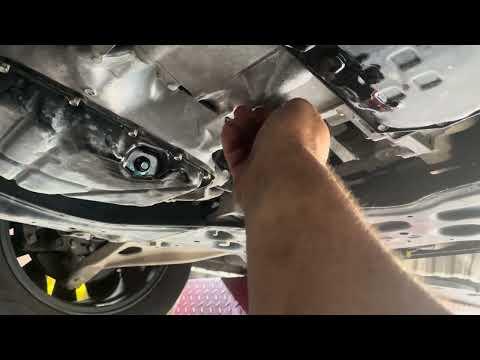







How to Change CVT Transmission Fluid on a 2007-2023 Nissan Altima (Trim: S | Engine: Inline 4 2.5L)
Step-by-step guide with NS-3 fluid, tools, torque specs, level check, and safety tips for 2007, 2008, 2009, 2010, 2011, 2012, 2013, 2014, 2015, 2016, 2017
How to Change CVT Transmission Fluid on a 2007-2023 Nissan Altima (Trim: S | Engine: Inline 4 2.5L)
Step-by-step guide with NS-3 fluid, tools, torque specs, level check, and safety tips for 2007, 2008, 2009, 2010, 2011, 2012, 2013, 2014, 2015, 2016, 2017


🔧 Altima - CVT Transmission Fluid Change
This repair replaces the continuously variable transmission fluid, called CVT fluid, in your Altima. The CVT uses a steel belt and pulleys instead of normal gears, so it requires the correct Nissan-compatible CVT fluid and a careful fluid-level check at the correct temperature.
Difficulty Level: Intermediate | Estimated Time: 1.5-2.5 hours
⚠️ Safety & Precautions
- ⚠️ Use only Nissan NS-3 compatible CVT fluid. Regular automatic transmission fluid can damage the CVT.
- ⚠️ CVT fluid can be hot enough to burn skin. Let the vehicle cool before draining, then warm it only as needed for the level check.
- ⚠️ The vehicle must be level when checking the final fluid level. An uneven vehicle can cause overfilling or underfilling.
- ⚠️ Support your Altima with jack stands. Never work under a vehicle supported only by a jack.
- ⚠️ Keep dirt out of the fill tube and drain area. CVTs are sensitive to contamination.
- ⚠️ Battery disconnect is not required for this repair.
🔧 Required Tools
You'll need the following tools for this repair:
- Floor jack rated 2-ton minimum
- Jack stands rated 2-ton minimum
- Wheel chocks
- Safety glasses
- Nitrile gloves
- Drain pan 10-quart minimum
- Ratchet 3/8-inch drive
- 10mm socket
- 19mm socket
- Torque wrench 3/8-inch drive
- Flat-blade screwdriver
- Long-neck funnel
- Fluid transfer pump
- Measuring jug marked in quarts
- Clean shop towels
- OBD2 scan tool with live data
- Infrared thermometer
🔩 Required Parts
HowToo sells all the parts you need for this repair:
- Nissan NS-3 compatible CVT fluid - Qty: 5 quarts
- CVT drain plug washer - Qty: 1
- Under-cover clips - Qty: As needed
📋 Before You Begin
- Park your Altima on a flat, level surface.
- Apply the parking brake and place wheel chocks behind the rear wheels.
- Drive gently for 5-10 minutes if the vehicle is cold, then park and shut it off.
- Let the exhaust and engine area cool enough to work safely.
- Record how much fluid drains out using a measuring jug. This helps you refill the same approximate amount before final level setting.
- A scan tool with live data means a tool that can show sensor readings, including CVT fluid temperature, while the vehicle is running.
- If your scan tool cannot read CVT fluid temperature, use an infrared thermometer on the transmission pan as a backup estimate.
🔨 Step-by-Step Instructions
Follow these steps in order:
Step 1: Raise and Support the Vehicle
- Use the floor jack rated 2-ton minimum to lift the front of your Altima at the front center lift point.
- Place the jack stands rated 2-ton minimum under the proper front support points.
- Lower the vehicle gently onto the stands and give the vehicle a light shake to confirm it is stable.
- Use wheel chocks at the rear wheels to help prevent movement.
- Never trust the jack alone.
Step 2: Remove the Lower Engine Under-Cover
- Use a 10mm socket to remove the under-cover bolts.
- Use a flat-blade screwdriver to gently release any plastic clips.
- Set the under-cover aside where it will not be stepped on.
- If clips break, replace them with under-cover clips.
Step 3: Locate the CVT Drain Plug
- Put on safety glasses and nitrile gloves.
- Place the drain pan 10-quart minimum under the CVT drain plug on the bottom of the transmission case.
- Wipe around the drain plug with clean shop towels so dirt does not enter the transmission.
Step 4: Drain the Old CVT Fluid
- Use a 19mm socket and ratchet 3/8-inch drive to loosen the CVT drain plug.
- Remove the plug by hand once loose and let the fluid drain completely into the pan.
- Use the measuring jug marked in quarts to measure the drained fluid amount.
- Write the amount down. You will add about the same amount first.
- Fluid may come out fast.
Step 5: Reinstall the Drain Plug
- Remove the old drain plug washer by hand.
- Install a new CVT drain plug washer onto the drain plug.
- Thread the drain plug in by hand first to prevent cross-threading.
- Use a torque wrench 3/8-inch drive and 19mm socket to tighten the drain plug to Torque to 34 Nm (25 ft-lbs).
Step 6: Access the CVT Fill Tube
- Open the hood and locate the CVT fill tube near the transmission side of the engine bay.
- Use a flat-blade screwdriver to release the locking tab on the fill cap if equipped.
- Remove the fill cap carefully and keep dirt away from the opening.
- A fill tube is the pipe where new CVT fluid is added.
Step 7: Add New CVT Fluid
- Place the long-neck funnel into the CVT fill tube.
- Add Nissan NS-3 compatible CVT fluid slowly.
- Add the same amount that drained out, minus about 0.25 quart to avoid overfilling.
- If access is tight, use the fluid transfer pump to pump fluid into the fill tube.
- Pour slowly to prevent spills.
Step 8: Warm the CVT and Circulate Fluid
- Start the engine with your foot on the brake.
- Use the OBD2 scan tool with live data to monitor CVT fluid temperature if supported.
- Move the shifter slowly through P, R, N, D, and back to P, pausing 3 seconds in each position.
- Keep the engine idling and parking brake applied.
- Warm the CVT fluid to about 35-45°C (95-113°F) for the final level check.
- If using an infrared thermometer, aim it at the CVT pan area for an approximate temperature reading.
Step 9: Check Final Fluid Level
- Keep the vehicle level, engine idling, and shifter in Park.
- Use the long-neck funnel or fluid transfer pump to add small amounts of Nissan NS-3 compatible CVT fluid if needed.
- The correct level procedure on this Altima is temperature-sensitive. The fluid should be set with the CVT fluid near 35-45°C (95-113°F).
- If your Altima has an overflow/check plug, use a 19mm socket to carefully open it during the temperature window. A small steady dribble means the level is correct.
- If no fluid comes out, add CVT fluid in small amounts until it begins to dribble from the check opening.
- Reinstall the check plug by hand first, then tighten with the torque wrench 3/8-inch drive and 19mm socket to Torque to 34 Nm (25 ft-lbs).
- Do not overfill the CVT.
Step 10: Reinstall the Fill Cap and Under-Cover
- Reinstall the CVT fill cap by hand and make sure its lock is fully seated.
- Use clean shop towels to wipe any spilled fluid.
- Raise the under-cover into place.
- Use a 10mm socket to reinstall the under-cover bolts snugly.
- Tighten the under-cover bolts to Torque to 5 Nm (44 in-lbs).
Step 11: Lower the Vehicle
- Use the floor jack rated 2-ton minimum to lift the vehicle slightly off the jack stands.
- Remove the jack stands rated 2-ton minimum.
- Lower your Altima slowly to the ground.
- Remove the wheel chocks.
✅ After Repair
- Start the engine and let it idle for 1-2 minutes.
- Shift through all gear positions again with your foot on the brake.
- Check underneath for leaks around the drain plug and check plug area.
- Take a gentle 5-10 minute test drive. Avoid hard acceleration.
- Recheck for leaks after the test drive.
- Dispose of old CVT fluid properly at an approved recycling center or auto parts store.
- No battery registration or infotainment reset is required.
💰 DIY vs Shop Cost
Shop Cost: $220-$380 (parts + labor)
DIY Cost: $70-$130 (parts only)
You Save: $150-$250 by doing it yourself!
Shop labor rates vary but typically run $100-$150/hour. This repair takes a shop approximately 1.0-1.5 hours.
🎯 Ready to get started?
HowToo makes it easy: same-day/2-day shipping on every part, plus all the tools and specialty tools you need! Check out the parts and tools sections below to add everything to your cart.