

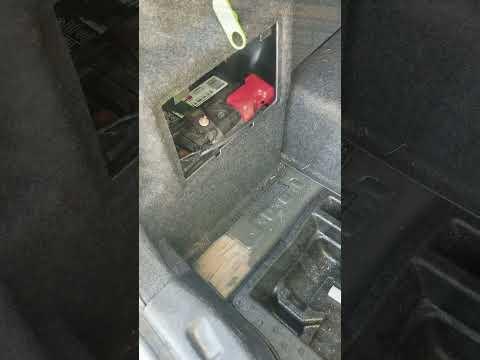





2018 Ford Fusion Hybrid No-Start: Troubleshoot “Starter” Issues & Fix 12V Battery
Step-by-step checks for READY mode, battery voltage, terminals, fuses, tools, parts, and torque specs for 2013, 2014, 2015, 2016, 2017, 2018, 2019, 2020
2018 Ford Fusion Hybrid No-Start: Troubleshoot “Starter” Issues & Fix 12V Battery
Step-by-step checks for READY mode, battery voltage, terminals, fuses, tools, parts, and torque specs for 2013, 2014, 2015, 2016, 2017, 2018, 2019, 2020


🔧 Fusion - Engine Start System (No Traditional Starter)
Your Fusion Hybrid does not use a conventional 12V starter motor you can replace. The gas engine is started by an electric motor/generator inside the eCVT transaxle, so a “starter replacement” isn’t a normal service item.
If the engine won’t crank/start, the most common causes are the 12V battery, power/ground connections, or a hybrid control fault that needs a scan.
Difficulty Level: Intermediate | Estimated Time: 0.5-1.5 hours (basic checks / 12V battery service)
⚠️ Safety & Precautions
- ⚠️ Hybrid warning: Do not touch orange high-voltage cables or connectors.
- ⚠️ Always power the car OFF and keep the key/fob 20+ feet away so it can’t wake up.
- ⚠️ If you disconnect the 12V battery, you may lose saved settings; keep windows/doors open so you don’t lock yourself out.
- ⚠️ If you smell burning/electrical odor or see melted wiring, stop and have it towed to a shop.
🔧 Required Tools
You'll need the following tools for this repair:
- 10mm socket
- 13mm socket
- 1/4" ratchet
- 3/8" ratchet
- 6" extension
- Trim clip removal tool
- Torque wrench (10–30 Nm range)
- Digital multimeter
- OBD2 scan tool capable of Ford hybrid codes (specialty)
- Battery terminal puller (specialty)
- Battery post cleaning brush
- Nitrile gloves
- Safety glasses
🔩 Required Parts
HowToo sells all the parts you need for this repair:
- 12V battery (Group 96R/H6, AGM as equipped) - Qty: 1
- Battery terminal anti-corrosion pads - Qty: 2
- Battery terminal protectant spray - Qty: 1
- Replacement fuses (low-profile mini, assorted) - Qty: 1
📋 Before You Begin
- Park on level ground, shift to Park, and set the parking brake.
- Power the car OFF and keep the key/fob far away.
- Open the trunk and driver door before 12V disconnection (prevents lockout).
- If you’re using a scan tool, plug it into the OBD port under the dash before you start removing anything.
🔨 Step-by-Step Instructions
Follow these steps in order:
Step 1: Confirm what “starter problem” means on your Fusion
- Turn the car ON and look for “READY” on the cluster.
- If the dash comes on but there is no READY, the issue is often 12V power or a stored fault—not a starter motor.
- Use an OBD2 scan tool capable of Ford hybrid codes (specialty) to read codes from PCM/HPCM/BCM (hybrid modules). Write codes down first.
Step 2: Check 12V battery voltage (most common no-start cause)
- Set your digital multimeter to DC volts.
- Measure across the 12V battery posts: red lead to +, black to −.
- As a quick guide: ~12.6V = healthy, ~12.2V = weak, ~12.0V or less = likely bad/discharged.
Step 3: Inspect and clean battery terminals (poor connection = “dead car”)
- Use a 10mm socket to loosen the negative (−) terminal clamp and remove it.
- Use a 10mm socket to loosen the positive (+) terminal clamp and remove it.
- Clean the battery posts and terminal insides using a battery post cleaning brush.
- Install battery terminal anti-corrosion pads, then reconnect positive first, negative last.
- Tighten terminal clamps with a 10mm socket until snug (do not crush the clamps).
Step 4: Check the main 12V fuses related to start/ignition
- Open the underhood fuse box and remove the cover using a trim clip removal tool as needed.
- Using your digital multimeter, check suspect fuses for continuity (or use the test points on top of the fuse).
- Replace any blown fuse with the same rating using replacement fuses (low-profile mini, assorted).
Step 5: If the 12V battery is weak, replace it (common fix)
- Disconnect negative then positive using a 10mm socket.
- Remove the battery hold-down using a 13mm socket (location can vary by battery tray style).
- Lift out the battery carefully (it’s heavy) and install the new 12V battery (Group 96R/H6, AGM as equipped).
- Reinstall hold-down and tighten using a torque wrench: Torque to 20 Nm (15 ft-lbs) if your hold-down uses an M8-style fastener. If it feels too tight, stop.
- Reconnect positive then negative using a 10mm socket, then apply battery terminal protectant spray.
Step 6: Recheck operation
- Turn the car ON and confirm it shows “READY”.
- Use the OBD2 scan tool capable of Ford hybrid codes (specialty) to clear codes only after you record them.
✅ After Repair
- Confirm the car consistently goes to “READY” and the engine starts normally when requested.
- Recheck battery voltage with the digital multimeter; in READY mode the DC/DC converter usually brings system voltage up (often ~13.5–14.8V).
- If codes return (especially hybrid/inverter/transaxle codes), stop DIY and schedule a hybrid-capable diagnostic.
💰 DIY vs Shop Cost
Shop Cost: $150-$350 (diagnosis / 12V battery service) or $4,000-$7,500+ (if an internal hybrid transaxle/motor-generator issue is confirmed)
DIY Cost: $200-$380 (12V battery + supplies)
You Save: $0-$200 by doing it yourself (for the common 12V fix)
Shop labor rates vary but typically run $100-$150/hour. This repair takes a shop approximately 0.5-1.5 hours (for 12V checks/battery replacement).
🎯 Ready to get started?
HowToo makes it easy: same-day/2-day shipping on every part, plus all the tools and specialty tools you need! Check out the parts and tools sections below to add everything to your cart.