







2015 Ford Fusion Timing Belt vs Timing Chain: Troubleshoot & Replace the Serpentine Belt
Step-by-step accessory belt replacement with tools list, routing tips, safety checks, and wheel torque specs for 2013, 2014, 2015, 2016, 2017, 2018, 2019, 2020
2015 Ford Fusion Timing Belt vs Timing Chain: Troubleshoot & Replace the Serpentine Belt
Step-by-step accessory belt replacement with tools list, routing tips, safety checks, and wheel torque specs for 2013, 2014, 2015, 2016, 2017, 2018, 2019, 2020


🔧 Fusion - Timing Belt Replacement
Your Fusion does not use a timing belt. The 2.0L hybrid engine uses a timing chain, which is internal and not a normal maintenance item like a belt.
Assumption: You meant the engine accessory/serpentine belt (the external belt that drives accessories). Below is the correct DIY procedure for that belt.
Difficulty Level: Intermediate | Estimated Time: 0.5-1.5 hours
⚠️ Safety & Precautions
- ⚠️ Make sure the car is OFF and the key/fob is kept at least 15 feet away so it can’t “wake up” unexpectedly.
- ⚠️ Keep fingers, hair, and clothing away from pulleys—pinch points can injure you fast.
- ⚠️ Work on a cool engine; hot parts can burn you.
- ⚠️ If you raise the car, support it with jack stands—never rely on a floor jack alone.
🔧 Required Tools
You'll need the following tools for this repair:
- Floor jack (rated 3-ton minimum)
- Jack stands (rated 3-ton minimum)
- Wheel chocks
- Lug wrench (19mm)
- Socket set (8mm, 10mm)
- Ratchet (3/8")
- Serpentine belt tool (specialty)
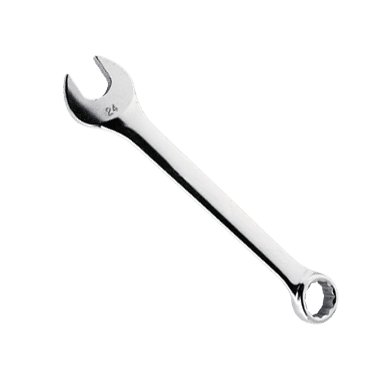
- 15mm socket
- Torque wrench (10–150 ft-lbs)
- Trim clip removal tool
- Work light
- Mechanic gloves
- Safety glasses
🔩 Required Parts
HowToo sells all the parts you need for this repair:
- Accessory drive belt (serpentine belt) - Qty: 1
- Accessory belt tensioner - Qty: 1 (optional, if noisy/weak)
- Idler pulley - Qty: 1 (optional, if noisy/rough)
📋 Before You Begin
- Park on level ground, set the parking brake, and place wheel chocks behind the rear wheels.
- Open the hood and confirm the engine is cool to the touch.
- Have a photo ready of the belt routing (take a picture with your phone before removal). Photos prevent routing mistakes.
🔨 Step-by-Step Instructions
Follow these steps in order:
Step 1: Raise and support the front-right corner
- Use wheel chocks to block the rear wheels.
- Use a floor jack (rated 3-ton minimum) to lift at the approved front-right jacking point.
- Set the car securely on jack stands (rated 3-ton minimum).
- Remove the front-right wheel using a lug wrench (19mm).
Step 2: Remove the inner splash shield for belt access
- Use a trim clip removal tool to pop out the plastic push-clips.
- Use an 8mm socket or 10mm socket with a ratchet (3/8") to remove any small bolts (varies by shield).
- Pull the splash shield back enough to clearly see the belt and tensioner.
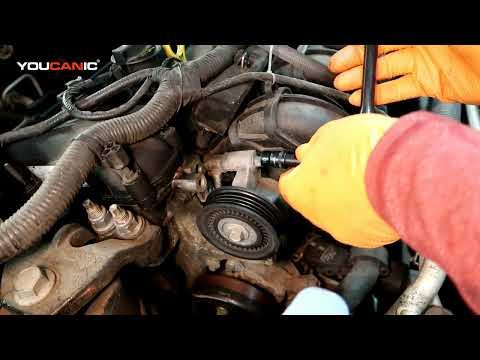
Step 3: Locate the belt tensioner
- Find the belt tensioner (spring-loaded arm with a pulley). It keeps the belt tight automatically.
- Set up a work light so you can see the belt path clearly.
Step 4: Release tension and remove the old belt
- Put a 15mm socket on the tensioner’s hex boss/bolt head.
- Use a serpentine belt tool (specialty) (a long, thin handle made for tight belt areas) or a ratchet (3/8") to rotate the tensioner and relieve belt tension.
- While holding the tensioner rotated, slide the belt off the nearest easy pulley.
- Slowly let the tensioner return to its resting position (don’t let it snap back).
- Remove the belt from the remaining pulleys and take it out.
Step 5: Inspect pulleys and tensioner before installing the new belt
- Spin each pulley by hand while wearing mechanic gloves.
- If any pulley feels rough, wobbly, or noisy, plan to replace that pulley/tensioner (a bad pulley can shred the new belt).
Step 6: Route and install the new belt
- Route the new belt around the pulleys following your photo (or the under-hood routing label if equipped).
- Keep the belt fully seated in the grooves on all ribbed pulleys before applying tension.
- Use the 15mm socket with the serpentine belt tool (specialty) to rotate the tensioner again.
- Slip the belt onto the last pulley, then slowly release the tensioner.
- Double-check the belt is centered and seated on every pulley.
Step 7: Reinstall splash shield and wheel
- Reposition the splash shield and reinstall fasteners using the trim clip removal tool, 8mm socket, 10mm socket, and ratchet (3/8") as needed.
- Reinstall the wheel using a lug wrench (19mm).
- Lower the car using the floor jack (rated 3-ton minimum).
- Tighten lug nuts with a torque wrench (10–150 ft-lbs): Torque to 135 Nm (100 ft-lbs).
✅ After Repair
- Start the car and let it idle while you watch the belt for 30–60 seconds (keep hands and tools away).
- Listen for squealing, chirping, or knocking—those usually mean mis-routing or a failing pulley.
- Turn the car off and re-check that the belt is still seated correctly in all grooves.
💰 DIY vs Shop Cost
Shop Cost: $180-$350 (parts + labor)
DIY Cost: $35-$90 (parts only)
You Save: $145-$260 by doing it yourself!
Shop labor rates vary but typically run $100-$150/hour. This repair takes a shop approximately 0.5-1.0 hours.
🎯 Ready to get started?
HowToo makes it easy: same-day/2-day shipping on every part, plus all the tools and specialty tools you need! Check out the parts and tools sections below to add everything to your cart.