

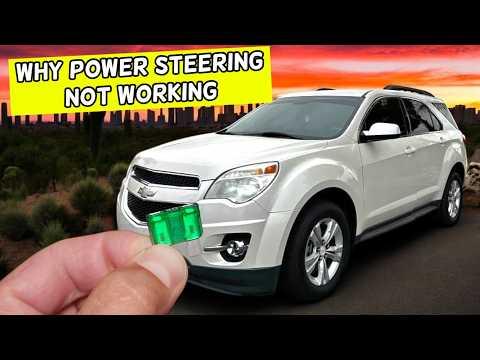






2014 Chevrolet Equinox Power Steering Problem: No Pump to Replace
Step-by-step guide to diagnosing electric power steering issues, tools, parts, safety tips, and when to let a pro replace EPS components
2014 Chevrolet Equinox Power Steering Problem: No Pump to Replace
Step-by-step guide to diagnosing electric power steering issues, tools, parts, safety tips, and when to let a pro replace EPS components


🔧 Equinox - Power Steering Pump Replacement
Your Equinox does not have a traditional power steering pump. It uses an electric power steering (EPS) system, so there is no fluid reservoir, hoses, or belt-driven pump to replace.
If your steering feels heavy or you see steering warnings, the issue is usually with the EPS motor/module, steering column, or steering rack, not a pump.
Difficulty Level: Advanced | Estimated Time: 3-6 hours (for EPS component replacement)
⚠️ Safety & Precautions
- ⚠️ There is no power steering fluid on your Equinox—do not attempt to bleed or refill a non‑existent system.
- ⚠️ EPS components are tied into the airbag system and ABS/traction control; improper work can cause airbag faults or loss of steering assist.
- ⚠️ Always disconnect the negative battery cable before touching wiring on the steering column or rack.
- ⚠️ If you see a “Power Steering” or “Service Power Steering” message, avoid driving at high speed until the issue is diagnosed.
- ⚠️ Lifting the vehicle requires correct jack and jack stand use to avoid the car falling.
🔧 Required Tools
You'll need the following tools for steering system diagnosis or EPS component replacement (not a pump):
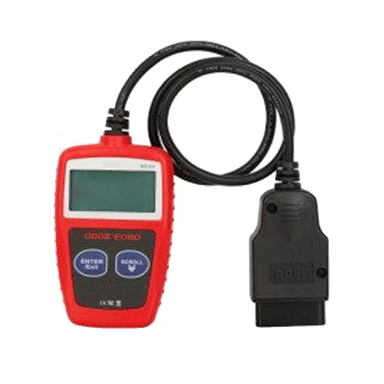
- 🔧 OBD2 scan tool with GM/Chevrolet enhanced functions (specialty)
- 🔧 Floor jack (rated 3-ton minimum)
- 🔧 Jack stands (3-ton, pair)
- 🔧 Wheel chocks
- 🔧 Socket set (8mm–21mm)
- 🔧 Ratchet wrench 3/8"
- 🔧 Torque wrench 3/8" drive (10–100 ft-lbs range)
- 🔧 Torx bit set (T20–T50)
- 🔧 Flathead screwdriver (medium)
- 🔧 Trim clip removal tool
- 🔧 Breaker bar 1/2"
- 🔧 Pry bar 18"
- 🔧 Work light
- 🔧 Mechanic’s gloves
- 🔧 Safety glasses
🔩 Required Parts
HowToo sells all the parts you need for this repair:
- 🔩 Electric power steering motor/module (if faulty) - Qty: 1
- 🔩 Steering column assembly (if internal EPS fault at column) - Qty: 1
- 🔩 Electric power steering rack and pinion assembly (if rack EPS fault) - Qty: 1
- 🔩 Steering intermediate shaft bolts - Qty: 2
- 🔩 Subframe bolts (single-use, if lowered) - Qty: 4
- 🔩 Electrical connector seals / clips (as needed) - Qty: 1 set
- 🔩 Anti-seize compound - Qty: 1
- 🔩 Dielectric grease - Qty: 1
📋 Before You Begin
- Park the Equinox on level ground, shift to PARK, and set the parking brake.
- Turn the steering wheel so the front wheels are pointed straight ahead.
- Switch the ignition off and remove the key.
- Disconnect the negative battery cable using a 10mm socket and move it aside so it cannot touch the terminal.
- Have your OBD2 scan tool ready; you’ll need it to read any EPS fault codes.
🔨 Step-by-Step Instructions
Follow these steps in order:
Step 1: Confirm there is no power steering pump
- Open the hood and locate the front of the engine where the accessory belt is (the belt that drives the alternator and A/C compressor).
- Use a work light to look along the belt path—on this engine you will see the alternator, A/C compressor, and belt idlers, but no round pump with metal hoses.
- Check around the engine bay for any cap labeled “Power Steering Fluid” — you will not find one on this Equinox.
- This confirms there is no hydraulic pump to replace.
Step 2: Check for EPS warning lights and messages
- Reconnect the negative battery cable with a 10mm socket if you disconnected it, turn the key to ON (engine off).
- Look at the instrument cluster for any steering wheel icon or messages like “Service Power Steering.”
- Plug in your OBD2 scan tool to the port under the dash and follow the tool’s menu to read codes from the steering or chassis system.
- Write down any code numbers you see (for example: C05xx, C08xx).
Step 3: Basic steering feel test
- With the engine running, gently turn the steering wheel left and right while parked.
- If steering is very heavy at all times, the EPS may have shut off.
- If steering is intermittently heavy (only sometimes), the EPS motor or wiring could be failing.
- If you feel clunks or binding, there may be an issue in the steering column or rack.
Step 4: Safely lift the front for visual inspection
- Turn off the engine and disconnect the negative battery cable with a 10mm socket.
- Place wheel chocks behind the rear tires.
- Use a floor jack under the front crossmember to lift the front of the vehicle.
- Support the vehicle on jack stands placed under the proper frame points.
- Never work under a car supported only by a jack.
Step 5: Locate EPS components
- Crawl beside the vehicle (not under subframe) with a work light.
- On the Equinox, the EPS assist is integrated into the steering column and/or steering rack, not the engine.
- From under the dash, use a work light to look up at the steering column: you’ll see an electric motor and wiring harnesses—this is part of the EPS system.
- From under the vehicle, you’ll see the steering rack bolted to the subframe with electrical connectors, not hydraulic lines.
Step 6: Decide which EPS part may be faulty (high-level)
- Use your OBD2 scan tool again (with battery reconnected) to see where the fault is pointing.
- Codes that mention steering column torque sensor or motor usually mean a column-side issue.
- Codes that mention steering gear/rack usually point to the rack assembly.
- At this point, replacement is advanced DIY.
Step 7: Why a beginner should avoid full EPS replacement
- Replacing the EPS column or rack on an Equinox requires:
- Dropping or loosening the front subframe with a socket set and breaker bar.
- Correctly centering the steering wheel and clock spring (airbag ribbon cable).
- Torquing steering and subframe bolts to spec using a torque wrench.
- Clearing codes and possibly performing steering angle calibration with a scan tool.
- If done incorrectly, you can lose assist, damage the airbag system, or cause an accident.
Step 8: Recommended path for you
- Since there is no pump to replace, focus on:
- Reading and sharing the exact trouble codes.
- Checking visible wiring damage to the steering column or rack (broken connectors, chafed wires).
- Use your OBD2 scan tool and let a professional handle column or rack replacement if codes point there.
- I can help interpret any codes you find.
✅ After Repair
- Once any EPS component is repaired or replaced by you or a shop, start the engine and check for steering warning lights.
- Turn the wheel from lock to lock slowly while parked to confirm smooth, even assist.
- Take a short, low-speed test drive in an open area to confirm normal steering feel.
- If a shop or scan tool performed steering angle calibration, verify the steering wheel is centered when driving straight.
💰 DIY vs Shop Cost
Shop Cost: $900-$1,600 (for EPS motor/column or rack, parts + labor)
DIY Cost: $500-$1,000 (parts only, depending on which EPS component)
You Save: $400-$600 by doing it yourself—but due to safety concerns, full EPS replacement is usually best left to a professional for a first-time DIYer.
Shop labor rates vary but typically run $100-$150/hour. This repair takes a shop approximately 3-5 hours.
🎯 Ready to get started?
HowToo makes it easy: same-day/2-day shipping on every part, plus all the tools and specialty tools you need! Check out the parts and tools sections above to add everything to your cart.