









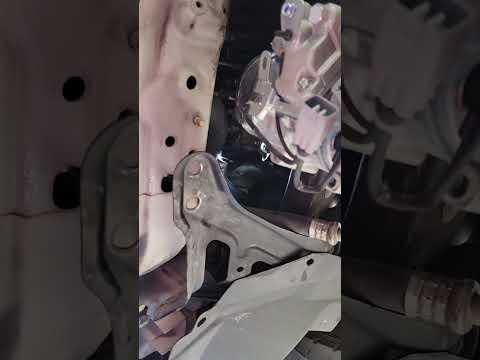





How to Replace Wheel Bearings and A/C Compressor on a 2014-2019 Toyota Highlander (Trim: Hybrid XLE | Engine: V6 3.5L)
Step-by-step repair guide with tools, parts, torque specs, safety tips, and A/C service notes for 2014, 2015, 2016, 2017, 2018, 2019
How to Replace Wheel Bearings and A/C Compressor on a 2014-2019 Toyota Highlander (Trim: Hybrid XLE | Engine: V6 3.5L)
Step-by-step repair guide with tools, parts, torque specs, safety tips, and A/C service notes for 2014, 2015, 2016, 2017, 2018, 2019


🔧 Highlander - Front Wheel Bearing Replacement
This job replaces the front wheel bearing/hub assembly on your Highlander. A worn bearing can cause humming, growling, vibration, or looseness at the wheel.
Assumption: This procedure is for a front wheel bearing/hub assembly. Rear bearing replacement is similar, but the rear brake/parking-brake layout differs.
Difficulty Level: Advanced | Estimated Time: 2.5-4 hours per side
⚠️ Safety & Precautions
- ⚠️ Your Highlander is a hybrid. Do not touch orange high-voltage cables or hybrid components.
- ⚠️ Work on level ground and support the vehicle with jack stands. Never rely on a jack alone.
- ⚠️ The axle nut is very tight. Loosen it only while the wheel is on the ground.
- ⚠️ Do not let the brake caliper hang by the brake hose. Support it with wire or a bungee cord.
- ⚠️ Avoid pulling the axle outward too far. It can damage the inner CV joint.
- ⚠️ Do not hammer directly on the ABS wheel speed sensor or sensor wiring.
- ⚠️ Disconnecting the 12V battery is recommended if working near ABS wiring. This does not disable the high-voltage hybrid system.
🔧 Required Tools
You'll need the following tools for this repair:
- 21mm lug nut socket
- 30mm axle nut socket
- 10mm socket
- 14mm socket
- 17mm socket
- 19mm socket
- Breaker bar 1/2-inch drive
- Torque wrench 1/2-inch drive 250 ft-lb capacity
- Ratchet 3/8-inch drive
- Ratchet 1/2-inch drive
- Flathead screwdriver medium
- Needle-nose pliers
- Hammer 2-lb
- Dead blow hammer 3-lb
- Punch set
- Hub puller kit (specialty)
- Slide hammer hub adapter kit (specialty)
- Ball joint separator (specialty)
- Penetrating oil spray
- Wire brush
- Brake cleaner spray
- Bungee cord
- Floor jack 3-ton minimum
- Jack stands 3-ton minimum
- Wheel chocks
- Nitrile gloves
- Safety glasses
🔩 Required Parts
HowToo sells all the parts you need for this repair:
- Front wheel bearing and hub assembly - Qty: 1 per side
- Front axle nut - Qty: 1 per side
- Brake rotor retaining clips - Qty: as needed
- Brake cleaner - Qty: 1 can
- Anti-seize compound - Qty: 1 small tube
📋 Before You Begin
- 🚗 Park your Highlander on level ground, shift to Park, and set the parking brake.
- 🧱 Place wheel chocks behind the rear wheels.
- 🔋 If disconnecting the 12V battery, use a 10mm socket on the negative terminal and isolate the cable. Wait 90 seconds before working around electrical connectors.
- 🧰 A hub puller pulls the hub straight out of the knuckle. A knuckle is the heavy metal steering part that holds the wheel bearing.
- 🧰 A slide hammer is a puller with a sliding weight. It helps remove a stuck hub with straight outward force.
- 💡 Spray penetrating oil around the axle nut area and hub mounting area before starting.
🔨 Step-by-Step Instructions
Follow these steps in order:
Step 1: Loosen the Axle Nut and Lug Nuts
- Use a flathead screwdriver and hammer to lift the staked part of the axle nut. The staked part is the bent-in lip that locks the nut in place.
- Use a 30mm axle nut socket and breaker bar to loosen the axle nut while the tire is still on the ground.
- Use a 21mm lug nut socket and breaker bar to loosen the wheel lug nuts one turn.
- Do not remove them yet.
Step 2: Raise and Support the Vehicle
- Use a floor jack to lift the front of your Highlander at the proper front jacking point.
- Place jack stands under the approved front support points.
- Lower the vehicle gently onto the jack stands.
- Use the floor jack lightly under the front subframe as backup support.
Step 3: Remove the Wheel
- Use a 21mm lug nut socket to remove the loosened lug nuts.
- Remove the wheel and place it flat under the vehicle as an extra safety backup.
Step 4: Remove the Brake Caliper
- Use a 14mm socket to remove the two front brake caliper slide pin bolts.
- Lift the caliper off the bracket.
- Use a bungee cord to hang the caliper from the strut spring.
- Never hang it by the hose.
Step 5: Remove the Caliper Bracket
- Use a 17mm socket and breaker bar to remove the two caliper bracket bolts.
- Remove the caliper bracket and set it aside.
- During reassembly, tighten the caliper bracket bolts to Torque to 107 Nm (79 ft-lbs).
Step 6: Remove the Brake Rotor
- Use needle-nose pliers to remove any rotor retaining clips if equipped.
- Pull the brake rotor straight off the hub.
- If stuck, use a dead blow hammer to tap around the rotor hat evenly.
- Tap gently and rotate often.
Step 7: Remove the ABS Sensor From the Knuckle
- Use a 10mm socket to remove the ABS wheel speed sensor retaining bolt.
- Gently twist and pull the sensor out of the knuckle.
- If it does not move easily, leave it installed and protect the wire carefully.
- Broken sensors are common when forced.
Step 8: Remove the Axle Nut
- Use a 30mm axle nut socket and breaker bar to remove the axle nut fully.
- Push the axle inward by hand.
- If stuck, use a punch and hammer on the axle center dimple only.
- Do not damage the axle threads.
Step 9: Free Extra Working Room if Needed
- Use a 17mm socket or 19mm socket to remove the lower ball joint fasteners if more axle movement is needed.
- Use a ball joint separator only if the joint is stuck.
- Move the steering knuckle outward just enough to slide the axle back from the hub.
- Do not overextend the axle.
Step 10: Remove the Hub/Bearing Mounting Bolts
- From the back side of the steering knuckle, use a 17mm socket to remove the four wheel bearing/hub assembly bolts.
- Spray penetrating oil around the hub where it enters the knuckle.
- Use a wire brush to clean exposed rust around the hub flange.
Step 11: Remove the Old Hub Assembly
- Install the hub puller kit or slide hammer hub adapter kit onto the wheel studs.
- Use the hub puller or slide hammer to pull the hub straight out of the knuckle.
- If it is badly stuck, alternate penetrating oil, light hammer taps, and puller pressure.
- Patience prevents broken parts.
Step 12: Clean the Knuckle Mounting Surface
- Use a wire brush to clean rust and dirt from the bearing bore and mounting face.
- Use brake cleaner spray to clean the area.
- Apply a very thin layer of anti-seize compound to the knuckle bore using a gloved finger.
- Do not get anti-seize on the brake rotor or wheel studs.
Step 13: Install the New Hub Assembly
- Slide the new wheel bearing and hub assembly into the steering knuckle by hand.
- Align the bolt holes carefully.
- Use a 17mm socket to start all four mounting bolts by hand first.
- Tighten the four hub bolts evenly in a crisscross pattern.
- Tighten the hub mounting bolts to Torque to 96 Nm (71 ft-lbs).
Step 14: Reinstall the Axle
- Guide the axle splines through the new hub by hand.
- Use a 30mm axle nut socket to install a new axle nut finger-tight.
- If the lower ball joint was removed, use a 17mm socket or 19mm socket to reinstall its fasteners.
- Tighten lower ball joint fasteners to Torque to 89 Nm (66 ft-lbs).
Step 15: Reinstall the ABS Sensor
- Use brake cleaner spray on a rag to clean the sensor tip gently.
- Slide the ABS sensor back into the knuckle by hand.
- Use a 10mm socket to install the retaining bolt.
- Tighten the ABS sensor bolt to Torque to 8 Nm (71 in-lbs).
Step 16: Reinstall the Brake Rotor and Caliper Bracket
- Use brake cleaner spray to clean both sides of the rotor if it was touched.
- Slide the rotor onto the hub.
- Use a 17mm socket to install the caliper bracket bolts.
- Tighten the caliper bracket bolts to Torque to 107 Nm (79 ft-lbs).
Step 17: Reinstall the Brake Caliper
- Remove the bungee cord while holding the caliper.
- Set the caliper over the brake pads and bracket.
- Use a 14mm socket to install the slide pin bolts.
- Tighten the slide pin bolts to Torque to 34 Nm (25 ft-lbs).
Step 18: Reinstall the Wheel
- Install the wheel by hand onto the hub.
- Use a 21mm lug nut socket to snug the lug nuts in a star pattern.
- Raise the vehicle slightly with the floor jack and remove the jack stands.
- Lower the tire until it just touches the ground.
Step 19: Torque the Axle Nut and Lug Nuts
- Use a 30mm axle nut socket and torque wrench to tighten the new axle nut to Torque to 294 Nm (217 ft-lbs).
- Use a punch and hammer to stake the axle nut into the axle groove.
- Use a 21mm lug nut socket and torque wrench to tighten the lug nuts in a star pattern to Torque to 103 Nm (76 ft-lbs).
✅ After Repair
- ✅ Reconnect the 12V battery negative cable if disconnected, using a 10mm socket.
- ✅ Pump the brake pedal until it feels firm before moving the vehicle.
- ✅ Start your Highlander and check for ABS, traction control, or brake warning lights.
- ✅ Test drive slowly first. Listen for grinding, clicking, or humming.
- ✅ Recheck lug nut torque after the first short drive.
- ✅ If the ABS light stays on, inspect the wheel speed sensor connector and wiring.
- ✅ If the steering wheel is off-center or the vehicle pulls, have the alignment checked.
💰 DIY vs Shop Cost
Shop Cost: $450-$750 per front side (parts + labor)
DIY Cost: $120-$280 per front side (parts only)
You Save: $330-$470 per side by doing it yourself!
Shop labor rates vary but typically run $100-$150/hour. This repair takes a shop approximately 1.5-2.5 hours per side.
🎯 Ready to get started?
HowToo makes it easy: same-day/2-day shipping on every part, plus all the tools and specialty tools you need! Check out the parts and tools sections below to add everything to your cart.
🔧 Highlander - A/C Compressor Replacement
Replacing the A/C compressor on your Highlander requires recovering the refrigerant, removing the drive belt, disconnecting the refrigerant lines, swapping the compressor, then evacuating and recharging the system. Because your Highlander uses a hybrid system, the A/C compressor is electrically driven and requires hybrid-safe A/C service practices.
Difficulty Level: Advanced | Estimated Time: 3-5 hours
⚠️ Safety & Precautions
- ⚠️ Your Highlander Hybrid uses an electric A/C compressor powered by the high-voltage hybrid system. Do not disconnect or probe orange high-voltage cables.
- ⚠️ Use only hybrid-compatible ND-11 type compressor oil. Conventional PAG oil can damage the electric compressor insulation.
- ⚠️ Refrigerant must be recovered with an approved recovery machine. Venting refrigerant is unsafe and illegal in many regions.
- ⚠️ A/C systems are under high pressure. Do not loosen refrigerant lines until the system has been fully recovered.
- ⚠️ Wear safety glasses and gloves. Refrigerant can cause frostbite instantly.
- ⚠️ Disconnect the 12V battery negative cable before unplugging the compressor electrical connector.
- ⚠️ If the compressor failed internally and sent metal debris through the system, the condenser and expansion valve should be replaced and the lines flushed where allowed.
🔧 Required Tools
You'll need the following tools for this repair:
- 10mm socket
- 12mm socket
- 14mm socket
- Ratchet 3/8-inch drive
- Extension 3/8-inch drive 6-inch
- Torque wrench 3/8-inch drive 10-80 ft-lb capacity
- Line wrench 10mm
- Line wrench 12mm
- Trim clip removal tool
- Flathead screwdriver medium
- Pick tool set
- A/C manifold gauge set R-134a (specialty)
- Refrigerant recovery machine R-134a (specialty)
- Vacuum pump 2-stage A/C (specialty)
- Refrigerant scale digital (specialty)
- Hybrid A/C oil injector R-134a (specialty)
- Scan tool with Toyota hybrid and A/C data (specialty)
- UV leak detection light (specialty)
- Floor jack 3-ton minimum
- Jack stands 3-ton minimum
- Wheel chocks
- Nitrile gloves
- Safety glasses
🔩 Required Parts
HowToo sells all the parts you need for this repair:
- Electric A/C compressor - Qty: 1
- A/C compressor O-ring seal kit - Qty: 1
- Hybrid A/C compressor oil ND-11 type - Qty: as required
- R-134a refrigerant - Qty: factory charge amount by weight
- A/C condenser with receiver/drier - Qty: 1 if compressor failed internally
- A/C expansion valve - Qty: 1 if compressor failed internally
- A/C line sealing caps - Qty: as needed
📋 Before You Begin
- 🚗 Park your Highlander on level ground, shift to Park, and set the parking brake.
- 🧱 Place wheel chocks behind the rear wheels.
- 🔋 Use a 10mm socket to disconnect the 12V battery negative cable after refrigerant recovery is complete.
- ❄️ Recover the refrigerant using an R-134a recovery machine before opening any A/C line.
- 🧰 An A/C manifold gauge set measures high-side and low-side refrigerant pressure.
- 🧰 A vacuum pump removes air and moisture from the A/C system before recharging.
- 🧰 A refrigerant scale measures the exact refrigerant weight. Your Highlander must be charged by weight, not by pressure guessing.
🔨 Step-by-Step Instructions
Follow these steps in order:
Step 1: Recover the Refrigerant
- Use the A/C manifold gauge set R-134a and refrigerant recovery machine R-134a to recover the refrigerant from the system.
- Confirm both high-side and low-side gauges show no system pressure after recovery.
- Do not loosen any A/C fitting until the system is fully recovered.
- Never vent refrigerant.
Step 2: Disconnect the 12V Battery
- Use a 10mm socket to loosen the negative battery cable clamp.
- Remove the negative cable and position it so it cannot touch the battery post.
- Wait at least 90 seconds before unplugging electrical connectors.
Step 3: Raise the Front of the Vehicle
- Use a floor jack 3-ton minimum to lift the front of your Highlander.
- Place jack stands 3-ton minimum under the approved front support points.
- Lower the vehicle gently onto the jack stands.
- Keep the floor jack lightly under the front support area as a backup.
Step 4: Remove the Lower Engine Covers
- Use a trim clip removal tool to remove the plastic push clips from the lower splash shield.
- Use a 10mm socket to remove the splash shield bolts.
- Lower the covers and set them aside.
Step 5: Locate the Electric A/C Compressor
- From underneath, locate the A/C compressor mounted low on the engine side of the engine compartment.
- Identify the refrigerant line connections and the electrical connector before removal.
- Do not touch any orange high-voltage wiring or connectors.
Step 6: Unplug the Compressor Electrical Connector
- Use a flathead screwdriver medium only to gently release the connector lock if needed.
- Pull the compressor connector straight off by the connector body.
- Do not pull on the wires.
Step 7: Disconnect the Refrigerant Lines
- Use a 10mm socket or 12mm socket to remove the refrigerant line retaining bolts at the compressor.
- Use a line wrench 10mm or line wrench 12mm if the fitting style requires it.
- Gently pull the suction and discharge lines away from the compressor.
- Use A/C line sealing caps to cap the open lines immediately.
- Remove old O-rings using a pick tool set.
- Keep dirt out of the lines.
Step 8: Remove the Compressor Mounting Bolts
- Support the compressor by hand before removing the last bolt.
- Use a 12mm socket or 14mm socket with a 3/8-inch ratchet and 6-inch extension to remove the compressor mounting bolts.
- Lower the electric A/C compressor out carefully.
Step 9: Compare the New Compressor
- Place the old and new compressors side by side.
- Confirm the mounting ears, refrigerant ports, and electrical connector match.
- Do not rotate or shake the compressor aggressively.
Step 10: Check Compressor Oil Amount
- Read the oil tag or paperwork on the new electric A/C compressor.
- Use only hybrid A/C compressor oil ND-11 type if oil adjustment is required.
- Use a hybrid A/C oil injector R-134a only if adding oil after installation.
- If the old compressor failed internally, replace the condenser with receiver/drier and expansion valve before charging.
- Wrong oil can ruin the compressor.
Step 11: Install the New Compressor
- Lift the electric A/C compressor into place by hand.
- Start all mounting bolts by hand to avoid cross-threading.
- Use a 12mm socket or 14mm socket to snug the bolts evenly.
- Use a torque wrench 3/8-inch drive to tighten the compressor mounting bolts to Torque to 25 Nm (18 ft-lbs).
Step 12: Install New O-Rings and Reconnect Lines
- Remove the caps from the compressor ports and refrigerant lines.
- Lightly coat the new A/C compressor O-rings with hybrid A/C compressor oil ND-11 type using a gloved finger.
- Install the new O-rings onto the refrigerant line fittings.
- Push the lines straight into the compressor ports.
- Use a 10mm socket or 12mm socket to install the line retaining bolts.
- Tighten refrigerant line retaining bolts to Torque to 10 Nm (89 in-lbs).
Step 13: Reconnect the Compressor Electrical Connector
- Push the electrical connector straight onto the compressor until it clicks.
- Use a flathead screwdriver medium only if the lock needs gentle help seating.
- Confirm the connector is fully latched.
Step 14: Reinstall the Lower Engine Covers
- Raise the splash shields into position.
- Use a 10mm socket to reinstall the lower cover bolts.
- Use a trim clip removal tool by hand to reinstall the plastic push clips.
- Tighten the lower cover bolts snugly to Torque to 5 Nm (44 in-lbs).
Step 15: Lower the Vehicle
- Use the floor jack 3-ton minimum to lift slightly off the jack stands.
- Remove the jack stands 3-ton minimum.
- Lower your Highlander fully to the ground.
Step 16: Reconnect the 12V Battery
- Use a 10mm socket to reconnect the negative battery cable.
- Tighten the terminal clamp until secure.
Step 17: Evacuate the A/C System
- Connect the A/C manifold gauge set R-134a to the high-side and low-side service ports.
- Connect the vacuum pump 2-stage A/C to the manifold gauge set.
- Run the vacuum pump for at least 30-45 minutes.
- Close the manifold valves and confirm the system holds vacuum for 10-15 minutes.
- If vacuum drops, use a UV leak detection light and inspect all disturbed fittings.
Step 18: Recharge the A/C System
- Place the R-134a refrigerant container on the refrigerant scale digital.
- Charge the system with the factory-specified refrigerant weight shown on the under-hood A/C label.
- Use the A/C manifold gauge set R-134a to feed refrigerant through the low side as directed by the equipment instructions.
- Do not overcharge the system.
- Charge by weight only.
Step 19: Command and Verify Compressor Operation
- Use a scan tool with Toyota hybrid and A/C data to check for A/C trouble codes.
- Start your Highlander in READY mode.
- Set climate control to LO temperature, A/C ON, fan medium-high, recirculation ON.
- Use the scan tool to monitor compressor command, high-side pressure, and evaporator temperature.
- Confirm the compressor operates smoothly and the vents begin blowing cold air.
✅ After Repair
- ✅ Check all A/C line connections for leaks using a UV leak detection light if dye is present.
- ✅ Confirm vent temperature is cold at idle and during a short road test.
- ✅ Scan for A/C and hybrid control codes after the test.
- ✅ If the A/C does not cool, stop testing and recheck charge weight, compressor command, and pressure readings.
- ✅ If the compressor failed from internal damage, do not keep running the new compressor until contamination repairs are complete.
💰 DIY vs Shop Cost
Shop Cost: $1,200-$2,200 (parts + labor)
DIY Cost: $550-$1,200 (parts only)
You Save: $650-$1,000 by doing it yourself!
Shop labor rates vary but typically run $100-$150/hour. This repair takes a shop approximately 3-5 hours.
🎯 Ready to get started?
HowToo makes it easy: same-day/2-day shipping on every part, plus all the tools and specialty tools you need! Check out the parts and tools sections below to add everything to your cart.