















How to Replace Upstream or Downstream Oxygen Sensor on a 2008-2012 Honda Accord (Engine: Inline 4 2.4L)
Step-by-step O2/A/F sensor swap with sensor locations, required tools/parts, torque specs, and code-clearing tips
How to Replace Upstream or Downstream Oxygen Sensor on a 2008-2012 Honda Accord (Engine: Inline 4 2.4L)
Step-by-step O2/A/F sensor swap with sensor locations, required tools/parts, torque specs, and code-clearing tips for 2008, 2009, 2010, 2011, 2012


🔧 Accord - Oxygen Sensor Replacement
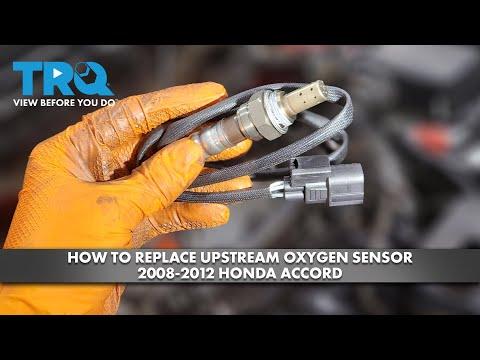
Your Accord has two exhaust sensors: an upstream Air/Fuel (A/F) sensor (Sensor 1) and a downstream O2 sensor (Sensor 2). Replacing the correct one matters because they sit in different locations and fix different trouble codes.
Difficulty Level: Intermediate | Estimated Time: 0.5-1.5 hours
⚠️ Safety & Precautions
- ⚠️ Exhaust parts get extremely hot—work on a fully cool engine.
- ⚠️ If lifting the car, support it with jack stands on solid, level ground—never rely on a jack alone.
- ⚠️ Avoid pulling on the sensor wires; only handle the connector and the sensor hex.
- 🔌 Battery disconnect is not required, but it’s OK to disconnect the negative terminal if you’re worried about shorting a connector.
🔧 Required Tools
You'll need the following tools for this repair:
- Safety glasses
- Nitrile gloves
- Floor jack (rated 2-ton minimum)
- Jack stands (rated 2-ton minimum)
- Wheel chocks
- Work light
- 22mm oxygen sensor socket (7/8")
- 3/8" drive ratchet
- 3/8" drive breaker bar
- 3/8" drive extension set
- Torque wrench (10-100 Nm range)
- 10mm socket
- Phillips screwdriver
- Trim clip removal tool
- OBD2 scan tool (basic code reader)
🔩 Required Parts
HowToo sells all the parts you need for this repair:
- Upstream A/F sensor (Sensor 1) - Qty: 1
- Downstream O2 sensor (Sensor 2) - Qty: 1
- Anti-seize compound - Qty: 1
- Penetrating oil - Qty: 1
- Replacement splash shield clips - Qty: 1 set
📋 Before You Begin
- 🧭 Identify which sensor you need:
- Sensor 1 (Upstream A/F): threaded into the exhaust manifold at the front of the engine bay.
- Sensor 2 (Downstream O2): threaded into the exhaust pipe after the catalytic converter, accessed from underneath.
- 🧰 If you have a check engine light, plug in your OBD2 scan tool and write down the codes first.
- 🚗 Park on level ground. Set the parking brake. Place wheel chocks behind the rear wheels.
- 🧊 Spray penetrating oil on the sensor threads (where it meets the pipe/manifold) and wait 10–15 minutes.
🔨 Step-by-Step Instructions
Follow these steps in order:
Step 1: Confirm which sensor you’re replacing
- Use the OBD2 scan tool to read codes.
- If you tell me the code(s) (example: P0138, P0420), I can confirm which sensor is most likely the correct one.
Step 2A: Replace Sensor 1 (Upstream A/F sensor) from the top
- Open the hood and locate the sensor on the exhaust manifold (front side of the engine).
- Unclip any harness retainers using the trim clip removal tool.
- Disconnect the sensor electrical connector by hand (press the lock tab, then pull apart).
- Install the 22mm oxygen sensor socket (7/8") over the sensor and loosen it using a 3/8" drive breaker bar.
- Remove the sensor the rest of the way with the 3/8" drive ratchet.
- If the new sensor threads are not pre-coated, apply a tiny amount of anti-seize compound to the threads only. Keep it off the tip.
- Thread the new sensor in by hand first to avoid cross-threading.
- Tighten with the torque wrench and 22mm oxygen sensor socket (7/8"): Torque to 44 Nm (33 ft-lbs).
- Reconnect the connector and re-secure the harness with the trim clip removal tool as needed.
Step 2B: Replace Sensor 2 (Downstream O2 sensor) from underneath
- Lift the front of the car using the floor jack (rated 2-ton minimum) and support it on jack stands (rated 2-ton minimum).
- Remove the lower splash shield if it blocks access:
- Remove bolts with a 10mm socket.
- Remove clips with a trim clip removal tool and/or Phillips screwdriver.
- Locate the downstream sensor on the exhaust pipe after the catalytic converter.
- Unclip harness retainers with the trim clip removal tool, then disconnect the electrical connector by hand.
- Loosen the sensor using the 22mm oxygen sensor socket (7/8") and a 3/8" drive breaker bar.
- Remove the sensor with the 3/8" drive ratchet and extension as needed.
- If needed, apply a small amount of anti-seize compound to the new sensor’s threads only. Do not contaminate the tip.
- Install the new sensor hand-tight first, then torque it with the torque wrench: Torque to 40 Nm (29 ft-lbs).
- Reconnect the connector, re-clip the harness, reinstall the splash shield using the 10mm socket and clips.
- Lower the car safely using the floor jack (rated 2-ton minimum).
Step 3: Clear codes and verify the fix
- Use the OBD2 scan tool to clear stored codes.
- Start the engine and listen for exhaust leaks (a sharp “ticking” near the sensor area can mean it’s loose).
- Test drive 10–15 minutes, then re-scan with the OBD2 scan tool to confirm no codes returned.
✅ After Repair
- 🔍 Re-check the sensor connector is fully latched and the harness is not touching the exhaust.
- 🛑 If a code returns immediately, stop and re-check for cross-threading, a damaged connector pin, or a blown fuse feeding the heater circuit.
- 🚗 If you were chasing a catalyst efficiency code (like P0420), a new downstream sensor may not fix it—tell me the code and I’ll guide you.
💰 DIY vs Shop Cost
Shop Cost: ₹6,000-₹18,000 (parts + labor)
DIY Cost: ₹3,500-₹12,000 (parts only)
You Save: ₹2,500-₹6,000 by doing it yourself!
Shop labor rates vary in Panipat, but this job is typically ~0.5-1.5 hours.
🎯 Ready to get started?
HowToo makes it easy: same-day/2-day shipping on every part, plus all the tools and specialty tools you need! Check out the parts and tools sections below to add everything to your cart.
Quick question (so I point you to the correct sensor):
- Which one are you replacing: upstream (Sensor 1) or downstream (Sensor 2)?
- What OBD2 code(s) are you getting (if any)?
Guide for Oxygen Sensor replace for these Honda vehicles
| Year Make Model | Sub Model | Engine | Body Style |
|---|---|---|---|
| 2012 Honda Accord | - | Inline 4 2.4L | - |
| 2011 Honda Accord | - | Inline 4 2.4L | - |
| 2010 Honda Accord | - | Inline 4 2.4L | - |
| 2009 Honda Accord | - | Inline 4 2.4L | - |
| 2008 Honda Accord | - | Inline 4 2.4L | - |