









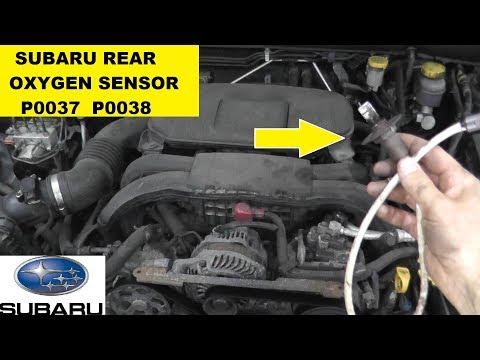







How to Replace Upstream & Downstream Oxygen (O2) Sensors on a 2018 Subaru Impreza
Step-by-step instructions with required tools, parts, OBD2 code tips, and torque specs for both sensors for 2012, 2013, 2014, 2015, 2016, 2017, 2018, 2019, 2020
How to Replace Upstream & Downstream Oxygen (O2) Sensors on a 2018 Subaru Impreza
Step-by-step instructions with required tools, parts, OBD2 code tips, and torque specs for both sensors for 2012, 2013, 2014, 2015, 2016, 2017, 2018, 2019, 2020


🔧 Impreza - Oxygen Sensor Replacement
Your Impreza uses two exhaust sensors: an upstream air/fuel (A/F) sensor (before the catalytic converter) and a downstream oxygen (O2) sensor (after the catalytic converter). Replacing the correct one restores proper fuel control and can fix a check-engine light for O2/A/F sensor codes.
Difficulty Level: Intermediate | Estimated Time: 0.8-2.0 hours
⚠️ Safety & Precautions
- ⚠️ Let the exhaust fully cool (burn risk).
- ⚠️ Support the car with jack stands; never rely on a jack.
- ⚠️ Avoid twisting/pulling on the sensor wiring.
- ⚠️ If working under the car, chock the rear wheels.
- ⚠️ Battery disconnect is not required, but keep ignition OFF while unplugging sensors.
🔧 Required Tools
You'll need the following tools for this repair:
- Safety glasses
- Nitrile gloves
- Wheel chocks
- Floor jack (rated 2-ton minimum)
- Jack stands (rated 2-ton minimum)
- 22mm oxygen sensor socket
- 3/8" drive ratchet
- 3/8" drive extension set
- Torque wrench (10–80 Nm range)
- Trim clip remover
- Flathead screwdriver
- Penetrating oil
- OBD2 scan tool
🔩 Required Parts
HowToo sells all the parts you need for this repair:
- Upstream A/F ratio sensor (front) - Qty: 1
- Downstream oxygen sensor (rear) - Qty: 1
📋 Before You Begin
- 🧰 Park on level ground and set the parking brake.
- 🧰 Let the engine/exhaust cool completely.
- 🧰 Decide which sensor you’re replacing: upstream (in engine bay) or downstream (under the car).
- 🧰 Spray penetrating oil on the sensor threads and let it soak 10–15 minutes.
🔨 Step-by-Step Instructions
Follow these steps in order:
Step 1: Identify the sensor (upstream vs downstream)
- Use your OBD2 scan tool to read codes.
- P0137/P0138 often point to the downstream sensor; P0031/P0032/P0130-type codes often point to the upstream A/F sensor.
- If unsure, replace only the coded sensor.
Step 2: Replace the upstream A/F sensor (engine bay method)
- Open the hood and locate the sensor on the exhaust manifold area (front of engine).
- Remove any blocking plastic ducting or covers using a trim clip remover and flathead screwdriver.
- Unplug the sensor connector by releasing the lock tab by hand (do not pull on wires).
- Install a 22mm oxygen sensor socket on a 3/8" drive ratchet with a 3/8" drive extension set and loosen the sensor.
- Remove the sensor by hand once loose.
- Thread the new sensor in by hand first (prevents cross-threading).
- Tighten with a torque wrench (10–80 Nm range): Torque to 44 Nm (32 ft-lbs).
- Reconnect the electrical connector until it clicks.
Step 3: Replace the downstream O2 sensor (under-car method)
- Chock wheels with wheel chocks.
- Lift the front with a floor jack (rated 2-ton minimum) and support with jack stands (rated 2-ton minimum).
- Locate the downstream sensor in the exhaust pipe after the catalytic converter.
- Unplug the connector (usually clipped to the body); use a trim clip remover if the harness clip is stubborn.
- Loosen the sensor using the 22mm oxygen sensor socket with a 3/8" drive ratchet and 3/8" drive extension set.
- Remove the sensor by hand, then install the new one by hand first.
- Tighten with a torque wrench (10–80 Nm range): Torque to 40 Nm (30 ft-lbs).
- Route the harness the same way as original and reconnect the connector until it clicks.
Step 4: What to do about anti-seize
- Most new sensors come with thread coating already applied.
- If your new sensor threads are pre-coated, do not add anything.
- If completely dry (rare), apply a tiny amount of nickel anti-seize only to threads, avoiding the tip.
Step 5: Reassemble and lower the car (if raised)
- Reinstall any covers/ducting using the trim clip remover and flathead screwdriver.
- Lower the car safely using the floor jack (rated 2-ton minimum).
✅ After Repair
- ✅ Clear codes with your OBD2 scan tool.
- ✅ Start the engine and check for exhaust leaks (ticking sound) around the sensor area.
- ✅ Confirm the check-engine light stays off after a short drive.
- ✅ If the light returns immediately, re-check the connector lock and harness routing.
💰 DIY vs Shop Cost
Shop Cost: $220-$520 (parts + labor)
DIY Cost: $60-$220 (parts only)
You Save: $160-$300 by doing it yourself!
Shop labor rates vary but typically run $100-$150/hour. This repair takes a shop approximately 0.8-1.5 hours.
🎯 Ready to get started?
HowToo makes it easy: same-day/2-day shipping on every part, plus all the tools and specialty tools you need! Check out the parts and tools sections below to add everything to your cart.