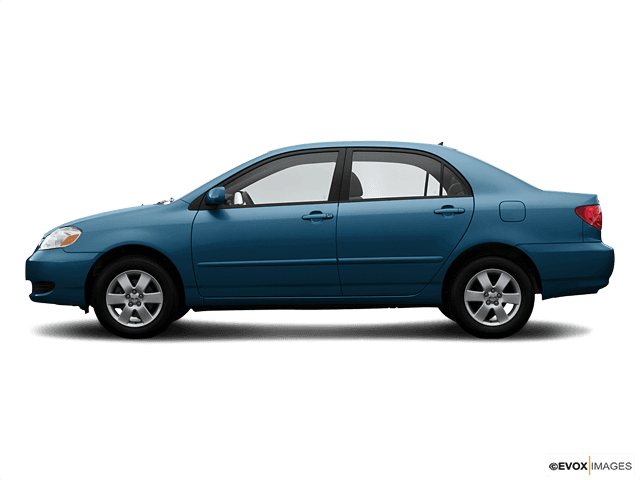









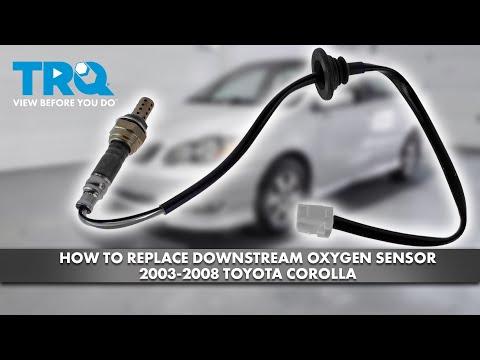







How to Replace Upstream & Downstream O2 Sensors on a 2005-2008 Toyota Corolla (Engine: Inline 4 1.8L)
Step-by-step instructions with tools/parts list, OBD2 code tips, and 33 ft-lb (44 Nm) torque spec
How to Replace Upstream & Downstream O2 Sensors on a 2005-2008 Toyota Corolla (Engine: Inline 4 1.8L)
Step-by-step instructions with tools/parts list, OBD2 code tips, and 33 ft-lb (44 Nm) torque spec for 2005, 2006, 2007, 2008


🔧 Corolla - Oxygen (O2) Sensor Replacement
Your Corolla uses oxygen sensors to measure exhaust oxygen so the engine computer can adjust fuel mixture and monitor the catalytic converter. Replacing a failed sensor can fix a check engine light, poor fuel economy, or emissions-test failures.
Difficulty Level: Intermediate | Estimated Time: 0.5-1.5 hours
⚠️ Safety & Precautions
- ⚠️ Exhaust parts get extremely hot—work on a fully cool engine/exhaust.
- ⚠️ Support the car with jack stands before going underneath; never rely on a jack alone.
- ⚠️ Use eye protection—rust and debris fall when loosening sensors.
- ⚠️ Don’t pull on the wiring harness; unplug by the connector only.
- ⚠️ Keep penetrating oil off the sensor tip and connector.
🔧 Required Tools
You'll need the following tools for this repair:
- Safety glasses
- Nitrile gloves
- Floor jack (rated 2-ton minimum)
- Jack stands (rated 2-ton minimum)
- Wheel chocks
- 22mm oxygen sensor socket (specialty)
- 3/8" drive ratchet
- 3/8" drive extension set
- Breaker bar (3/8" or 1/2")
- Torque wrench (10–100 ft-lb range)
- Trim clip tool
- Flathead screwdriver
- Penetrating oil
- OBD2 scan tool (specialty)
🔩 Required Parts
HowToo sells all the parts you need for this repair:
- Upstream air/fuel ratio sensor (Sensor 1) - Qty: 1
- Downstream oxygen sensor (Sensor 2) - Qty: 1
- Anti-seize compound (oxygen-sensor safe) - Qty: 1
📋 Before You Begin
- Park on level ground, shift to neutral, set the parking brake, and chock the rear wheels.
- Let the exhaust cool completely (at least 1 hour after driving).
- Decide which sensor you’re replacing:
- Sensor 1 (Upstream/A/F): on the exhaust manifold at the front of the engine (top side).
- Sensor 2 (Downstream/O2): in the exhaust pipe after the catalytic converter (under the car).
- Tip: Read the code first (P013x/P015x).
🔨 Step-by-Step Instructions
Follow these steps in order:
Step 1: Confirm which sensor the code points to
- Plug in your OBD2 scan tool (specialty) and read stored codes.
- Use this quick map:
- P0130–P0135 usually relates to Sensor 1 (upstream).
- P0136–P0141 usually relates to Sensor 2 (downstream).
- P0420 is often catalyst-related; a sensor can be a cause, but not always.
Step 2: Access the sensor
- If replacing Sensor 1 (Upstream/A/F):
- Open the hood and locate the sensor screwed into the exhaust manifold (front of engine).
- If a plastic cover or clips block access, remove them using a trim clip tool or flathead screwdriver.
- If replacing Sensor 2 (Downstream/O2):
- Lift the front of the car with a floor jack (rated 2-ton minimum) and place it on jack stands (rated 2-ton minimum).
- Keep wheel chocks in place.
- Locate the sensor threaded into the exhaust pipe after the catalytic converter.
Step 3: Unplug the electrical connector
- Spray a small amount of penetrating oil on the sensor threads only (avoid the connector).
- Find the sensor connector and release the lock tab using a flathead screwdriver (gentle pressure).
- Separate the connector by pulling on the plastic housing, not the wires.
Step 4: Remove the old sensor
- Slip the 22mm oxygen sensor socket (specialty) over the sensor (it has a slot for the wire).
- Use a 3/8" drive ratchet with a 3/8" drive extension set as needed to get a straight angle.
- If it’s stuck, use a breaker bar (3/8" or 1/2") to crack it loose, then spin it out.
- Tip: Short, controlled force works best.
Step 5: Install the new sensor
- Compare the old and new sensor (thread size, connector, wire length).
- Check the new sensor’s threads:
- If the new sensor threads already have a coating, do not add anti-seize.
- If threads are bare, apply a tiny amount of anti-seize compound (oxygen-sensor safe) to the threads only (keep it off the tip).
- Start threading the sensor by hand 3–4 turns to avoid cross-threading.
- Tighten with the 22mm oxygen sensor socket (specialty) and torque wrench (10–100 ft-lb range).
- Torque to 44 Nm (33 ft-lb).
Step 6: Reconnect wiring and secure the harness
- Plug the connector back in until it clicks.
- Route the wiring the same way as factory and clip it back into holders (use the trim clip tool if needed).
- Make sure the harness is not touching the exhaust.
Step 7: Lower the car (if you lifted it)
- Raise slightly with the floor jack (rated 2-ton minimum), remove the jack stands (rated 2-ton minimum), then lower the car.
- Remove wheel chocks after the car is fully on the ground.
✅ After Repair
- Use the OBD2 scan tool (specialty) to clear codes.
- Start the engine and listen for exhaust leaks near the sensor (a ticking sound).
- Verify no check engine light returns immediately.
- Take a 10–15 minute drive with mixed city/highway speeds; re-scan for pending codes.
- Tip: Some monitors need 1–3 drive cycles.
💰 DIY vs Shop Cost
Shop Cost: $200-$450 (parts + labor)
DIY Cost: $60-$180 (parts only)
You Save: $140-$270 by doing it yourself!
Shop labor rates vary but typically run $100-$150/hour. This repair takes a shop approximately 0.5-1.5 hours.
🎯 Ready to get started?
HowToo makes it easy: same-day/2-day shipping on every part, plus all the tools and specialty tools you need! Check out the parts and tools sections below to add everything to your cart.
Guide for Air / Fuel Ratio Sensor replace for these Toyota vehicles
| Year Make Model | Sub Model | Engine | Body Style |
|---|---|---|---|
| 2008 Toyota Corolla | - | Inline 4 1.8L | - |
| 2007 Toyota Corolla | - | Inline 4 1.8L | - |
| 2006 Toyota Corolla | - | Inline 4 1.8L | - |
| 2005 Toyota Corolla | - | Inline 4 1.8L | - |