









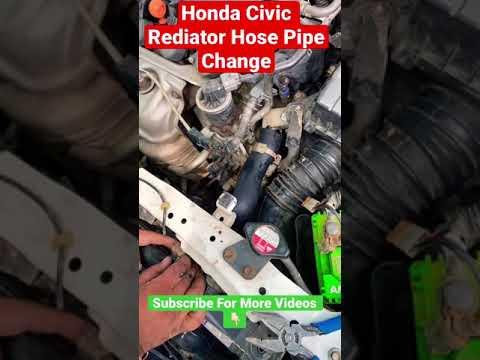







How to Replace Upper & Lower Radiator Hoses on a 2016-2021 Honda Civic (Engine: Inline 4 2.0L)
Step-by-step instructions, required tools/parts, coolant drain & bleed procedure, and safety tips
How to Replace Upper & Lower Radiator Hoses on a 2016-2021 Honda Civic (Engine: Inline 4 2.0L)
Step-by-step instructions, required tools/parts, coolant drain & bleed procedure, and safety tips for 2016, 2017, 2018, 2019, 2020, 2021


🔧 Civic - Radiator Hose Replacement
On your Civic, radiator hoses carry coolant between the radiator and the engine. Replacing the correct hose (upper vs lower) matters because access points and spill control are different, and I want to give you the exact, trim-correct steps.
Difficulty Level: Intermediate | Estimated Time: 1.0-2.0 hours
⚠️ Safety & Precautions
- ⚠️ Only work on a fully cool engine—hot coolant can cause severe burns.
- ⚠️ Do not open the radiator cap when hot; pressure can spray coolant.
- ⚠️ Support the Civic with jack stands on solid points; never rely on a jack.
- ⚠️ Keep coolant off belts/electrical connectors; wipe spills immediately.
- ⚠️ Battery disconnect is not required for the hose itself, but keep tools away from the battery terminals.
🔧 Required Tools
You'll need the following tools for this repair:
- Floor jack (rated 2-ton minimum)
- Jack stands (rated 2-ton minimum)
- Wheel chocks
- Safety glasses
- Nitrile gloves
- Drain pan (at least 2-gallon)
- Pliers for spring clamps
- Hose clamp pliers (specialty)
- Flathead screwdriver
- Pick tool set
- Trim clip removal tool
- 10mm socket
- 3/8" ratchet
- 3" extension
- Funnel
- Shop towels
🔩 Required Parts
HowToo sells all the parts you need for this repair:
- Upper radiator hose - Qty: 1
- Lower radiator hose - Qty: 1
- Radiator hose clamps - Qty: 2
- Honda-compatible coolant (prediluted 50/50) - Qty: 1-2 gallons
📋 Before You Begin
- Park the Civic on level ground, set the parking brake, and let the engine cool completely.
- Set the cabin heat to HOT and the fan to LOW before bleeding later (this helps purge air).
- Place a drain pan under the radiator area to catch any coolant.
- Take a quick photo of hose routing first.
🔨 Step-by-Step Instructions
Follow these steps in order:
Step 1: Confirm which hose you’re replacing
- Tell me: is it the upper hose (radiator to top of engine) or lower hose (radiator bottom to engine)?
- Also tell me what clamps you have: spring clamps (squeezed with pliers) or screw clamps (tightened with a flathead screwdriver).
- If you can, upload a clear photo of the hose ends and clamps.
Step 2: I’ll give you the exact Civic-specific steps + bleed procedure
- Once you answer the two questions above, I’ll provide the exact access steps (top-only vs under-car), how much coolant to drain, and the correct bleed sequence for your Civic.
✅ After Repair
- Verify the radiator cap is fully seated and the overflow reservoir is at the MAX line when cold.
- Warm the engine and confirm the heater blows hot; then recheck coolant level after a full cool-down.
- Inspect for leaks at both hose ends after a short test drive.
💰 DIY vs Shop Cost
Shop Cost: $180-$450 (parts + labor)
DIY Cost: $35-$120 (parts only)
You Save: $145-$330 by doing it yourself!
Shop labor rates vary but typically run $100-$150/hour. This repair takes a shop approximately 1.0-2.0 hours.
🎯 Ready to get started?
HowToo makes it easy: same-day/2-day shipping on every part, plus all the tools and specialty tools you need! Check out the parts and tools sections below to add everything to your cart.
Guide for Radiator Coolant Hose replace for these Honda vehicles
| Year Make Model | Sub Model | Engine | Body Style |
|---|---|---|---|
| 2021 Honda Civic | - | Inline 4 2.0L | - |
| 2020 Honda Civic | - | Inline 4 2.0L | - |
| 2019 Honda Civic | - | Inline 4 2.0L | - |
| 2018 Honda Civic | - | Inline 4 2.0L | - |
| 2017 Honda Civic | - | Inline 4 2.0L | - |
| 2016 Honda Civic | - | Inline 4 2.0L | - |