









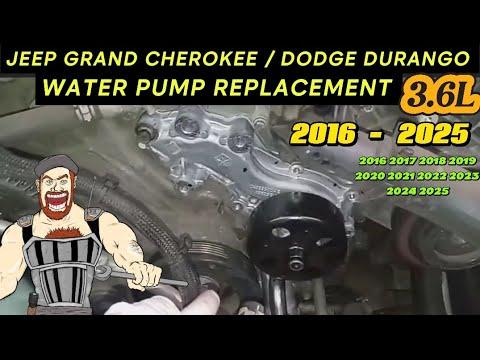





How to Replace the Water Pump on a 2022 Jeep Grand Cherokee WK 3.6L
Step-by-step DIY guide with required tools, parts list, torque specs, safety tips, and bleeding procedure for 2022
How to Replace the Water Pump on a 2022 Jeep Grand Cherokee WK 3.6L
Step-by-step DIY guide with required tools, parts list, torque specs, safety tips, and bleeding procedure for 2022


🔧 Grand Cherokee WK - Water Pump Replacement
You’ll be removing the drive belt, unbolting the water pump from the front of the engine, and installing a new pump and gasket, then refilling and bleeding the cooling system. This pump on your 3.6L V6 is belt-driven and sits at the front, so you do NOT open the timing chain area.
Difficulty Level: Intermediate | Estimated Time: 3–4 hours
⚠️ Safety & Precautions
- ⚠️ Let the engine cool completely (at least 2–3 hours). Hot coolant can cause severe burns.
- ⚠️ Never open the coolant reservoir cap when the engine is hot or under pressure.
- ⚠️ Disconnect the negative battery cable to avoid accidental fan operation or short circuits.
- ⚠️ Support the vehicle on jack stands if you raise it; never rely only on a jack.
- ⚠️ Coolant is poisonous to people and animals. Collect it in a pan and dispose of it properly.
- ⚠️ Keep tools and hands clear of the belt area when rotating the engine or tensioner.
🔧 Required Tools
You'll need the following tools for this repair:
- 🧰 Metric socket set (8mm–19mm)
- 🧰 3/8" drive ratchet
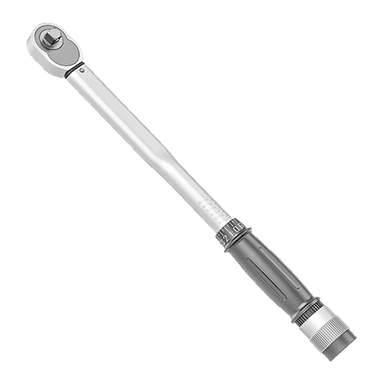
- 🧰 3/8" drive torque wrench (5–75 ft-lbs range)
- 🧰 1/4" drive torque wrench (40–150 in-lbs range)
- 🧰 3/8" drive extensions (3" and 6")
- 🧰 Serpentine belt tool or 3/8" breaker bar
- 🧰 Flat-head screwdriver (medium)
- 🧰 Phillips screwdriver
- 🧰 Trim clip removal tool
- 🧰 Pliers set
- 🧰 Coolant drain pan (at least 10 liters)
- 🧰 Funnel with small spout
- 🧰 Plastic or brass scraper
- 🧰 Nylon scouring pad
- 🧰 Shop towels or rags
- 🧰 Floor jack (rated 3-ton minimum)
- 🧰 Jack stands (rated 3-ton minimum)
- 🧰 Safety glasses
- 🧰 Mechanic gloves
- 🧰 Work light or flashlight
🔩 Required Parts
HowToo sells all the parts you need for this repair:
- 🔩 Engine water pump (3.6L V6) - Qty: 1
- 🔩 Water pump gasket or O-ring (included with pump in most kits) - Qty: 1
- 🔩 Serpentine drive belt (3.6L with A/C) - Qty: 1 Recommended while you’re here
- 🔩 Engine coolant (OAT, MS-12106, 50/50 premix) - Qty: 10–12 liters total
- 🔩 Coolant-safe RTV sealant - Qty: 1 small tube Only if specified by pump instructions
- 🔩 New hose clamps (appropriate sizes) - Qty: 2–4 If any originals are rusty or weak
- 🔩 Throttle body/intake clamp screws (if damaged or corroded) - Qty: As needed
- 🔩 Shop towels/absorbent pads - Qty: 1 pack
📋 Before You Begin
- Park the Grand Cherokee WK on level ground, shift to Park, and set the parking brake.
- Open the hood and let the engine cool completely if it has been running.
- Disconnect the negative (-) battery cable with a 10mm socket and move it aside so it cannot spring back.
- Place the coolant drain pan under the front center of the vehicle.
- Review the belt routing diagram sticker under the hood. If there is none, take a clear photo of the belt path.
🔨 Step-by-Step Instructions
Follow these steps in order:
Step 1: Raise and prepare the vehicle
- Use the floor jack to lift the front of the Grand Cherokee WK at the front jacking point.
- Set the vehicle down securely on jack stands under the front frame points.
- Position the coolant drain pan under the radiator drain area and lower front of the engine.
Step 2: Drain some coolant
- Slowly loosen the coolant reservoir cap by hand until any hiss of pressure stops, then remove it.
- From under the front, locate the radiator lower area; if there is a drain petcock, use a flat-head screwdriver to open it and drain 4–6 liters into the pan.
- If there is no petcock, loosen the lower radiator hose clamp with pliers or a socket and carefully pull the hose off to drain coolant into the pan.
- Once drained, close the petcock with the flat-head screwdriver or reinstall the lower hose and tighten the clamp with the appropriate socket.
Step 3: Remove intake ducting for access
- Locate the plastic air intake tube between the airbox and throttle body.
- Use a flat-head screwdriver or 8mm socket to loosen the hose clamps at both ends.
- Unclip any attached small hoses or connectors by hand or with pliers.
- Lift the intake tube out and set it aside.
Step 4: Remove the serpentine belt
- Find the belt tensioner (spring-loaded pulley) on the front of the engine.
- Insert a 3/8" breaker bar or serpentine belt tool into the square hole on the tensioner.
- Rotate the tensioner (usually clockwise) to relieve tension while you slide the belt off one of the upper pulleys by hand.
- Slowly release the tensioner back to its resting position.
- Remove the belt completely, noting the routing, and set aside. If replacing, discard the old belt.
Step 5: Identify and inspect the water pump area
- The water pump on the 3.6L is the aluminum housing with a pulley near the center front of the engine.
- Look around the pump for hoses or sensors attached. Most connections are to the housing and not right on the pump pulley area.
- Wipe the area with shop towels so you can see clearly.
Step 6: Remove any brackets or components blocking the water pump
- If any small brackets or the belt idler pulleys are in front of the pump bolts, remove them.
- Use the appropriate 13mm or 15mm socket with a 3/8" ratchet to remove idler or bracket bolts.
- Keep track of bolt locations on a clean cardboard or tray.
- If you remove an idler pulley or tensioner, note torque when reinstalling: Torque to 54 Nm (40 ft-lbs).
Step 7: Remove the water pump pulley (if required)
- Some pump designs have a separate pulley held on by bolts. If yours does, use a 13mm socket to remove the pulley bolts.
- Hold the pulley by hand while loosening bolts so it does not spin.
- Remove the pulley and set it aside.
Step 8: Remove the water pump
- Locate all the water pump mounting bolts around the pump perimeter.
- Use a 10mm socket and 3/8" ratchet with extensions as needed to remove each bolt.
- Loosen bolts in a crisscross pattern to reduce stress on the housing.
- Gently tap the pump body with the handle of a rubber mallet or screwdriver to break it loose if it is stuck.
- Pull the pump straight out; be ready for some remaining coolant to spill into the drain pan.
Step 9: Clean the gasket surface
- Use a plastic or brass scraper to carefully remove old gasket material from the engine block surface.
- Follow up with a nylon scouring pad to smooth the surface.
- Do not gouge or scratch the aluminum; avoid metal scrapers.
- Wipe the surface clean with shop towels until it is smooth and free of debris or old sealant.
- Block must be clean and dry for sealing.
Step 10: Prepare the new water pump
- Install the new gasket or O-ring onto the new pump as directed in the pump instructions.
- If the manufacturer calls for RTV sealant, run a thin, even bead of coolant-safe RTV on the pump’s gasket surface and let it skin for a few minutes.
- Make sure the weep hole (small hole in pump body) is clear and facing down.
Step 11: Install the new water pump
- Align the new pump with the bolt holes on the engine block.
- Start all pump bolts by hand using the 10mm socket on an extension but do not fully tighten yet.
- Once all bolts are finger-tight, snug them in a crisscross pattern with the 3/8" ratchet.
- Using the 1/4" drive torque wrench and 10mm socket, tighten each bolt to 12 Nm (106 in-lbs ≈ 9 ft-lbs) in a crisscross pattern.
Step 12: Reinstall water pump pulley and brackets
- Position the pulley on the pump hub and start the pulley bolts by hand using a 13mm socket.
- Hold the pulley and snug the bolts with the 3/8" ratchet.
- Torque the pulley bolts to 25 Nm (18 ft-lbs) with the 3/8" torque wrench.
- Reinstall any brackets or idler pulleys removed earlier using the correct socket size.
- Torque idler and tensioner bolts to 54 Nm (40 ft-lbs) with the 3/8" torque wrench.
Step 13: Reinstall the serpentine belt
- Route the belt according to the under-hood diagram or your photo.
- Leave the belt off one easy-to-reach upper pulley for last.
- Use the serpentine belt tool or 3/8" breaker bar on the tensioner to rotate it and relieve tension.
- Slip the belt over the last pulley with your free hand, then slowly release the tensioner.
- Visually check that the belt sits centered on every pulley groove.
Step 14: Reinstall intake ducting
- Place the intake tube back between the airbox and throttle body.
- Reconnect any small hoses or connectors by hand.
- Use the flat-head screwdriver or 8mm socket to tighten the hose clamps snugly (do not overtighten).
Step 15: Refill the cooling system
- Make sure the drain petcock and lower radiator hose are fully closed and tight using the flat-head screwdriver or correct socket.
- Place a funnel into the coolant reservoir opening.
- Slowly pour the correct OAT 50/50 coolant into the reservoir until it reaches near the “MAX” line.
- Pause occasionally to let trapped air escape.
Step 16: Reconnect battery and bleed air from the system
- Reconnect the negative battery cable with a 10mm socket and tighten snugly.
- Start the engine and let it idle with the reservoir cap off.
- Turn the heater to maximum hot and fan to medium inside the cabin.
- Watch the coolant level in the reservoir; add more as it drops.
- As the engine warms, you may see air bubbles; let them escape.
- When the upper radiator hose is warm and the heater blows hot air, the thermostat has opened.
- Once the level stabilizes and there are no more bubbles, install the reservoir cap by hand.
Step 17: Final checks and reassembly
- Shut the engine off and let the vehicle cool fully (at least an hour).
- Check under the front of the Grand Cherokee WK and around the water pump for any signs of leaks.
- If dry, remove the jack stands using the floor jack and lower the vehicle to the ground.
- Check the coolant level again in the reservoir and top off to the “MAX” line if needed.
✅ After Repair
- Take a short, gentle test drive while watching the temperature gauge. It should stay in the normal range.
- After the drive, park, shut off the engine, and check for leaks under the front of the vehicle and around the pump area.
- When the engine cools, recheck coolant level in the reservoir and top up to the “MAX” line if it dropped.
- Over the next few days, keep an eye on the coolant level and the ground where you park for any drips.
💰 DIY vs Shop Cost
Shop Cost: $650–$950 (parts + labor)
DIY Cost: $180–$320 (parts + coolant)
You Save: $330–$770 by doing it yourself!
Shop labor rates vary but typically run $100–$150/hour. This repair takes a shop approximately 2–3 hours.
🎯 Ready to get started?
HowToo makes it easy: same-day/2-day shipping on every part, plus all the tools and specialty tools you need! Check out the parts and tools sections above to add everything to your cart.