









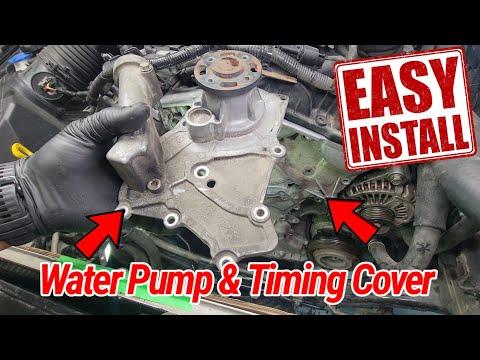







How to Replace the Water Pump on a 2020 Hyundai Palisade 3.8L V6
Step-by-step DIY instructions with tools, parts list, coolant refill/bleeding tips, and leak checks
How to Replace the Water Pump on a 2020 Hyundai Palisade 3.8L V6
Step-by-step DIY instructions with tools, parts list, coolant refill/bleeding tips, and leak checks


🔧 Palisade - Water Pump Replacement
On your Palisade, the water pump is a belt-driven mechanical pump on the front of the 3.8L engine. Replacing it requires draining coolant, removing the drive belt and nearby components for access, then reinstalling with a new gasket/O-ring and properly refilling/bleeding the cooling system.
Difficulty Level: Advanced | Estimated Time: 3-6 hours
⚠️ Safety & Precautions
- ⚠️ Work on a cold engine only; hot coolant can cause severe burns.
- ⚠️ Support the vehicle with jack stands; never rely on a jack.
- ⚠️ Keep hands/tools clear of the belt path; fingers can get pulled in.
- ⚠️ Coolant is toxic—clean spills immediately and keep away from pets.
- Disconnecting the battery is recommended if you’ll be working near the alternator wiring.
🔧 Required Tools
You'll need the following tools for this repair:
- Safety glasses
- Nitrile gloves
- Floor jack (rated 3-ton minimum)
- Jack stands (rated 3-ton minimum)
- Wheel chocks
- Drain pan (at least 10-quart)
- Funnel
- Trim clip remover
- Ratchet 3/8"
- Ratchet 1/2"
- Socket set 8mm–19mm
- Wrench set 8mm–19mm
- Torque wrench 5–80 Nm (4–60 ft-lbs)
- Serpentine belt tool (specialty)
- Pry bar
- Plastic scraper
- Shop towels
- Cooling system pressure tester (specialty)
- Vacuum coolant refill tool (specialty)
🔩 Required Parts
HowToo sells all the parts you need for this repair:
- Water pump - Qty: 1
- Water pump gasket / O-ring - Qty: 1
- Serpentine drive belt - Qty: 1
- Hyundai-compatible coolant (P-OAT type, prediluted 50/50) - Qty: 2-3 gallons
- Distilled water - Qty: 1 gallon
📋 Before You Begin
- Park on level ground, set the parking brake, and chock the rear wheels.
- Let the engine cool fully (ideally overnight).
- Raise the front and place it securely on jack stands.
- Remove the lower engine splash shield using a trim clip remover and the appropriate socket.
🔨 Step-by-Step Instructions
Follow these steps in order:
Step 1: Confirm the exact pump location you’re replacing
- Open the hood and look at the front (belt side) of the engine.
- The mechanical water pump is mounted on the front of the engine and driven by the serpentine belt.
- If unsure, send a photo of the belt side.
Step 2: Drain the coolant
- Place a drain pan under the radiator drain area.
- Slowly loosen the coolant reservoir cap by hand to release any pressure.
- Open the radiator drain using the appropriate socket or by hand (varies by fastener style) and drain coolant.
Step 3: Remove under-covers and access panels
- Use a trim clip remover to remove plastic clips.
- Use an 10mm socket to remove under-cover bolts (if equipped).
Step 4: Remove the serpentine belt
- Use a serpentine belt tool (a long handled wrench designed to rotate the belt tensioner) to rotate the tensioner and relieve belt tension.
- Slide the belt off one pulley, then remove it completely.
- Take a photo of the belt routing before removal.
Step 5: Remove components blocking the water pump (as needed)
- Remove any brackets or covers blocking access using the appropriate socket (commonly 10mm, 12mm, 14mm depending on fastener).
- If you need to move the alternator harness for clearance, disconnect the negative battery cable using a 10mm socket first.
Step 6: Remove the water pump
- Place shop towels under the pump area to catch remaining coolant.
- Use the appropriate socket to remove the water pump mounting bolts.
- Gently break the seal and pull the pump away; a small amount of coolant will spill.
Step 7: Clean the sealing surface
- Use a plastic scraper to remove old gasket material from the engine mating surface.
- Wipe clean with shop towels until dry and smooth.
- Do not gouge the aluminum surface.
Step 8: Install the new water pump and gasket/O-ring
- Install the new gasket/O-ring onto the new pump (dry unless the gasket instructions specify otherwise).
- Position the pump and start all bolts by hand to avoid cross-threading.
- Tighten bolts evenly in a criss-cross pattern using a torque wrench.
- Torque specs: I need one quick confirmation to provide the exact Hyundai torque values for your specific bolt set (see question #1 below).
Step 9: Reinstall removed brackets/covers and install the serpentine belt
- Reinstall brackets/covers using the same socket sizes used for removal.
- Route the belt correctly, then use the serpentine belt tool to rotate the tensioner and slip the belt into place.
- Double-check that the belt ribs are fully seated in every pulley groove.
Step 10: Refill and bleed the cooling system
- Best method: use a vacuum coolant refill tool to pull vacuum and refill without air pockets.
- If filling normally: use a funnel and fill the reservoir with the correct Hyundai-compatible P-OAT coolant mix.
- Start the engine and set heat to HOT, fan LOW. Let it reach operating temp and watch for bubbles/top-offs.
- Shut down, cool completely, then recheck level and top off as needed.
Step 11: Pressure test for leaks
- Use a cooling system pressure tester to pressurize the system.
- Inspect around the pump seam, hose connections, and drain point for leaks.
✅ After Repair
- Verify no leaks with engine hot and cold.
- Confirm heater output is strong (weak heat can mean trapped air).
- Recheck coolant level over the next 2–3 drive cycles and top off if needed.
- If overheating occurs, stop and re-bleed—air pockets can cause rapid overheating.
💰 DIY vs Shop Cost
Shop Cost: $650-$1,200 (parts + labor)
DIY Cost: $150-$350 (parts only)
You Save: $500-$850 by doing it yourself!
Shop labor rates vary but typically run $100-$150/hour. This repair takes a shop approximately 3-6 hours.
🎯 Ready to get started?
HowToo makes it easy: same-day/2-day shipping on every part, plus all the tools and specialty tools you need! Check out the parts and tools sections below to add everything to your cart.
Quick questions (so I can give you the exact Hyundai torque specs and the right access steps):
- 🔍 Is your pump the belt-driven mechanical water pump on the front of the engine (not a thermostat housing or coolant pipe leak)?
- 🔍 Can you upload a photo of the water pump area (belt side) so I can confirm which brackets/components need to come off on your Palisade?