















How to Replace the Water Pump on a 2019 Ford Explorer 3.5L EcoBoost
Step-by-step DIY water pump replacement with tools, parts list, torque specs guidance, safety tips, and timing chain procedures
How to Replace the Water Pump on a 2019 Ford Explorer 3.5L EcoBoost
Step-by-step DIY water pump replacement with tools, parts list, torque specs guidance, safety tips, and timing chain procedures


🔧 Explorer - Water Pump Replacement
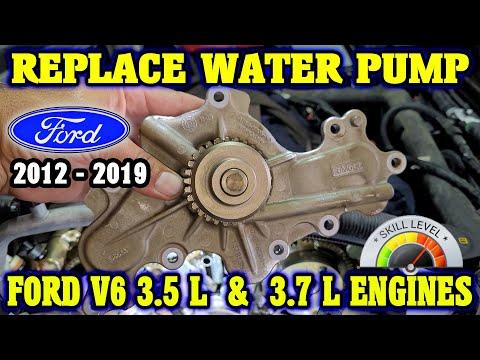
The water pump on your Explorer’s 3.5L EcoBoost is driven by the timing chain and is mounted inside the front of the engine. Replacing it is a major job that involves removing the front cover and working with the timing chains. This is considered a professional-level repair; if anything feels beyond your comfort level, it’s safer to have a shop finish the job.
Difficulty Level: Advanced | Estimated Time: 8-12 hours (first-timer)
⚠️ Safety & Precautions
- ⚠️ This job involves working near the timing chains; incorrect timing can cause severe engine damage.
- ⚠️ You must support the engine with an engine support bar or floor jack before removing engine mounts.
- ⚠️ Coolant will be drained; avoid skin contact and keep away from children and pets.
- ⚠️ Disconnect the negative battery terminal before starting to avoid accidental cranking and short circuits.
- ⚠️ Work only on a cool engine; hot coolant and parts can cause serious burns.
- ⚠️ Wear eye protection when working under the vehicle and when draining coolant.
🔧 Required Tools
You'll need the following tools for this repair:
- 🔹Floor jack (rated 3-ton minimum)
- 🔹Jack stands (rated 3-ton minimum, Qty: 2-4)
- 🔹Wheel chocks
- 🔹Engine support bar (specialty)
- 🔹Metric socket set (8mm-21mm)
- 🔹Deep metric socket set (8mm-21mm)
- 🔹1/4" drive ratchet
- 🔹3/8" drive ratchet
- 🔹1/2" drive ratchet
- 🔹1/2" drive breaker bar
- 🔹Torque wrench (3/8" drive, 5-80 Nm range)
- 🔹Torque wrench (1/2" drive, 40-250 Nm range)
- 🔹Metric combination wrench set (8mm-19mm)
- 🔹Torx bit set (T20-T50)
- 🔹E-Torx socket set (E6-E14)
- 🔹Serpentine belt tool or long 3/8" breaker bar
- 🔹Crankshaft pulley holding tool (specialty)
- 🔹Pry bar (medium length)
- 🔹Plastic trim removal tool set
- 🔹Flathead screwdriver (medium)
- 🔹Phillips screwdriver
- 🔹Coolant drain pan (at least 10-liter capacity)
- 🔹Funnel with long spout
- 🔹Razor scraper or gasket scraper
- 🔹Plastic Scotch-Brite pad
- 🔹Brake cleaner spray
- 🔹Shop towels or rags
- 🔹Paint marker or white marker pen
- 🔹Pliers set (needle nose and standard)
- 🔹Hose clamp pliers (specialty)
- 🔹OBD2 scan tool (basic)
- 🔹Safety glasses
- 🔹Mechanic gloves
- 🔹Work light or headlamp
🔩 Required Parts
HowToo sells all the parts you need for this repair:
- 🔹Water pump assembly (3.5L EcoBoost, internal) - Qty: 1
- 🔹Water pump O-rings / seals - Qty: 1 set
- 🔹Front timing cover gasket set - Qty: 1
- 🔹Timing chain cover RTV sealant (engine-grade, gray) - Qty: 1 tube
- 🔹Timing chain set (chains, guides, tensioners) - Qty: 1 set strongly recommended while open
- 🔹Crankshaft front seal - Qty: 1
- 🔹Crankshaft pulley bolt (one-time-use) - Qty: 1
- 🔹Engine mount bolts (if specified one-time-use) - Qty: 1 set
- 🔹Accessory drive belt (serpentine belt) - Qty: 1
- 🔹Engine coolant (Ford specification orange or yellow coolant as specified for 2019) - Qty: enough for full refill, typically 2-3 gallons premixed
- 🔹Throttle body gasket - Qty: 1 (if removed)
- 🔹Intake manifold gasket set - Qty: 1 (if removed)
- 🔹Hose clamps (assorted replacement) - Qty: as needed
- 🔹Brake cleaner or engine degreaser - Qty: 1-2 cans
- 🔹Shop towels - Qty: 1 pack
📋 Before You Begin
- Park the Explorer on level ground, set the parking brake, and place wheel chocks behind the rear wheels.
- Open the hood and allow the engine to cool completely (at least 1-2 hours).
- Disconnect the negative battery terminal using a 10mm socket and move the cable aside so it cannot touch the post.
- Make sure you have an engine support bar or a safe way to support the engine from below with a floor jack and wood block when the right engine mount is removed.
- Have your phone ready to take photos as you go; this really helps with routing hoses and wiring later.
🔨 Step-by-Step Instructions
Follow these steps in order:
Step 1: Raise and support the vehicle
- Use the floor jack to lift the front of the Explorer at the front jacking point.
- Place jack stands securely under the front subframe on both sides and gently lower the vehicle onto them.
- Leave the floor jack under a solid point (light contact only) as a backup.
- Never work under a car supported only by a jack.
Step 2: Drain the engine coolant
- Position the coolant drain pan under the radiator drain area.
- Remove the coolant reservoir cap by hand to release pressure.
- Open the radiator drain petcock (usually plastic) using your hand or a pliers gently if needed, and let the coolant drain fully.
- If there is no easy drain, remove the lower radiator hose using hose clamp pliers and let coolant flow into the pan.
Step 3: Remove engine covers and intake components
- Remove the plastic engine cover by hand or with a 10mm socket if it has bolts.
- Loosen the intake tube clamps with a flathead screwdriver or 8mm socket and disconnect the air intake tube from the throttle body and airbox.
- Unplug any sensors in the intake tube by hand (push the tab, then pull the connector).
- Lift out the intake tube and set it aside.
- If the upper intake manifold blocks access, remove its bolts with a 10mm socket, unplug connectors, and lift it off, keeping track of vacuum hoses. Replace the gaskets later.
Step 4: Remove accessory drive belt and components
- Note or photograph the belt routing before removal.
- Use a serpentine belt tool or long 3/8" breaker bar in the belt tensioner square hole to relieve tension, then slide the belt off pulleys by hand.
- Remove any idler pulleys or brackets blocking the front cover using appropriate 13mm-15mm sockets.
- If the alternator or power steering pump brackets block the cover, remove their mounting bolts with a 15mm socket and carefully move them aside without stressing hoses or wires.
Step 5: Support the engine and remove the right engine mount
- Install the engine support bar across the fenders and attach to the engine lift point with its hooks and chain, then apply light tension.
- Alternatively, place the floor jack with a wood block under the oil pan and raise until it just contacts the pan. Do not lift the vehicle by the oil pan.
- Remove the right engine mount bracket bolts using a 15mm or 18mm socket as fitted, and remove the mount and bracket that block the timing cover area.
Step 6: Remove crankshaft pulley (harmonic balancer)
- Remove any lower splash shields using a 7mm or 8mm socket and plastic trim tools for clips.
- Install the crankshaft pulley holding tool to lock the pulley from turning, following its instructions.
- Use a 1/2" breaker bar and correct large socket (commonly 21mm) to loosen the crankshaft pulley bolt; this will be very tight.
- Remove the pulley bolt with a 1/2" drive ratchet, then slide the crankshaft pulley off by hand or with gentle leverage from a pry bar if needed.
Step 7: Remove front timing cover
- Unplug any sensors and remove any brackets attached to the front cover using appropriate 10mm-15mm sockets and Torx bits.
- Remove all front timing cover bolts with a 10mm socket and any E-Torx bolts with the correct E-Torx socket. Note different bolt lengths and locations (take photos or label).
- Gently pry the cover away from the engine block using a plastic trim tool or pry bar at the designated pry points. Do not gouge the sealing surfaces.
- Carefully remove the cover; some coolant and oil may drip, so keep the drain pan and rags ready.
Step 8: Expose timing chains and mark timing positions
- Rotate the engine by hand using a 1/2" ratchet and crank bolt (temporarily reinstalled) until the timing marks on the crank sprocket and camshaft sprockets align as per service manual (use paint marker to add your own clear marks on chains and sprockets).
- Use the paint marker to mark the relationship between timing chains and each sprocket. This is your backup reference.
- Take multiple clear photos of all timing marks now.
Step 9: Remove timing chain components as needed
- Relieve tension on the timing chains by carefully compressing and locking any chain tensioners if possible, using a flathead screwdriver or as specified.
- Remove timing chain tensioners and guides using a 10mm socket and/or E-Torx sockets.
- Carefully remove the timing chains from the water pump sprocket and related sprockets, keeping track of orientation.
- If you are installing a full timing set, prepare new chains, guides, and tensioners for installation later.
Step 10: Remove the water pump
- Locate the water pump on the front of the engine block (behind the timing chains).
- Remove the water pump mounting bolts with a 10mm socket.
- Gently pry the water pump away from the block using a plastic trim tool if it is stuck. Some coolant may leak out.
- Remove the pump and old O-rings or seals, and clean the mating surface on the engine with a razor scraper and Scotch-Brite pad, then wipe with brake cleaner on a rag.
Step 11: Install the new water pump
- Lightly coat new O-rings or seals with fresh coolant for lubrication.
- Position the new pump onto the engine by hand, making sure it sits flat and the O-rings do not pinch.
- Install the pump bolts finger-tight, then tighten evenly with a 10mm socket.
- Torque to factory specification from the service manual (do not guess).
Step 12: Reinstall timing chains, guides, and tensioners
- Install new or original timing chains onto the crankshaft and camshaft sprockets, matching your paint marks and the factory timing marks.
- Install guides and tensioners with a 10mm socket and/or E-Torx sockets.
- Release tensioners to apply proper tension to the chains.
- Rotate the engine by hand two full crankshaft turns using a 1/2" ratchet and confirm all timing marks line up again and there is no binding.
- Torque to factory specification from the service manual (do not guess) for each fastener.
Step 13: Prepare and reinstall front timing cover
- Thoroughly clean the front cover and engine block sealing surfaces with a razor scraper and brake cleaner on a rag.
- Install a new crankshaft front seal into the timing cover if it is separate, using a suitable driver or large socket and a hammer tapped gently.
- Apply RTV sealant to the timing cover in the specified areas and around coolant/oil passages according to the gasket kit instructions. Do not over-apply.
- Position the timing cover onto the engine by hand, aligning dowels.
- Install all timing cover bolts finger-tight with a 10mm socket and E-Torx sockets where needed, then tighten in a crisscross pattern.
- Torque to factory specification from the service manual (do not guess) and observe any time limits for RTV skinning.
Step 14: Reinstall crankshaft pulley and engine mount
- Install the crankshaft pulley onto the crank snout by hand.
- Install a new crankshaft pulley bolt and snug it with a 1/2" ratchet.
- Use the crankshaft pulley holding tool again and tighten the bolt with a torque wrench to the factory spec and angle (this is critical; follow the service data exactly).
- Reinstall the right engine mount and bracket with a 15mm or 18mm socket and torque wrench, using new bolts if required.
- Torque to factory specification from the service manual (do not guess).
- Remove the engine support bar or lower the supporting floor jack carefully.
Step 15: Reinstall accessory parts and belt
- Reinstall any brackets, pulleys, alternator, and other components removed earlier using the appropriate socket sizes.
- Torque to factory specification from the service manual (do not guess) for all fasteners.
- Route the new serpentine belt according to your photo or routing diagram.
- Use the serpentine belt tool or 3/8" breaker bar to rotate the tensioner, then slip the belt over the final pulley.
Step 16: Reinstall intake and covers
- Reinstall the intake manifold with new gaskets, using a 10mm socket and torque wrench. Plug in all connectors and reattach hoses.
- Reinstall the intake tube, tighten clamps with a flathead screwdriver or 8mm socket, and reconnect all sensors.
- Reinstall the engine cover using a 10mm socket if needed.
- Reinstall any lower splash shields using a 7mm or 8mm socket and plastic trim tools for clips.
Step 17: Refill coolant and bleed the system
- Close the radiator drain or reconnect the lower radiator hose and secure the clamp with hose clamp pliers.
- Using a funnel, slowly fill the coolant reservoir with the correct premixed coolant until it reaches the MAX line.
- Reconnect the negative battery terminal with a 10mm socket.
- Start the engine and let it idle, heater set to HOT with blower on low, monitoring coolant level and temperature.
- Add coolant as the level drops, and watch for leaks around the timing cover and water pump area.
- Once warm and the thermostat opens, carefully check upper and lower radiator hoses for warmth and system for trapped air (you may need to burp hoses gently by hand with engine off and cool).
Step 18: Final checks
- Turn off the engine, let it cool completely, then recheck coolant level and top off if needed.
- Inspect the front of the engine and under the vehicle for any signs of coolant or oil leaks.
- Clear any engine codes with an OBD2 scan tool if present.
- Lower the vehicle from jack stands using the floor jack and remove wheel chocks.
✅ After Repair
- Start the engine and let it idle for several minutes while watching temperature and checking for leaks.
- Take a short, gentle test drive, keeping an eye on the temperature gauge and any warning lights.
- After the test drive, recheck coolant level and top off if necessary.
- Inspect the front of the engine and underside again after the drive for any fresh coolant or oil.
- Over the next few days of driving, keep checking coolant level and watch for drips under the front of the Explorer.
💰 DIY vs Shop Cost
Shop Cost: $1,500-$2,500 (parts + labor)
DIY Cost: $300-$700 (parts only, depending on timing set and extras)
You Save: $800-$2,000 by doing it yourself!
Shop labor rates vary but typically run $100-$150/hour. This repair takes a shop approximately 6-8 hours.
🎯 Ready to get started?
HowToo makes it easy: same-day/2-day shipping on every part, plus all the tools and specialty tools you need! Check out the parts and tools sections above to add everything to your cart.