








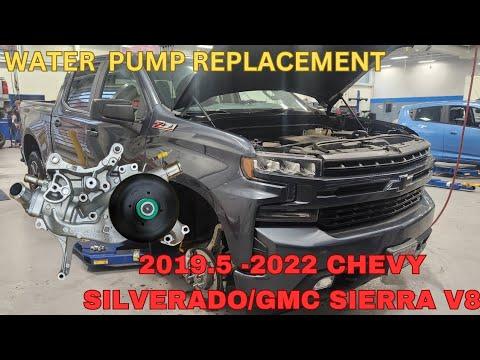




How to Replace the Water Pump on a 2019-2020 GMC Sierra 1500 5.3L (Engine: V8 5.3L)
Step-by-step DIY water pump replacement with tools, parts list, torque specs, bleeding procedure, and safety tips for your 2019 Sierra 1500.
How to Replace the Water Pump on a 2019-2020 GMC Sierra 1500 5.3L (Engine: V8 5.3L)
Step-by-step DIY water pump replacement with tools, parts list, torque specs, bleeding procedure, and safety tips for your 2019 Sierra 1500. for 2019, 2020


🔧 Sierra 1500 - Water Pump Replacement
You’ll be removing the drive belt, draining the coolant, then unbolting and swapping the water pump on your Sierra 1500. The new pump keeps coolant flowing through the engine to prevent overheating.
Difficulty Level: Intermediate | Estimated Time: 3-4 hours
⚠️ Safety & Precautions
- 🛑 Only work on the cooling system when the engine is completely cool; hot coolant can cause severe burns.
- 🧯 Disconnect the negative battery cable to avoid the electric fan starting unexpectedly.
- 🧤 Support the truck securely with jack stands if you raise the front; never rely on a jack alone.
- 😷 Coolant is toxic; avoid skin contact and keep away from children and pets.
- 🔌 Use only Dex-Cool compatible coolant; mixing types can cause sludge and overheating.
🔧 Required Tools
You'll need the following tools for this repair:
- 🧰 1/4" drive ratchet
- 🧰 3/8" drive ratchet
- 🧰 10mm socket
- 🧰 13mm socket
- 🧰 15mm socket
- 🧰 E10 external Torx socket
- 🧰 3/8" drive torque wrench (5-80 ft-lbs range)
- 🧰 1/4" drive torque wrench (40-200 in-lbs range)
- 🧰 Serpentine belt tool or 3/8" breaker bar
- 🧰 Flathead screwdriver (medium)
- 🧰 Hose clamp pliers (specialty)
- 🧰 Plastic trim removal tool set
- 🧰 Coolant drain pan (10+ liters)
- 🧰 Shop rags
- 🧰 Plastic gasket scraper
- 🧰 Small wire brush (brass)
- 🧰 Floor jack (rated 3-ton minimum)
- 🧰 Jack stands (pair, rated 3-ton minimum)
- 🧰 Safety glasses
- 🧰 Mechanic gloves
- 🧰 Funnel with long spout
- 🧰 Coolant fill / spill-free funnel kit (specialty)
🔩 Required Parts
HowToo sells all the parts you need for this repair:
- 🔩 Engine water pump (5.3L) - Qty: 1
- 🔩 Water pump gasket set - Qty: 1
- 🔩 Serpentine drive belt - Qty: 1 (recommended while you’re here)
- 🔩 Upper radiator hose clamp - Qty: 1 (if original is weak)
- 🔩 Lower radiator hose clamp - Qty: 1 (if original is weak)
- 🔩 Dex-Cool compatible premixed coolant (50/50) - Qty: 3-4 gallons
- 🔩 Water pump mounting bolts set - Qty: 1 (optional but recommended if corroded)
- 🔩 Thermostat and housing assembly - Qty: 1 (optional “while you’re in there”)
- 🔩 Radiator cap - Qty: 1 (if original is old or damaged)
- 🔩 Shop towels / absorbent pads - Qty: 1 pack
📋 Before You Begin
- 🧊 Make sure the engine is fully cold; let the truck sit at least a few hours after running.
- 🅿️ Park the Sierra 1500 on level ground, set the parking brake, and place wheel chocks behind the rear wheels.
- 🔌 Disconnect the negative battery cable using a 10mm socket and set it aside so it cannot touch the terminal.
- 🪜 If you need more access, raise the front with a floor jack and support it on jack stands under the frame rails.
- 📸 Take a clear photo of the serpentine belt routing before removal for easy reinstallation.
🔨 Step-by-Step Instructions
Follow these steps in order:
Step 1: Remove engine cover and prepare work area
- Lift off the plastic engine cover (it usually pulls straight up; no tools needed). Pull near corners, not the center
- Use a plastic trim removal tool to gently release any clips for covers or air duct pieces blocking access to the front of the engine.
- Place a large coolant drain pan under the radiator and front of the engine to catch coolant.
Step 2: Drain the coolant
- Slowly open the coolant reservoir cap by hand to relieve any pressure.
- From under the front, locate the radiator drain petcock on the bottom of the radiator (driver side on most trucks).
- Use a flathead screwdriver to carefully turn the petcock counterclockwise and let coolant drain into the pan.
- Allow as much coolant as possible to drain, then close the petcock using the flathead screwdriver. Do not overtighten plastic valve
Step 3: Remove the serpentine belt
- Locate the belt tensioner (spring-loaded pulley) on the front of the engine.
- Insert a serpentine belt tool or 3/8" breaker bar into the tensioner square drive.
- Rotate the tensioner to relieve belt tension, then slide the belt off the water pump pulley with your free hand.
- Carefully release the tensioner back to its rest position.
- Remove the belt from all pulleys and set it aside (or discard if replacing).
Step 4: Remove hoses from the water pump
- Use hose clamp pliers to compress the spring clamp on the upper radiator hose where it attaches to the water pump, then slide the clamp back on the hose.
- Twist the hose gently by hand to break it loose, then pull it off the water pump fitting. Use a flathead screwdriver carefully if needed, but do not gouge the hose.
- Repeat for the lower hose at the pump (from underneath if access is better), again using hose clamp pliers.
- Disconnect any smaller heater or bypass hoses attached to the pump the same way, catching any extra coolant in the pan.
Step 5: Remove any brackets or accessories attached to the pump
- On this engine, some brackets (like wiring looms or small brackets) may bolt to the water pump.
- Use a 10mm socket on a 1/4" drive ratchet to remove the small bolts holding brackets or harness retainers to the pump, and move them aside.
- Note their positions or take photos so you can reinstall them in the same locations.
Step 6: Remove the water pump mounting bolts
- There are several bolts around the water pump perimeter securing it to the front of the engine.
- Use a 13mm socket on a 3/8" drive ratchet to loosen and remove all water pump bolts.
- Some trucks use an E10 external Torx socket for certain bolts; if you see star-shaped heads, use that socket instead.
- Keep track of bolt length and position; lay them out on a clean rag in the same pattern as the pump. Helps avoid mixing bolt lengths
Step 7: Remove the old water pump
- Gently rock the pump by hand to break the gasket seal; more coolant will drain when it comes free.
- Pull the pump straight forward and out of the engine bay.
- Use shop rags to wipe away any coolant pooling at the front of the engine.
Step 8: Clean the gasket surface
- The gasket surface is the flat area on the engine where the pump was mounted.
- Use a plastic gasket scraper to carefully remove all remaining gasket material and sealant from the engine surface.
- Use a small brass wire brush very lightly to clean stubborn residue, being careful not to scratch the aluminum.
- Wipe the surface with a clean rag until it’s smooth, clean, and dry. Good sealing needs clean metal
Step 9: Prepare the new water pump
- Install the new gasket(s) on the new pump. Most replacement pumps have a molded rubber gasket that fits into a groove.
- Make sure the gasket is fully seated all the way around with no twists.
- Do not apply extra sealant unless the gasket instructions specifically say to; the factory design is dry-fit.
Step 10: Install the new water pump
- Carefully position the new pump against the engine, aligning the bolt holes.
- Install all the water pump bolts finger-tight first, using your 13mm socket or E10 socket depending on the bolts.
- Once all bolts are started, snug them lightly with the 3/8" drive ratchet in a crisscross pattern to draw the pump in evenly.
- Now torque the bolts with a 3/8" drive torque wrench in two passes:
- First pass: Torque to 11 Nm (97 in-lbs)
- Second pass: Torque to 22 Nm (16 ft-lbs)
Step 11: Reinstall brackets and hoses
- Reattach any brackets or wiring retainers you removed earlier using the 10mm socket and tighten snugly by hand or to about 9 Nm (80 in-lbs).
- Slide the upper radiator hose onto the new water pump fitting until it seats fully, then move the clamp back in place using hose clamp pliers.
- Repeat for the lower hose and any heater/bypass hoses attached to the pump.
- Check that all clamps are centered over the hose barb bumps and fully tight.
Step 12: Reinstall the serpentine belt
- Route the new or reused belt according to your photo or the belt routing decal under the hood.
- Leave it off the water pump pulley last.
- Use the serpentine belt tool or 3/8" breaker bar to rotate the tensioner and slip the belt onto the water pump pulley.
- Release the tensioner slowly and check the belt is centered on each pulley.
Step 13: Refill the cooling system
- Make sure the radiator drain petcock is fully closed using the flathead screwdriver.
- Set up your coolant fill / spill-free funnel on the coolant reservoir.
- Slowly pour Dex-Cool compatible premixed coolant (50/50) into the reservoir until it reaches the “FULL COLD” mark.
- Squeeze the upper radiator hose by hand several times to help purge trapped air.
Step 14: Initial bleeding and leak check
- Reconnect the negative battery cable using the 10mm socket and tighten to about 7 Nm (62 in-lbs).
- Start the engine and let it idle with the reservoir cap off and the funnel installed.
- Turn the heater to full hot with the fan on medium to circulate coolant through the heater core.
- Watch for air bubbles coming up into the funnel; keep adding coolant to maintain level.
- As the engine warms, the thermostat will open and you may see the coolant level drop; top it off as needed.
- Check around the water pump, hose connections, and radiator for leaks while the engine idles.
Step 15: Final bleeding and reassembly
- Once the engine reaches normal operating temperature and the bubbles slow down, shut the engine off.
- Let it cool for at least 30-45 minutes, then check the coolant level again and top up to the “FULL COLD” line.
- Install the coolant reservoir cap securely by hand.
- Reinstall any air ducting or covers you removed using the plastic trim removal tool to help align clips, then press the engine cover back into place.
- Remove the jack stands and lower the truck with the floor jack if it was raised.
✅ After Repair
- 🚗 Take a short test drive (10-15 minutes) while watching the temperature gauge; it should stay in the normal range.
- 🕵️ Park, shut the engine off, and check under the truck and around the water pump and hoses for any signs of coolant leaks.
- 🌡️ After the engine fully cools (later the same day or next morning), recheck the coolant level in the reservoir and top up to “FULL COLD” if needed.
- ♻️ Dispose of the old coolant properly at a recycling center or parts store; never pour it on the ground or into drains.
💰 DIY vs Shop Cost
Shop Cost: $650-$950 (parts + labor)
DIY Cost: $180-$320 (parts only)
You Save: $330-$770 by doing it yourself!
Shop labor rates typically run $100-$150/hour. This repair takes a shop approximately 2-3 hours.
🎯 Ready to get started?
HowToo makes it easy: same-day/2-day shipping on every part, plus all the tools and specialty tools you need! Check out the parts and tools sections above to add everything to your cart.
Guide for Engine Auxiliary Water Pump replace for these GMC vehicles
| Year Make Model | Sub Model | Engine | Body Style |
|---|---|---|---|
| 2020 GMC Sierra 1500 | - | V8 5.3L | - |
| 2020 GMC Sierra 1500 | - | V8 6.2L | - |
| 2020 GMC Sierra 1500 | - | V6 4.3L | - |
| 2019 GMC Sierra 1500 | - | V8 5.3L | - |
| 2019 GMC Sierra 1500 | - | V8 6.2L | - |
| 2019 GMC Sierra 1500 | - | V6 4.3L | - |