









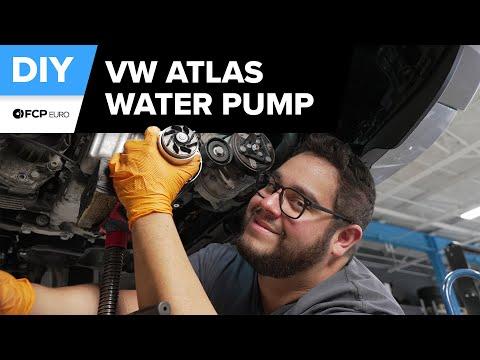







How to Replace the Water Pump on a 2018 Volkswagen Passat 3.6L (Cooling System Repair)
Step-by-step instructions with required tools/parts, safety tips, and coolant refill & bleeding guidance for 2006, 2007, 2008, 2012, 2013, 2014, 2015, 2016, 2017, 2018
How to Replace the Water Pump on a 2018 Volkswagen Passat 3.6L (Cooling System Repair)
Step-by-step instructions with required tools/parts, safety tips, and coolant refill & bleeding guidance for 2006, 2007, 2008, 2012, 2013, 2014, 2015, 2016, 2017, 2018


🔧 Passat - Water Pump Replacement
On your Passat’s 3.6L, the water pump is part of the cooling system that circulates coolant through the engine and radiator. Replacement typically involves draining coolant, removing components for access, swapping the pump (often with the thermostat housing if it’s a combined unit), then refilling and bleeding the system.
Difficulty Level: Advanced | Estimated Time: 3-6 hours
⚠️ Safety & Precautions
- ⚠️ Let the engine cool completely before opening the cooling system.
- ⚠️ Support the car with jack stands; never rely on a jack alone.
- ⚠️ Coolant is toxic—keep away from kids/pets and clean spills immediately.
- ⚠️ Disconnect the negative battery terminal if you’ll be working near the radiator fan/shroud.
🔧 Required Tools
You'll need the following tools for this repair:
- Floor jack (rated 3-ton minimum)
- Jack stands (rated 3-ton minimum)
- Wheel chocks
- Safety glasses
- Nitrile gloves
- Drain pan (at least 10-quart)
- Funnel
- Trim clip removal tool
- Torx T25 screwdriver
- Torx T30 screwdriver
- Torx T45 bit socket
- 10mm socket
- 13mm socket
- 16mm socket
- 3/8" ratchet
- 1/4" ratchet
- 3" extension
- 6" extension
- Hose clamp pliers
- Pick tool
- Torque wrench (5–60 Nm range)
- Torque wrench (40–200 Nm range)
- Cooling system vacuum fill tool (specialty)
🔩 Required Parts
HowToo sells all the parts you need for this repair:
- Water pump - Qty: 1
- Water pump gasket/O-ring - Qty: 1
- Thermostat housing gasket/O-ring - Qty: 1
- Thermostat (if serviced with pump) - Qty: 1
- Coolant (VW-compatible, pre-mix or concentrate + distilled water) - Qty: 2-3 gallons total mix
- Hose clamp(s) (if any are single-use or damaged) - Qty: 1-4
📋 Before You Begin
- Park on level ground, set the parking brake, and chock the rear wheels.
- Let the engine cool for at least 2-3 hours so the system isn’t under pressure.
- If you don’t have a vacuum fill tool: plan extra time to bleed air out carefully.
- Two quick questions so I give you the exact, correct steps and torque specs:
- Is your replacement part a water pump only, or a water pump + thermostat housing assembly?
- Can you upload a photo of the new part/box (showing what’s included and the hose ports)?
🔨 Step-by-Step Instructions
Follow these steps in order:
Step 1: Raise the front of the car and remove the lower splash shield
- Use a floor jack (rated 3-ton minimum) to lift the front and set it on jack stands (rated 3-ton minimum).
- Use a Torx T25 screwdriver and trim clip removal tool to remove the belly pan/lower cover fasteners.
Step 2: Drain the coolant safely
- Place a drain pan (at least 10-quart) under the radiator area.
- Slowly open the coolant reservoir cap to release any residual pressure.
- Use hose clamp pliers to release the lower radiator hose clamp (or open the drain if equipped), then drain coolant.
- Tip: Save coolant only if it’s fresh/clean.
Step 3: Remove the intake ducting (as needed for access)
- Use a 10mm socket and Torx T30 screwdriver to remove the fasteners and clamps for the intake snorkel/ducting that blocks access.
Step 4: Remove the serpentine belt
- Use a 16mm socket on the belt tensioner and rotate to relieve tension, then slide the belt off.
- Take a photo of the belt routing before removal.
Step 5: Remove components blocking the water pump
- Depending on your exact pump/thermostat setup, you may need to remove brackets/lines for access.
- Use 10mm socket, 13mm socket, and extensions as needed.
Step 6: Disconnect coolant hoses from the pump/thermostat housing
- Use hose clamp pliers to release clamps and slide hoses off.
- Use a pick tool gently at the hose end if it’s stuck (do not gouge the plastic fitting).
Step 7: Remove the water pump (and thermostat housing if combined)
- Use the appropriate Torx bit sockets and 10mm socket to remove mounting bolts.
- Pull the pump/module straight off; expect more coolant to spill into the drain pan.
- Stop here for torque specs: bolt torques vary depending on whether it’s pump-only or a combined module (and bolt type/length). Once you upload the part photo, I’ll give you the exact torque list for each bolt location.
Step 8: Clean the mating surface and install the new seals
- Wipe the engine mating surface clean (no old gasket material or debris).
- Install the new gasket/O-ring onto the new pump/module (lightly wet with fresh coolant).
Step 9: Reinstall the pump/module and reassemble removed parts
- Install bolts finger-tight first, then tighten evenly with a torque wrench (5–60 Nm range).
- Reconnect hoses using hose clamp pliers and verify each clamp is seated in its original groove.
- Reinstall belt using a 16mm socket on the tensioner.
Step 10: Refill and bleed the cooling system
- Best method: use a cooling system vacuum fill tool (specialty) to vacuum-test and refill without air pockets.
- If filling manually, use a funnel and fill slowly at the reservoir. Then run the engine and heater to purge air (final detailed bleed steps depend on your exact hose/module layout).
✅ After Repair
- Start the engine and let it idle. Watch the temperature gauge and check for leaks at every hose and the pump seam.
- Turn cabin heat to max and confirm strong, steady heat (a sign coolant is circulating).
- After the first full heat cycle and cool-down, recheck coolant level and top off as needed.
- If the level drops repeatedly or heat is weak, you likely still have air trapped and need to bleed again.
💰 DIY vs Shop Cost
Shop Cost: $900-$1,600 (parts + labor)
DIY Cost: $180-$550 (parts only)
You Save: $720-$1,050 by doing it yourself!
Shop labor rates vary but typically run $100-$150/hour. This repair takes a shop approximately 3-6 hours.
🎯 Ready to get started?
HowToo makes it easy: same-day/2-day shipping on every part, plus all the tools and specialty tools you need! Check out the parts and tools sections below to add everything to your cart.