









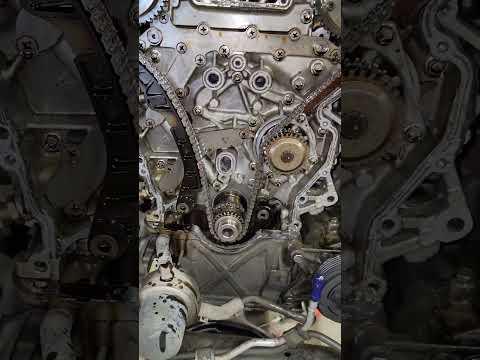







How to Replace the Water Pump on a 2018 Nissan Pathfinder (Timing Cover/Chain Driven)
Step-by-step instructions with required tools, parts list, safety tips, and coolant refill/bleeding steps for 2017, 2018, 2019
How to Replace the Water Pump on a 2018 Nissan Pathfinder (Timing Cover/Chain Driven)
Step-by-step instructions with required tools, parts list, safety tips, and coolant refill/bleeding steps for 2017, 2018, 2019


🔧 Pathfinder - Water Pump Replacement
On your Pathfinder, the water pump is driven by the timing chain and sits behind the front timing cover. That means this is a deep job: you’ll be draining coolant and removing front-engine components and the timing cover to access the pump.
Difficulty Level: Advanced | Estimated Time: 6-10 hours
⚠️ Safety & Precautions
- ⚠️ Let the engine cool fully before opening the cooling system.
- ⚠️ Support the vehicle with jack stands; never rely on a jack.
- ⚠️ Coolant is toxic—use a drain pan and clean spills immediately.
- ⚠️ This repair involves the timing cover area; incorrect sealing can cause major oil leaks.
- ⚠️ Disconnect the battery negative terminal to prevent accidental cranking.
🔧 Required Tools
You'll need the following tools for this repair:
- Safety glasses
- Nitrile gloves
- Floor jack (rated 3-ton minimum)
- Jack stands (rated 3-ton minimum)
- Wheel chocks
- Drain pan (at least 10-quart)
- Metric socket set 8mm-19mm
- 3/8" drive ratchet
- 1/2" drive breaker bar
- Torque wrench (10-200 ft-lbs range)
- Serpentine belt tool (long-handle) (specialty)
- Harmonic balancer puller kit (specialty)
- Crank pulley holding tool (specialty)
- Trim clip removal tool
- Flat-blade screwdriver
- Pliers (hose clamp)
- Plastic razor blade scraper
- Gasket scraper
- RTV sealant applicator nozzle
- Funnel
- Shop rags
🔩 Required Parts
HowToo sells all the parts you need for this repair:
- Water pump assembly - Qty: 1
- Water pump gasket / O-ring (as applicable) - Qty: 1
- Engine coolant (Nissan-compatible) - Qty: 2-3 gallons (premix equivalent)
- RTV silicone sealant (Nissan-compatible gray) - Qty: 1
- Serpentine drive belt - Qty: 1
- Thermostat and gasket - Qty: 1
📋 Before You Begin
- Park on level ground, set the parking brake, and use wheel chocks.
- Disconnect the battery using a 10mm socket (negative terminal first).
- Have plenty of time—once the timing cover is off, the vehicle can’t be moved easily.
- Quick check needed (so I can give exact OEM torque specs and the correct variant steps):
- Look at the under-hood emissions label. Does it say VQ35DE or VQ35DD?
- Do you have a power liftgate and auto stop/start, or neither? (This can change minor access steps and undertray/brace layout.)
🔨 Step-by-Step Instructions
Follow these steps in order:
Step 1: Identify the engine variant (needed for exact torque specs)
- Open the hood and locate the emissions label on the underside of the hood or radiator support.
- Write down whether it states VQ35DE or VQ35DD.
- This prevents wrong torque and sealing points.
Step 2: Drain the coolant
- Place a drain pan (at least 10-quart) under the radiator drain.
- Remove the radiator cap only when cold, then open the drain.
- Use pliers (hose clamp) if you need to remove the lower radiator hose for faster draining.
Step 3: Remove lower covers for access
- Raise the front and support it with jack stands (rated 3-ton minimum).
- Remove the lower splash shields using a trim clip removal tool and metric socket set 8mm-19mm.
Step 4: Remove the serpentine belt
- Relieve belt tension using a serpentine belt tool (long-handle) (specialty).
- Slip the belt off and note the routing (take a photo first).
Step 5: Remove the crank pulley (harmonic balancer)
- Use a crank pulley holding tool (specialty) and a 1/2" drive breaker bar to loosen the crank bolt.
- Remove the pulley using a harmonic balancer puller kit (specialty).
Step 6: Remove front timing cover components
- Remove any brackets, hoses, and covers blocking the front cover using the metric socket set 8mm-19mm.
- Carefully separate the timing cover from the engine using a flat-blade screwdriver only at designated pry points (do not gouge the sealing surface).
- Clean old sealant using a plastic razor blade scraper and shop rags.
Step 7: Remove and replace the water pump
- Remove the water pump fasteners using the metric socket set 8mm-19mm.
- Remove the pump and gasket/O-ring and clean the mating surface with a plastic razor blade scraper.
- Install the new gasket/O-ring and water pump.
Step 8: Reseal and reinstall the timing cover
- Apply RTV silicone sealant (Nissan-compatible gray) per the correct bead pattern for your engine variant.
- Reinstall the cover and all removed components using a torque wrench (10-200 ft-lbs range).
Step 9: Reinstall crank pulley and belt
- Reinstall the crank pulley and crank bolt using a crank pulley holding tool (specialty) and torque wrench (10-200 ft-lbs range).
- Reinstall the belt using the serpentine belt tool (long-handle) (specialty).
Step 10: Refill and bleed the cooling system
- Refill coolant using a funnel.
- Run the engine and set the heater to HOT to help purge air.
- Top off as needed once the thermostat opens and coolant level stabilizes.
✅ After Repair
- Check for coolant leaks and oil leaks around the timing cover seam.
- Verify the heater blows hot and the temperature gauge stays normal on a 10-15 minute drive.
- Recheck coolant level after a full cool-down and top off if needed.
💰 DIY vs Shop Cost
Shop Cost: $1,200-$2,200 (parts + labor)
DIY Cost: $180-$450 (parts only)
You Save: $1,020-$1,750 by doing it yourself!
Shop labor rates vary but typically run $100-$150/hour. This repair takes a shop approximately 6-10 hours.
🎯 Ready to get started?
HowToo makes it easy: same-day/2-day shipping on every part, plus all the tools and specialty tools you need! Check out the parts and tools sections below to add everything to your cart.