









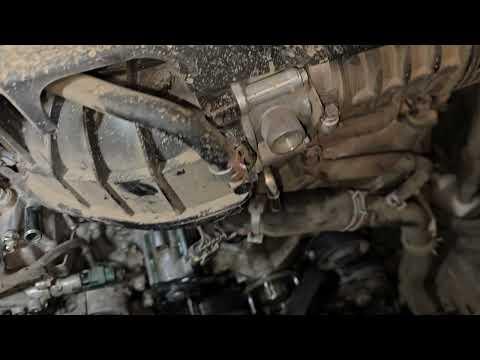







How to Replace the Water Pump on a 2018 Nissan Armada (Belt-Driven vs Chain-Driven)
Step-by-step DIY instructions with required tools, parts list, safety tips, coolant drain/refill, and what to check before teardown for 2005, 2006, 2007, 2008, 2009, 2010, 2011, 2012, 2013, 2014, 2015, 2017, 2018, 2019, 2020, 2021, 2022
How to Replace the Water Pump on a 2018 Nissan Armada (Belt-Driven vs Chain-Driven)
Step-by-step DIY instructions with required tools, parts list, safety tips, coolant drain/refill, and what to check before teardown for 2005, 2006, 2007, 2008, 2009, 2010, 2011, 2012, 2013, 2014, 2015, 2017, 2018, 2019, 2020, 2021, 2022


🔧 Armada - Water Pump Replacement
On your Armada, the water pump replacement procedure depends on whether the pump is belt-driven (has an external pulley) or timing-chain-driven (no pulley; behind the front cover). Those are very different jobs—one is a few hours, the other is a major front-engine teardown.
Difficulty Level: Intermediate (belt-driven) / Advanced (chain-driven) | Estimated Time: 3-5 hours / 10-16 hours
⚠️ Safety & Precautions
- ⚠️ Only work on a fully cool engine; hot coolant can cause severe burns.
- ⚠️ Support the truck with jack stands; never rely on a jack alone.
- ⚠️ Keep coolant off belts and electrical connectors; wipe spills immediately.
- ⚠️ Disconnect the negative battery cable if you’ll be removing the fan/shroud or working near the starter wiring.
- ⚠️ Coolant is toxic; capture it in a drain pan and dispose of it properly.
🔧 Required Tools
You'll need the following tools for this repair:
- Floor jack (rated 3-ton minimum)
- Jack stands (rated 3-ton minimum)
- Wheel chocks
- Safety glasses
- Nitrile gloves
- Drain pan (at least 3-gallon)
- Funnel
- Shop towels
- Trim clip removal tool
- Flathead screwdriver
- Hose clamp pliers
- 3/8" drive ratchet
- 1/2" drive breaker bar
- Socket set 8mm-19mm
- Wrench set 8mm-19mm
- Torque wrench (10-150 ft-lbs range)
- Serpentine belt tool (specialty)
- Gasket scraper
- Plastic razor blade scraper
🔩 Required Parts
HowToo sells all the parts you need for this repair:
- Water pump - Qty: 1
- Water pump gasket / O-ring (as equipped) - Qty: 1
- Engine coolant (Nissan-compatible long-life) - Qty: 3-4 gallons (premix equivalent)
- RTV silicone sealant (coolant-safe) - Qty: 1
- Serpentine belt - Qty: 1 Replace if cracked or soaked.
- Thermostat and gasket - Qty: 1 Recommended while coolant is drained.
📋 Before You Begin
- Park on level ground, set the parking brake, and chock the rear wheels.
- Let the engine cool completely (minimum 2-3 hours).
- Open the hood and remove the radiator cap only when cool.
- Raise the front and support with jack stands if you need access to the lower splash shield.
- Quick check (important): Look at the front of the engine—does the water pump have an external pulley with the serpentine belt riding on it?
🔨 Step-by-Step Instructions
Follow these steps in order:
Step 1: Confirm which water pump design you have
- Use a flashlight and look at the belt routing at the front of the engine.
- If you see the serpentine belt driving a water pump pulley, it’s the belt-driven procedure.
- If there is no pump pulley and the belt does not ride on a pump, it’s typically a chain-driven pump behind the front cover (major job).
Step 2: Tell me these 2 things so I can give the exact OEM steps and torque specs
- Does your pump have an external pulley (yes/no)?
- Are you seeing a coolant leak at the pump area or overheating (which one)?
Step 3: Safe coolant drain (works for either design)
- Place a drain pan (at least 3-gallon) under the radiator drain.
- Remove the lower splash shield as needed using a trim clip removal tool and socket set 8mm-12mm.
- Open the radiator drain and drain coolant fully. Keep pets away from coolant.
Step 4: Stop here until pump type is confirmed
- The next steps (fan/shroud removal, belt removal, and especially torque specs) differ by pump design.
- Reply with the two answers from Step 2, and I’ll continue with the correct, trim-accurate procedure.
✅ After Repair
- Refill with the correct coolant mixture and bleed air from the cooling system.
- Warm the engine to operating temp and verify cabin heat is hot (a quick air-pocket check).
- Check for leaks at the pump area and hose connections after a short test drive.
- Recheck coolant level after the engine cools again.
💰 DIY vs Shop Cost
Shop Cost: $600-$1,200 (belt-driven) / $1,800-$3,500 (chain-driven)
DIY Cost: $120-$350 (parts only)
You Save: $480-$3,150 by doing it yourself!
Shop labor rates vary but typically run $100-$150/hour. This repair takes a shop approximately 3-5 hours or 10-16 hours.
🎯 Ready to get started?
HowToo makes it easy: same-day/2-day shipping on every part, plus all the tools and specialty tools you need! Check out the parts and tools sections below to add everything to your cart.