









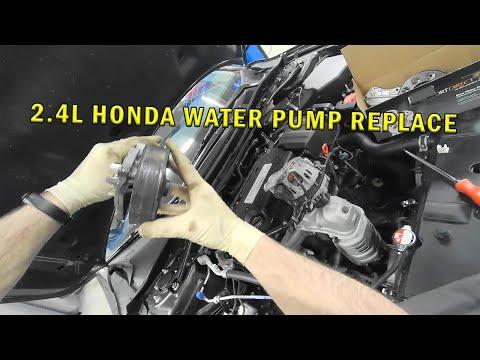




How to Replace the Water Pump on a 2017-2025 Honda CR-V 1.5L Turbo (Trim: Touring | Engine: Inline 4 1.5L)
Step-by-step DIY water pump replacement with tools, parts list, torque specs, safety tips, and coolant bleeding instructions
How to Replace the Water Pump on a 2017-2025 Honda CR-V 1.5L Turbo (Trim: Touring | Engine: Inline 4 1.5L)
Step-by-step DIY water pump replacement with tools, parts list, torque specs, safety tips, and coolant bleeding instructions for 2017, 2018, 2019, 2020, 2021, 2022, 2023, 2024, 2025


🔧 CR-V - Water Pump Replacement
You’ll be removing the drive belt, draining the coolant, and swapping the water pump on your CR-V. The water pump circulates coolant through the engine; if it fails, the engine can overheat and get badly damaged.
Difficulty Level: Intermediate | Estimated Time: 3-4 hours
⚠️ Safety & Precautions
- ⚠️ Let the engine cool completely before opening the coolant system; hot coolant can cause serious burns.
- ⚠️ Disconnect the negative battery cable to avoid the engine cranking while you work near the belt.
- ⚠️ Support the vehicle with jack stands if you raise it; never rely only on a floor jack.
- ⚠️ Coolant is poisonous to people and animals; collect and dispose of it properly.
- ⚠️ Keep tools and hands clear of the belt path when releasing the belt tensioner.
🔧 Required Tools
You'll need the following tools for this repair:
- 🛠️ 3/8" drive ratchet
- 🛠️ 1/2" drive ratchet
- 🛠️ 10mm socket
- 🛠️ 12mm socket
- 🛠️ 14mm socket
- 🛠️ 10mm deep socket
- 🛠️ 14mm box-end wrench
- 🛠️ Torx T30 screwdriver
- 🛠️ Small flathead screwdriver
- 🛠️ Trim clip removal tool
- 🛠️ Needle-nose pliers
- 🛠️ Serpentine belt tool (long handle) (specialty)
- 🛠️ 3/8" drive torque wrench (5-80 ft-lbs range)
- 🛠️ Drain pan (at least 2 gallons)
- 🛠️ Funnel
- 🛠️ Plastic scraper
- 🛠️ Shop rags
- 🛠️ Floor jack (rated 3-ton minimum)
- 🛠️ Jack stands (rated 3-ton minimum)
- 🛠️ Work light
- 🛠️ Mechanic’s gloves
- 🛠️ Safety glasses
🔩 Required Parts
HowToo sells all the parts you need for this repair:
- 🔩 Engine water pump (1.5L turbo) - Qty: 1
- 🔩 Water pump O-ring / gasket - Qty: 1
- 🔩 Serpentine drive belt - Qty: 1
- 🔩 Honda Type 2 premixed coolant (blue) - Qty: 2 gallons
- 🔩 Water pump mounting bolts (optional new hardware) - Qty: 1 set
- 🔩 Hose clamp(s) 10-16mm (if any are rusty) - Qty: 2-4
- 🔩 Coolant-safe RTV sealant (if required by pump instructions) - Qty: 1 tube
- 🔩 Shop towels - Qty: 1 pack
📋 Before You Begin
- 🧾 Park the CR-V on a flat surface, engage the parking brake, and place the transmission in Park.
- 🧾 Let the engine cool for at least 45–60 minutes so the coolant is not hot.
- 🧾 Open the hood and remove any loose items from the engine bay area.
- 🧾 Disconnect the negative battery terminal using a 10mm socket; move the cable aside so it cannot spring back.
- 🧾 Place the drain pan under the front of the engine, below the radiator drain area.
🔨 Step-by-Step Instructions
Follow these steps in order:
Step 1: Raise and secure the front of the CR-V
- Use the floor jack at the front center jacking point to lift the front of the CR-V.
- Place jack stands under the proper pinch weld areas on both sides and gently lower the vehicle onto them.
- Give the car a shake to confirm it’s stable.
Step 2: Remove the lower engine splash shield
- Use the 10mm socket to remove the small bolts holding the plastic splash shield under the engine.
- Use the trim clip removal tool to pop out any plastic push clips.
- Lower the shield and set it aside.
Step 3: Drain the engine coolant
- Position the drain pan under the radiator drain area (bottom of radiator on the passenger side).
- Use the needle-nose pliers or fingers to turn the plastic radiator drain cock if equipped; otherwise loosen the lower radiator hose clamp using the flathead screwdriver and slide the hose off.
- Open the coolant reservoir cap on top to let air in so coolant drains more smoothly.
- Let coolant drain fully, then close the drain cock or slip the hose back on and snug the clamp with the flathead screwdriver.
Step 4: Remove the engine top cover and access the belt area
- Pull up on the plastic engine cover by hand; it’s held by rubber grommets.
- On the passenger side, remove any small plastic air duct pieces in the way using a 10mm socket or Torx T30 screwdriver as needed.
- Keep bolts and clips in a tray so you don’t lose them.
Step 5: Relieve tension and remove the serpentine drive belt
- Find the belt tensioner (spring-loaded pulley) on the front of the engine.
- Place the serpentine belt tool or a 14mm box-end wrench on the tensioner’s hex head.
- Rotate the tool to relieve tension on the belt (usually clockwise on this engine).
- While holding tension released, slide the belt off one of the upper pulleys with your other hand.
- Slowly release the tensioner back to its resting position.
- Remove the belt fully and note the routing; take a clear phone picture for reference.
Step 6: Remove components blocking access to the water pump
- The water pump is mounted on the front of the engine, low on the passenger side, with a pulley that the belt rode on.
- If a small bracket or engine mount cover is in the way, remove its bolts using a 10mm socket or 12mm socket and move it aside.
- If needed for hand room, gently unplug nearby electrical connectors by pressing their tabs with your flathead screwdriver and pulling straight off.
Step 7: Remove the water pump pulley (if required)
- Some pumps require the pulley to be removed first. If so, use a 10mm socket to loosen the small bolts on the pulley.
- Hold the pulley from turning using your hand with a glove or a strap while breaking the bolts loose.
- Remove the pulley and set it aside.
Step 8: Remove the water pump
- Place the drain pan under the water pump area; some coolant will come out as you remove it.
- Use a 10mm socket to remove all the water pump mounting bolts. Count them so you know how many go back in.
- Gently tap the pump body with the handle of a screwdriver if it’s stuck, then pull it straight off the engine.
- Let any remaining coolant drain into the pan.
- Do not pry hard on the aluminum engine surface.
Step 9: Clean the sealing surface
- Use the plastic scraper to carefully clean off old gasket material from the engine’s water pump mounting surface.
- Wipe the area clean with shop rags until it’s smooth and free of debris.
- If the new pump instructions call for a very thin layer of RTV, apply a small, even bead now. If it comes with a rubber O-ring only, do not use RTV unless the instructions specifically say to.
Step 10: Install the new water pump
- Lightly coat the new pump’s O-ring with clean coolant to help it seat.
- Position the new water pump against the engine, lining up the bolt holes.
- Install the mounting bolts finger-tight by hand to avoid cross-threading.
- Using the 10mm socket and torque wrench, tighten the bolts evenly in a crisscross pattern. Torque to 12 Nm (8.9 ft-lbs).
- Snug, not “gorilla tight” – aluminum strips easily.
Step 11: Reinstall the water pump pulley
- Place the pulley back onto the pump shaft.
- Install the pulley bolts by hand, then tighten them with a 10mm socket while holding the pulley from turning.
- Finish tightening evenly with the torque wrench. Torque to 12 Nm (8.9 ft-lbs).
Step 12: Reinstall any brackets or covers
- Reinstall any brackets, engine mount covers, or small components you removed using the 10mm socket or 12mm socket.
- Snug their bolts and, if you have specs, torque them appropriately; otherwise just tighten firmly without overdoing it.
Step 13: Reinstall the serpentine drive belt
- Route the new belt following your photo or the belt routing diagram (usually on a sticker under the hood).
- Leave the easiest upper pulley for last.
- Use the serpentine belt tool or 14mm box-end wrench to rotate the tensioner and create slack.
- Slide the belt onto the last pulley, then slowly release the tensioner.
- Visually check that the belt is sitting in all pulley grooves correctly.
Step 14: Reinstall the splash shield and lower the CR-V
- Reinstall the lower splash shield, lining it up and pushing in the plastic clips by hand.
- Use the 10mm socket to reinstall and snug the shield bolts.
- Use the floor jack to lift the CR-V slightly, remove the jack stands, and lower the vehicle to the ground.
Step 15: Reconnect battery and refill coolant
- Reconnect the negative battery cable using the 10mm socket and tighten it securely.
- Using a funnel, slowly pour Honda Type 2 coolant into the radiator (if accessible) and then the reservoir until both are at the proper level.
- Squeeze the upper radiator hose by hand a few times to help burp out air.
Step 16: Bleed (burp) the cooling system
- Start the engine and set the heater to maximum hot with the fan on medium.
- Let the engine idle, watching the temperature gauge and checking for leaks at the water pump and hose connections.
- As the engine warms, the coolant level in the reservoir may drop; add more coolant as needed.
- Once the cooling fans cycle on and off at least once and the heater blows good hot air, shut the engine off.
- Let the engine cool, then recheck and top off the coolant level in the reservoir to the “MAX” line.
✅ After Repair
- 🧪 Check under the CR-V and around the water pump for any signs of coolant leaks after your first drive.
- 🧪 Over the next few short trips, recheck the coolant reservoir level when the engine is cold and top off if needed.
- 🧪 Watch the temperature gauge for a few days; it should stay in the normal range.
- 🧪 If you notice overheating, coolant smell, or puddles, stop driving and re-inspect your work.
💰 DIY vs Shop Cost
Shop Cost: $550-$800 (parts + labor)
DIY Cost: $150-$250 (parts only)
You Save: $400-$550 by doing it yourself!
Shop labor rates vary but typically run $100-$150/hour. This repair takes a shop approximately 2-3 hours.
🎯 Ready to get started?
HowToo makes it easy: same-day/2-day shipping on every part, plus all the tools and specialty tools you need! Check out the parts and tools sections above to add everything to your cart.
Guide for Engine Water Pump replace for these Honda vehicles
| Year Make Model | Sub Model | Engine | Body Style |
|---|---|---|---|
| 2025 Honda CR-V | EX | Inline 4 1.5L | - |
| 2025 Honda CR-V | EX-L | Inline 4 1.5L | - |
| 2025 Honda CR-V | LX | Inline 4 1.5L | - |
| 2024 Honda CR-V | EX | Inline 4 1.5L | - |
| 2024 Honda CR-V | EX-L | Inline 4 1.5L | - |
| 2024 Honda CR-V | LX | Inline 4 1.5L | - |
| 2023 Honda CR-V | EX | Inline 4 1.5L | - |
| 2023 Honda CR-V | EX-L | Inline 4 1.5L | - |
| 2023 Honda CR-V | LX | Inline 4 1.5L | - |
| 2022 Honda CR-V | EX | Inline 4 1.5L | - |
| 2022 Honda CR-V | EX-L | Inline 4 1.5L | - |
| 2022 Honda CR-V | Touring | Inline 4 1.5L | - |
| 2022 Honda CR-V | LX | Inline 4 1.5L | - |
| 2022 Honda CR-V | Special Edition | Inline 4 1.5L | - |
| 2021 Honda CR-V | EX | Inline 4 1.5L | - |
| 2021 Honda CR-V | EX-L | Inline 4 1.5L | - |
| 2021 Honda CR-V | Touring | Inline 4 1.5L | - |
| 2021 Honda CR-V | LX | Inline 4 1.5L | - |
| 2021 Honda CR-V | Special Edition | Inline 4 1.5L | - |
| 2020 Honda CR-V | EX | Inline 4 1.5L | - |
| 2020 Honda CR-V | EX-L | Inline 4 1.5L | - |
| 2020 Honda CR-V | Touring | Inline 4 1.5L | - |
| 2020 Honda CR-V | LX | Inline 4 1.5L | - |
| 2019 Honda CR-V | EX | Inline 4 1.5L | - |
| 2019 Honda CR-V | EX-L | Inline 4 1.5L | - |
| 2019 Honda CR-V | Touring | Inline 4 1.5L | - |
| 2018 Honda CR-V | EX | Inline 4 1.5L | - |
| 2018 Honda CR-V | EX-L | Inline 4 1.5L | - |
| 2018 Honda CR-V | Touring | Inline 4 1.5L | - |
| 2017 Honda CR-V | EX | Inline 4 1.5L | - |
| 2017 Honda CR-V | EX-L | Inline 4 1.5L | - |
| 2017 Honda CR-V | Touring | Inline 4 1.5L | - |