









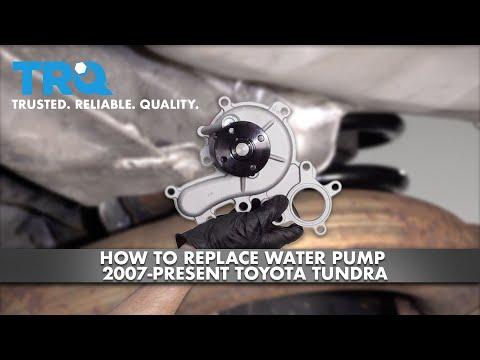




How to Replace the Water Pump on a 2016 Toyota Tundra
Step-by-step instructions with tools, parts, torque specs, and safety tips for 2007, 2008, 2009, 2010, 2011, 2012, 2013, 2014
How to Replace the Water Pump on a 2016 Toyota Tundra
Step-by-step instructions with tools, parts, torque specs, and safety tips for 2007, 2008, 2009, 2010, 2011, 2012, 2013, 2014


🔧 Water Pump - Replacement
Your Tundra’s water pump circulates coolant through the engine to keep temperatures under control. If it’s leaking, noisy, or the engine is running hot, replacing the pump and gasket is the correct fix.
Difficulty Level: Intermediate | Estimated Time: 3-5 hours
⚠️ Safety & Precautions
- Let the engine cool completely before opening the cooling system. Hot coolant can cause severe burns.
- Disconnect the negative battery terminal before starting.
- Keep hands and tools clear of the fan and belts when the engine is running for testing.
- Use a drain pan and dispose of old coolant properly; it is toxic.
- On this truck, removing the mechanical fan assembly is usually the hardest part. Work carefully to avoid damaging the radiator fins.
🔧 Required Tools
You'll need the following tools for this repair:
- 8mm socket
- 10mm socket
- 12mm socket
- 14mm wrench
- 3/8-inch ratchet
- Breaker bar
- Belt tensioner tool (specialty)
- Fan clutch wrench set (specialty)
- Drain pan
- Funnel
- Torque wrench
- Hose clamp pliers
- Plastic scraper
- Shop towels
- Safety glasses
- Nitrile gloves
- Jack stands
🔩 Required Parts
HowToo sells all the parts you need for this repair:
- Water pump - Qty: 1
- Water pump gasket - Qty: 1
- Engine coolant (Toyota Super Long Life Coolant, pink) - Qty: 2 gallons
- Serpentine drive belt - Qty: 1
- Thermostat gasket or seal - Qty: 1
- Radiator cap - Qty: 1
📋 Before You Begin
- Park on level ground and set the parking brake.
- Let the engine cool completely.
- Disconnect the negative battery cable.
- Place a drain pan under the radiator drain.
- Have coolant ready before disassembly so the truck can be refilled right away.
🔨 Step-by-Step Instructions
Follow these steps in order:
Step 1: Drain the coolant
- Open the radiator drain cock and remove the reservoir cap to let coolant flow into the drain pan.
- If equipped, open the engine block drain plugs carefully using the correct socket. Use a 10mm socket or 14mm wrench if needed.
- Keep the drain pan centered.
Step 2: Remove the engine cover and air intake tube
- Remove the engine cover by lifting it off its mounts.
- Loosen the intake tube clamps with a 10mm socket and disconnect any attached hoses or sensors as needed.
Step 3: Remove the serpentine belt
- Use a belt tensioner tool (specialty) or breaker bar on the tensioner to release belt tension.
- Slip the belt off the pulleys and remove it from the engine bay.
- Inspect the belt tensioner and idlers while you are here.
Step 4: Remove the mechanical fan and shroud
- Use a fan clutch wrench set (specialty) to loosen the fan clutch nut.
- Lift the fan and shroud assembly out together if possible.
- Move slowly so you do not hit the radiator.
Step 5: Remove the water pump pulley
- Use a 12mm socket to remove the water pump pulley bolts.
- Remove the pulley and set it aside.
- Torque on reassembly: 9 Nm (80 in-lbs)
Step 6: Remove the water pump
- Use a 10mm socket to remove the water pump bolts in a crisscross pattern.
- Tap the pump gently with a plastic mallet if it is stuck. Do not pry on the aluminum engine surface.
- Remove the pump and gasket.
- Do not scratch the sealing surface.
Step 7: Clean the mating surface
- Use a plastic scraper and shop towels to clean the engine side sealing surface.
- Make sure no old gasket material remains.
- Wipe the area clean and dry before installing the new pump.
Step 8: Install the new water pump
- Place the new gasket on the pump or engine as designed.
- Install the new water pump by hand first so the bolts do not cross-thread.
- Use a 10mm socket to snug the bolts in a crisscross pattern.
- Torque to 18 Nm (13 ft-lbs)
- Tighten evenly to prevent leaks.
Step 9: Reinstall the pulley, fan, shroud, and belt
- Install the pulley and tighten the bolts with a 12mm socket.
- Torque to 9 Nm (80 in-lbs)
- Reinstall the fan clutch and shroud using the fan clutch wrench set (specialty).
- Reinstall the serpentine belt using the belt tensioner tool (specialty).
- Check belt routing twice.
Step 10: Refill the cooling system
- Close the drain cock and any block drains.
- Use a funnel to fill with Toyota Super Long Life Coolant.
- Fill the reservoir to the correct mark.
- Reconnect the negative battery cable.
Step 11: Bleed the air from the system
- Start the engine and let it idle with the radiator cap off if the service procedure allows.
- Turn the heater to full hot and low fan speed.
- Watch for air bubbles and top off coolant as the level drops.
- Install the radiator cap once the coolant stabilizes and the upper hose warms up.
Step 12: Check for leaks
- Inspect the pump, hose connections, drain cock, and radiator for leaks using a flashlight.
- Verify the belt tracks correctly and the engine runs quietly.
- Torque for fan clutch nut: 54 Nm (40 ft-lbs)
✅ After Repair
- Let the engine reach normal operating temperature.
- Confirm the temperature gauge stays steady.
- Recheck coolant level after the engine cools completely.
- Top off the reservoir if needed.
- Check again for any seepage around the new pump after a short test drive.
💰 DIY vs Shop Cost
Shop Cost: $700-$1,200 (parts + labor)
DIY Cost: $180-$350 (parts only)
You Save: $450-$850 by doing it yourself!
Shop labor rates vary but typically run $100-$150/hour. This repair takes a shop approximately 3-5 hours.
🎯 Ready to get started?
HowToo makes it easy: same-day/2-day shipping on every part, plus all the tools and specialty tools you need! Check out the parts and tools sections below to add everything to your cart.