









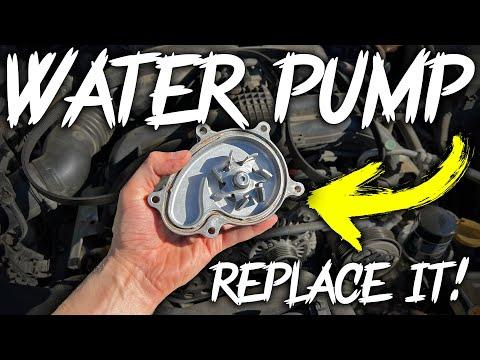







How to Replace the Water Pump on a 2016 Subaru Impreza 2.0L (FB20)
Step-by-step DIY instructions with tools, parts list, torque specs, coolant bleed steps, and safety tips for 2016
How to Replace the Water Pump on a 2016 Subaru Impreza 2.0L (FB20)
Step-by-step DIY instructions with tools, parts list, torque specs, coolant bleed steps, and safety tips for 2016


🔧 Impreza - Water Pump Replacement
The water pump circulates coolant through the engine and radiator. If it leaks, makes bearing noise, or the engine runs hot, replacing the pump restores proper cooling and helps prevent engine damage.
Difficulty Level: Advanced | Estimated Time: 3-6 hours
Assumption: your Impreza has the 2.0L FB20 engine (stock).
⚠️ Safety & Precautions
- ⚠️ Work on a fully cool engine; hot coolant can cause severe burns.
- ⚠️ Support the car with jack stands; never rely on a jack.
- ⚠️ Keep coolant off belts and electrical connectors; wipe spills immediately.
- ⚠️ Properly capture and dispose of coolant; it is toxic to pets.
- ⚠️ Battery disconnect is recommended before working near the fans.
🔧 Required Tools
You'll need the following tools for this repair:
- Floor jack (rated 3-ton minimum)
- Jack stands (rated 3-ton minimum)
- Wheel chocks
- Safety glasses
- Nitrile gloves
- Drain pan (at least 10-liter)
- Funnel
- Spill-free coolant funnel kit (specialty)
- Socket set: 8mm, 10mm, 12mm, 14mm sockets
- Ratchet (3/8" drive)
- Extensions (3" and 6")
- Torque wrench (3/8" drive, 5–60 Nm range)
- Flat trim clip tool
- Flathead screwdriver
- Pliers (hose clamp)
- Serpentine belt tool or long 14mm wrench
- Plastic scraper
- Shop rags
- Brake cleaner or parts cleaner
🔩 Required Parts
HowToo sells all the parts you need for this repair:
- Water pump assembly - Qty: 1
- Water pump gasket / O-ring (as equipped) - Qty: 1
- Engine coolant (Subaru Super Coolant equivalent, pre-mix) - Qty: 2 gallons
- Accessory drive belt - Qty: 1 (recommended if belt is worn or coolant-soaked)
- Radiator drain plug gasket (if equipped/separate) - Qty: 1
📋 Before You Begin
- Park on level ground, set the parking brake, and chock the rear wheels.
- Let the engine cool completely (radiator hoses should feel cool).
- Use a 10mm socket to disconnect the negative battery terminal (move it aside so it can’t spring back).
- Raise the front of the car with a floor jack and support it on jack stands.
- Remove the lower engine splash shield using a flat trim clip tool and 10mm socket (fasteners vary by shield).
🔨 Step-by-Step Instructions
Follow these steps in order:
Step 1: Drain the coolant
- Place a drain pan under the radiator drain.
- Slowly remove the radiator cap (if equipped) or coolant reservoir cap to relieve any leftover pressure.
- Open the radiator drain using a flathead screwdriver (some drains are finger-turn). Let coolant drain fully.
Step 2: Remove the air intake ducting (access room)
- Loosen the intake clamp(s) using an 8mm socket or flathead screwdriver.
- Unclip/remove the snorkel/duct and set it aside.
Step 3: Remove the accessory drive belt
- Locate the belt tensioner at the front of the engine.
- Rotate the tensioner using a serpentine belt tool or long 14mm wrench to relieve belt tension.
- Slide the belt off a smooth pulley first, then remove it completely.
- Tip: Take a photo of belt routing first.
- Tool term: A “tensioner” is a spring-loaded arm that keeps the belt tight.
Step 4: Remove any covers/brackets blocking the water pump
- Remove small brackets or plastic covers in the pump area using a 10mm socket and 12mm socket, as equipped.
- Set bolts aside in order so they go back to the same spots.
Step 5: Disconnect hoses at the water pump (as needed)
- Position the drain pan under the pump area for extra coolant loss.
- Use hose clamp pliers to slide spring clamps back, then twist hoses gently to break them free.
- Tip: Twist first, then pull—don’t pry hard.
Step 6: Remove the water pump
- Remove the water pump mounting bolts using a 10mm socket (bolt sizes can vary by location).
- Support the pump with one hand as the last bolts come out.
- Separate the pump from the engine. If it’s stuck, tap lightly with the palm of your hand—do not hammer on the housing.
Step 7: Clean the sealing surface
- Use a plastic scraper to remove old gasket material from the engine mating surface.
- Spray brake cleaner or parts cleaner on a shop rag and wipe until clean and dry.
- Tip: No metal scraper—avoid gouging aluminum.
Step 8: Install the new water pump and gasket
- Install the new gasket/O-ring onto the new pump (confirm it sits flat and is not twisted).
- Position the pump on the engine and hand-start all bolts to avoid cross-threading.
- Tighten bolts evenly in a crisscross pattern using a 10mm socket.
- Final-tighten with a torque wrench: Torque to 10 Nm (7 ft-lbs).
Step 9: Reconnect hoses and reinstall brackets/covers
- Reinstall coolant hoses and clamps using hose clamp pliers.
- Reinstall any removed brackets/covers using a 10mm socket and 12mm socket.
- If you removed any 12mm/14mm bracket bolts: Torque to 18 Nm (13 ft-lbs).
Step 10: Reinstall the accessory belt
- Route the belt correctly, then rotate the tensioner using a serpentine belt tool or long 14mm wrench.
- Slip the belt onto the last pulley and slowly release the tensioner.
- Visually confirm the belt is seated in every ribbed groove.
Step 11: Reinstall splash shield and lower the car
- Reinstall the lower splash shield using a flat trim clip tool and 10mm socket.
- Lower the car from the jack stands using the floor jack.
Step 12: Refill and bleed the cooling system
- Install a spill-free coolant funnel kit (specialty) at the fill point.
- Slowly refill with Subaru Super Coolant equivalent, pre-mix until the level stays full.
- Reconnect the battery negative terminal using a 10mm socket.
- Start the engine and set the heater to HOT with the fan on LOW.
- Let the engine warm up while watching for bubbles in the funnel and keeping the level topped up.
- When the radiator fan cycles on and off and bubbles stop, shut the engine off and let it cool.
- Top off the reservoir to the FULL line using a funnel.
✅ After Repair
- Check for leaks around the pump and hose connections with the engine running.
- Verify the heater blows hot (a sign coolant is circulating).
- On the next 2–3 drives, recheck coolant level after the engine cools and top off if needed.
- If the temperature gauge rises or heat turns cold, stop and re-bleed the system.
💰 DIY vs Shop Cost
Shop Cost: $650-$1,150 (parts + labor)
DIY Cost: $140-$320 (parts only)
You Save: $510-$830 by doing it yourself!
Shop labor rates vary but typically run $100-$150/hour. This repair takes a shop approximately 3-5 hours.
🎯 Ready to get started?
HowToo makes it easy: same-day/2-day shipping on every part, plus all the tools and specialty tools you need! Check out the parts and tools sections below to add everything to your cart.