









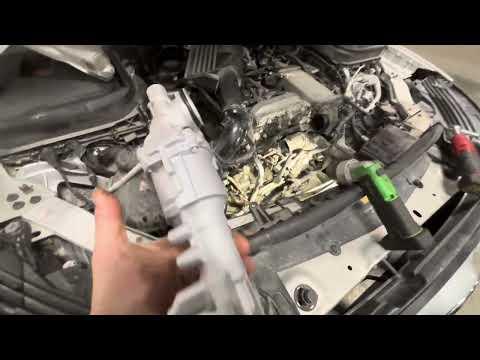







How to Replace the Water Pump on a 2016-2018 Mercedes-Benz GLC300 (M274 2.0L Turbo) (Trim: 4Matic | Engine: Inline 4 2.0L)
Step-by-step DIY guide with tools/parts list, coolant drain & bleed tips, and OEM torque spec notes
How to Replace the Water Pump on a 2016-2018 Mercedes-Benz GLC300 (M274 2.0L Turbo) (Trim: 4Matic | Engine: Inline 4 2.0L)
Step-by-step DIY guide with tools/parts list, coolant drain & bleed tips, and OEM torque spec notes for 2016, 2017, 2018


🔧 GLC300 - Water Pump Replacement
On your GLC300, the water pump circulates coolant through the engine and radiator. Replacing it typically involves draining coolant, removing the drive belt, unbolting the pump, installing a new seal, and then properly refilling/bleeding the cooling system.
Difficulty Level: Advanced | Estimated Time: 3-6 hours
Assumption: Stock cooling system, mechanical belt-driven water pump (M274 2.0L turbo).
⚠️ Safety & Precautions
- ⚠️ Never open the coolant reservoir cap on a hot engine; wait until fully cool.
- ⚠️ Support the vehicle with jack stands before working underneath.
- ⚠️ Keep coolant off belts and electrical connectors; it can cause slipping/corrosion.
- ⚠️ Coolant is toxic—catch it in a drain pan and dispose of it properly.
- ⚠️ Battery disconnect is not usually required, but keep the key away from the vehicle while hands are near the belt path.
🔧 Required Tools
You'll need the following tools for this repair:
- Floor jack (rated 3-ton minimum)
- Jack stands (rated 3-ton minimum)
- Wheel chocks
- Safety glasses
- Nitrile gloves
- Drain pan (at least 10 liters)
- Trim clip removal tool
- Torx bit set (E-Torx and Torx)
- External Torx socket set (E10, E12, E14)
- Metric socket set (8mm, 10mm, 13mm)
- 3/8" ratchet
- 1/4" ratchet
- Extensions (3" and 6")
- Serpentine belt tool (specialty)
- Torque wrench (5–60 Nm range)
- Torque wrench (40–200 Nm range)
- Hose clamp pliers
- Pick tool
- Plastic scraper
- Shop rags
- Cooling system vacuum filler (specialty)
- Funnel with long neck
🔩 Required Parts
HowToo sells all the parts you need for this repair:
- Water pump assembly - Qty: 1
- Water pump seal/O-ring (included with pump on most kits) - Qty: 1
- Accessory drive belt - Qty: 1
- Engine coolant (MB-approved, typically 325.0 spec concentrate) - Qty: 2-3 gallons mixed 50/50 (or equivalent liters)
- New water pump mounting bolts (if single-use on your setup) - Qty: 1 set
- Hose clamp(s) (only if originals are damaged) - Qty: 1-3
📋 Before You Begin
- Park on level ground, set the parking brake, and place wheel chocks behind the rear wheels.
- Let the engine cool completely (radiator hoses should feel cool to the touch).
- Plan your belt routing before removal: take a clear photo of the belt path.
- If using a cooling system vacuum filler (a tool that sucks air out then pulls coolant in), set up your air supply and ensure all hose connections are tight.
🔨 Step-by-Step Instructions
Follow these steps in order:
Step 1: Raise the front and remove the lower covers
- Use a floor jack (rated 3-ton minimum) to lift the front jacking point, then support with jack stands (rated 3-ton minimum).
- Remove the lower engine splash shield/undertray using a Torx bit and trim clip removal tool.
Step 2: Drain the coolant
- Place a drain pan (at least 10 liters) under the radiator/engine area.
- Slowly loosen the coolant reservoir cap to release any remaining pressure (engine must be cool).
- Drain coolant from the lowest accessible point (radiator drain if equipped, or lower radiator hose).
- Use hose clamp pliers to release spring clamps and carefully twist hoses free by hand; use a pick tool only to break the seal gently—don’t gouge the hose.
Step 3: Remove the accessory drive belt
- Locate the belt tensioner.
- Use a serpentine belt tool (specialty) to rotate the tensioner and relieve belt tension (this tool is a long, thin lever designed for tight belt areas).
- Slip the belt off one upper pulley, then remove it fully.
- Tip: Keep fingers out of pinch points.
Step 4: Create access to the water pump
- Remove any intake ducting or small brackets blocking access using a 8mm socket, 10mm socket, and Torx bit as applicable.
- Move wiring looms aside carefully and secure them with a safe gap using shop rags for protection.
Step 5: Disconnect hoses from the water pump
- Use hose clamp pliers to open the clamps and slide them back on the hose.
- Twist and pull hoses off the pump nipples; catch remaining coolant in the drain pan.
- Plug hoses temporarily with shop rags to reduce dripping.
Step 6: Remove the water pump
- Remove the water pump mounting bolts using the correct external Torx socket (E10/E12/E14) and a 3/8" ratchet with extensions as needed.
- Support the pump as you remove the last bolt, then pull the pump away from the engine.
- Remove the old seal/O-ring and clean the sealing surface with a plastic scraper and shop rags.
- Torque note: Water pump bolt torque varies by pump/bolt type on this engine. Tighten with a torque wrench to the exact Mercedes-Benz specification for your pump fasteners.
Step 7: Install the new water pump
- Lightly lubricate the new O-ring with fresh coolant (just a thin film).
- Position the pump squarely and start all bolts by hand to avoid cross-threading.
- Tighten bolts evenly in a crisscross pattern using an external Torx socket and torque wrench.
- Torque to OEM specification using your torque wrench (do not “guess tight”).
Step 8: Reconnect hoses and reinstall removed components
- Reinstall hoses fully seated, then position clamps back in their original locations using hose clamp pliers.
- Reinstall brackets/ducting using a 10mm socket and Torx bit.
Step 9: Install the new accessory drive belt
- Route the new belt exactly like your reference photo.
- Use the serpentine belt tool (specialty) to rotate the tensioner and slip the belt onto the final pulley.
- Double-check that the belt ribs are seated correctly in every pulley groove.
Step 10: Refill and bleed the cooling system
- Best method: Use a cooling system vacuum filler (specialty) to pull a vacuum, confirm it holds, then draw in the correct MB-approved coolant mix.
- Fallback method: Use a funnel with long neck to fill slowly at the reservoir, pausing to let air burp out.
- Start the engine and let it warm up while monitoring the coolant level; add coolant as needed.
- Set the HVAC to heat and low fan to encourage coolant flow through the heater core.
- Watch for leaks at the pump and hose connections.
Step 11: Reinstall undertray and lower the vehicle
- Reinstall the undertray using a Torx bit and trim clip removal tool.
- Lower the vehicle safely using the floor jack and remove jack stands.
✅ After Repair
- Bring the engine to operating temperature and verify the cabin heat works normally.
- Check for leaks with the engine running and again after a short test drive.
- After the engine cools fully, recheck coolant level and top off to the correct mark.
- If you get a coolant temperature warning or repeated low-coolant message, stop and recheck for trapped air or a leak.
💰 DIY vs Shop Cost
Shop Cost: $900-$1,600 (parts + labor)
DIY Cost: $180-$450 (parts only)
You Save: $720-$1,150 by doing it yourself!
Shop labor rates vary but typically run $100-$150/hour. This repair takes a shop approximately 3-6 hours.
🎯 Ready to get started?
HowToo makes it easy: same-day/2-day shipping on every part, plus all the tools and specialty tools you need! Check out the parts and tools sections below to add everything to your cart.