















How to Replace the Water Pump on a 2015 Toyota Tacoma (DIY Guide)
Step-by-step instructions with required tools/parts, coolant refill & bleeding, and key torque specs
How to Replace the Water Pump on a 2015 Toyota Tacoma (DIY Guide)
Step-by-step instructions with required tools/parts, coolant refill & bleeding, and key torque specs


🔧 Tacoma - Water Pump Replacement
On your Tacoma, the water pump circulates coolant through the engine and radiator. If it’s leaking (coolant crust at the pump/weep hole) or the bearing is noisy, replacing the pump prevents overheating and bigger engine damage.
Difficulty Level: Advanced | Estimated Time: 3-5 hours
⚠️ Safety & Precautions
- ⚠️ Let the engine cool completely before opening the cooling system.
- ⚠️ Support the truck with jack stands on a level surface; never rely on a jack.
- ⚠️ Keep hands/clothes clear of the fan and belt drive.
- ⚠️ Coolant is toxic—catch it in a drain pan and dispose of it properly.
- 🔋 Disconnect the negative battery cable if you’ll be working close to the fan/rotating parts.
🔧 Required Tools
You'll need the following tools for this repair:
- Safety glasses
- Nitrile gloves
- Floor jack (rated 3-ton minimum)
- Jack stands (rated 3-ton minimum)
- Wheel chocks
- Drain pan (at least 3-gallon)
- Funnel
- Shop towels
- Plastic trim clip tool
- Ratchet (3/8")
- Ratchet (1/2")
- Socket set 8mm-19mm
- 12mm socket
- 14mm socket
- Extensions (3" and 6")
- Torque wrench (10-80 ft-lbs range)
- Serpentine belt tool (specialty)
- Flathead screwdriver
- Pliers
- Gasket scraper (plastic)
🔩 Required Parts
HowToo sells all the parts you need for this repair:
- Water pump - Qty: 1
- Water pump gasket - Qty: 1
- Toyota Super Long Life Coolant (pink) premixed - Qty: 2 gallons
- Serpentine drive belt - Qty: 1
📋 Before You Begin
- Park on level ground, set the parking brake, and chock the rear wheels.
- Make sure the engine is fully cold (overnight is best).
- If you’re replacing the belt (recommended), take a quick photo of the belt routing under the hood.
- If disconnecting the battery: use a 10mm socket to remove the negative cable and set it aside so it can’t spring back.
🔨 Step-by-Step Instructions
Follow these steps in order:
Step 1: Raise the front and remove the lower splash shield
- Use a floor jack (rated 3-ton minimum) to lift the front, then place jack stands (rated 3-ton minimum) under the frame.
- Remove the lower engine splash shield using a plastic trim clip tool and 10mm socket.
Step 2: Drain the coolant
- Place a drain pan (at least 3-gallon) under the radiator drain.
- Slowly remove the radiator cap by hand to release any leftover pressure.
- Open the radiator drain using a flathead screwdriver (if equipped) and drain coolant fully.
Step 3: Remove the fan shroud and fan assembly
- Unclip/remove the upper fan shroud fasteners using a 10mm socket and plastic trim clip tool.
- At the water pump pulley, remove the fan clutch nuts using a 12mm socket.
- Lift the fan and shroud out together carefully. Go slow—radiator fins bend easily.
- Torque wrench note: A torque wrench is a tool that tightens fasteners to a specific setting so you don’t strip or crack parts.
- When reinstalling later: Torque fan clutch nuts to 13 N·m (115 in-lbs).
Step 4: Remove the serpentine belt
- Use a serpentine belt tool (specialty) on the belt tensioner to rotate it and release belt tension.
- Slip the belt off and remove it from the engine bay.
- Serpentine belt tool note: This is a long-handled wrench made to reach the tensioner in tight spaces.
Step 5: Remove the water pump pulley
- Hold the pulley from turning by snugging two nuts back on, or by hand, and remove the pulley nuts with a 12mm socket.
- Remove the pulley and set it aside.
- When reinstalling later: Torque water pump pulley nuts to 21 N·m (15 ft-lbs).
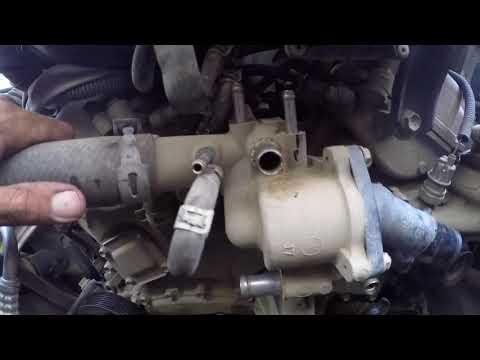
Step 6: Disconnect hoses from the water pump
- Use pliers to slide the spring clamps back, then twist and pull the hoses off.
- Have shop towels ready—more coolant will spill.
Step 7: Remove the water pump
- Remove the water pump mounting bolts using a 10mm socket and 12mm socket with extensions (3" and 6").
- Pull the water pump straight off the front cover.
- Remove the old gasket and clean the mating surface using a gasket scraper (plastic) and shop towels. No deep scraping—aluminum gouges easily.
Step 8: Install the new water pump and gasket
- Position the new gasket on the new water pump.
- Set the pump in place and hand-start all bolts to avoid cross-threading.
- Tighten bolts evenly in a crisscross pattern using a 10mm socket/12mm socket.
- Final tighten with a torque wrench (10-80 ft-lbs range): Torque water pump bolts to 21 N·m (15 ft-lbs).
Step 9: Reconnect hoses, reinstall pulley, belt, fan, and shroud
- Reconnect hoses and reposition clamps using pliers.
- Reinstall the water pump pulley and nuts using a 12mm socket, then Torque water pump pulley nuts to 21 N·m (15 ft-lbs).
- Route the belt per the under-hood diagram and apply tension using the serpentine belt tool (specialty).
- Reinstall fan/shroud assembly and start the fan clutch nuts by hand using a 12mm socket.
- Final tighten with a torque wrench (10-80 ft-lbs range): Torque fan clutch nuts to 13 N·m (115 in-lbs).
- Reinstall the lower splash shield using a 10mm socket and plastic trim clip tool.
Step 10: Refill and bleed the cooling system
- Lower the truck from the jack stands (rated 3-ton minimum).
- Close the radiator drain by hand (snug, not over-tight).
- Use a funnel to fill the radiator with Toyota Super Long Life Coolant (pink) premixed.
- Fill the overflow reservoir to the “FULL” line.
- Start the engine and set the heater to HOT. Let it idle and watch the coolant level.
- As the thermostat opens, top off coolant as needed. Squeeze the upper radiator hose carefully (with nitrile gloves) to help burp air.
- Install the radiator cap once bubbles reduce and the level stabilizes.
✅ After Repair
- Check for leaks around the water pump and hose connections with the engine running.
- Watch the temperature gauge on a 10-15 minute test drive.
- After the engine cools fully, recheck the radiator and overflow level and top off as needed.
- Recheck for dried coolant trails over the next 2-3 days.
💰 DIY vs Shop Cost
Shop Cost: $650-$1,150 (parts + labor)
DIY Cost: $180-$420 (parts only)
You Save: $470-$730 by doing it yourself!
Shop labor rates vary but typically run $100-$150/hour. This repair takes a shop approximately 3-5 hours.
🎯 Ready to get started?
HowToo makes it easy: same-day/2-day shipping on every part, plus all the tools and specialty tools you need! Check out the parts and tools sections below to add everything to your cart.