









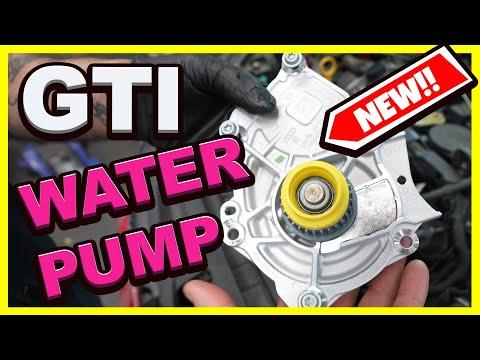







How to Replace the Water Pump on a 2015-2020 Volkswagen GTI (Engine: Inline 4 2.0L)
Step-by-step instructions with tools, parts, torque specs, and coolant bleeding tips
How to Replace the Water Pump on a 2015-2020 Volkswagen GTI (Engine: Inline 4 2.0L)
Step-by-step instructions with tools, parts, torque specs, and coolant bleeding tips for 2015, 2016, 2017, 2018, 2019, 2020


🔧 Water Pump - Replacement
On your GTI, the water pump and thermostat housing are a common leak point. This job involves draining the coolant, removing access parts, swapping the pump assembly, then refilling and bleeding the cooling system carefully so the engine does not overheat.
Difficulty Level: Intermediate | Estimated Time: 4-6 hours
⚠️ Safety & Precautions
- Work only on a completely cool engine. Hot coolant can cause severe burns.
- Use jack stands. Never rely on a floor jack alone.
- Keep hands clear of the cooling fans. They can turn on unexpectedly.
- Dispose of old coolant properly. It is toxic to people and animals.
- Disconnect the battery if you will be removing the starter-area covers or working near exposed wiring.
🔧 Required Tools
You'll need the following tools for this repair:
- Floor jack (rated 3-ton minimum)
- Jack stands
- Wheel chocks
- Safety glasses
- Nitrile gloves
- Drain pan
- Ratchet
- Torque wrench
- 10mm socket
- 13mm socket
- Torx T25 screwdriver
- Torx T30 screwdriver
- Flat trim tool
- Pliers
- Coolant fill funnel (specialty)
- Volkswagen coolant bleed funnel or vacuum fill tool (specialty)
🔩 Required Parts
HowToo sells all the parts you need for this repair:
- Water pump and thermostat housing assembly - Qty: 1
- Coolant flange seal or O-ring set - Qty: 1
- Coolant pipe seals - Qty: 1 set
- Engine coolant G13 or approved Volkswagen coolant - Qty: 2-3 gallons mixed as required
- Replacement hose clamps - Qty: 1 set
- Undertray fastener clips or screws - Qty: 1 set
📋 Before You Begin
- Park on level ground and set the parking brake.
- Let the engine go fully cold before opening the cooling system.
- Raise the front of the car and support it with jack stands.
- If your GTI still has the factory belly pan, remove it first for access.
- Have fresh coolant ready before opening the system.
🔨 Step-by-Step Instructions
Follow these steps in order:
Step 1: Drain the coolant
- Use a drain pan under the radiator area.
- Remove the coolant reservoir cap slowly.
- Open the radiator drain or disconnect the lower radiator hose, depending on access.
- Allow the coolant to drain fully.
Step 2: Remove lower access panels
- Use a Torx T25 screwdriver or Torx T30 screwdriver to remove the belly pan fasteners.
- Remove the undertray and set the hardware aside in order.
Step 3: Remove intake-side access parts
- Use a flat trim tool and ratchet with 10mm socket to remove the air intake ducting and related covers blocking access to the water pump area.
- Move wiring and hoses gently aside without stressing them.
- Take a photo before removing hoses.
Step 4: Release coolant hoses
- Use pliers to release the spring clamps, or loosen clamp-style fittings if equipped.
- Twist each hose gently to break the seal, then pull it off.
- Plug or cap the hoses if coolant continues to drip.
Step 5: Remove the water pump assembly
- Use a ratchet with 10mm socket to remove the water pump/thermostat housing bolts.
- Pull the assembly straight out once all fasteners are removed.
- Clean the mounting surface carefully. Do not scratch the aluminum mating surface.
- Torque on reassembly: Water pump/thermostat housing bolts to 10 Nm (7 ft-lbs).
Step 6: Install the new pump
- Compare the old and new parts before installing.
- Install the new seals and lightly lubricate O-rings with fresh coolant.
- Set the new water pump assembly in place by hand first.
- Use a ratchet with 10mm socket to install the bolts evenly.
- Torque on reassembly: Tighten evenly to 10 Nm (7 ft-lbs).
Step 7: Reconnect hoses and removed parts
- Reinstall all coolant hoses and make sure each clamp sits in the original position.
- Use pliers for spring clamps and verify each hose is fully seated.
- Reinstall the intake parts and covers using the 10mm socket and Torx T25 screwdriver.
- Reinstall the belly pan with the Torx T25 screwdriver or Torx T30 screwdriver.
Step 8: Refill and bleed the cooling system
- Use a coolant fill funnel or vacuum fill tool to refill the system with the correct coolant mix.
- Fill slowly to reduce trapped air.
- Set the heater to maximum temperature and low fan speed.
- Start the engine and let it idle while watching the coolant level.
- Top off as the level drops.
- Torque on reassembly: Coolant drain plug, if removed, to 2 Nm (18 in-lbs).
Step 9: Final inspection
- Use a flashlight to inspect the pump, hose connections, and drain area for leaks.
- Check the coolant level again after the engine cools fully.
- Confirm the temperature stays normal during the road test.
✅ After Repair
- Run the engine until fully warm and verify heat output from the cabin vents.
- Check for warning lights and coolant leaks after the first drive.
- Recheck coolant level the next morning when the engine is cold.
- If the level drops again, bleed the system one more time.
💰 DIY vs Shop Cost
Shop Cost: $900-$1,600 (parts + labor)
DIY Cost: $220-$500 (parts only)
You Save: $680-$1,100 by doing it yourself!
Shop labor rates vary but typically run $100-$150/hour. This repair takes a shop approximately 4-6 hours.
🎯 Ready to get started?
HowToo makes it easy: same-day/2-day shipping on every part, plus all the tools and specialty tools you need! Check out the parts and tools sections below to add everything to your cart.