









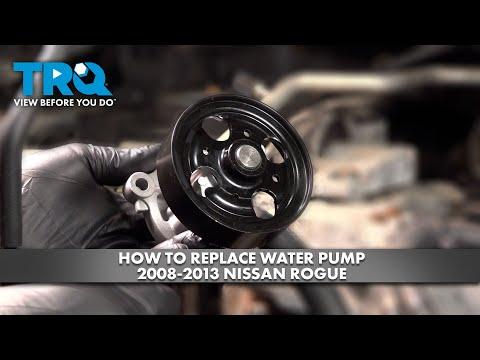






How to Replace the Water Pump on a 2014-2020 Nissan Rogue 2.5L QR25DE (Engine: Inline 4 2.5L)
Step-by-step DIY water pump replacement with tools, parts list, torque specs, safety tips, and bleeding procedure
How to Replace the Water Pump on a 2014-2020 Nissan Rogue 2.5L QR25DE (Engine: Inline 4 2.5L)
Step-by-step DIY water pump replacement with tools, parts list, torque specs, safety tips, and bleeding procedure for 2014, 2015, 2016, 2017, 2018, 2019, 2020


🔧 Rogue - Water Pump Replacement
You’ll be removing the old water pump on your Rogue’s 2.5L engine and installing a new one, then refilling and bleeding the cooling system. This fixes leaks and overheating caused by a worn or failing pump.
Difficulty Level: Intermediate | Estimated Time: 3-4 hours
⚠️ Safety & Precautions
- 🛑 Never open the radiator cap or work on the cooling system when the engine is hot. Let the engine cool completely (at least 1–2 hours).
- 🧤 Coolant is toxic. Avoid skin contact and keep away from kids and pets. Clean spills immediately.
- 🧰 You’ll be lifting the front of the Rogue. Always use a floor jack and jack stands on solid, level ground. Never rely on the jack alone.
- 🔌 Disconnect the negative battery cable with a 10mm wrench to avoid accidental starts and reduce short-circuit risk.
- 🧊 Make sure you have the correct coolant type: Nissan Blue long-life coolant or equivalent.
🔧 Required Tools
You'll need the following tools for this repair:
- 🧰 Floor jack (rated 3-ton minimum)
- 🧰 Jack stands (rated 3-ton minimum)
- 🧰 Wheel chocks
- 🧰 10mm socket
- 🧰 12mm socket
- 🧰 14mm socket
- 🧰 3/8" drive ratchet
- 🧰 3/8" drive torque wrench (5–75 ft-lbs range)
- 🧰 Short extension (3")
- 🧰 Breaker bar 3/8" or 1/2" drive
- 🧰 Serpentine belt tool or long-handled 14mm wrench
- 🧰 Flathead screwdriver (medium)
- 🧰 Phillips screwdriver
- 🧰 Needle-nose pliers
- 🧰 Drain pan (at least 10-quart capacity)
- 🧰 Plastic trim clip removal tool
- 🧰 Razor scraper or plastic gasket scraper
- 🧰 Shop rags
- 🧰 Safety glasses
- 🧰 Nitrile gloves
- 🧰 Flashlight or work light
- 🧰 Coolant funnel or spill-free funnel (specialty)
- 🧰 Catch bottles or jugs for old coolant
🔩 Required Parts
HowToo sells all the parts you need for this repair:
- 🔩 Engine water pump (QR25DE) - Qty: 1
- 🔩 Water pump gasket or O-ring (as required by pump) - Qty: 1
- 🔩 Serpentine drive belt - Qty: 1
- 🔩 Engine coolant (Nissan Blue long-life or equivalent premix) - Qty: 2-3 gallons
- 🔩 RTV silicone sealant (coolant-safe, if required by pump) - Qty: 1
- 🔩 New hose clamps (if any are rusty or damaged) - Qty: 2-4
- 🔩 Distilled water - Qty: 1-2 gallons (only if mixing concentrate)
- 🔩 Replacement plastic clips for splash shield - Qty: 4-8
📋 Before You Begin
- 🅿️ Park the Rogue on level ground, set the parking brake, and place wheel chocks behind the rear wheels.
- ❄️ Let the engine cool completely so the upper radiator hose is cool to the touch.
- 🔌 Disconnect the negative battery cable using a 10mm socket and move it aside so it cannot spring back.
- 🧴 Place a large drain pan under the radiator area to catch old coolant.
- 📸 Take a clear photo of the belt routing first.
🔨 Step-by-Step Instructions
Follow these steps in order:
Step 1: Raise the front and remove right front wheel
- Loosen the right front wheel lug nuts a half turn with a 21mm socket and breaker bar while the Rogue is still on the ground. If you don’t have 21mm, use the factory lug wrench.
- Use the floor jack on the front jacking point (center crossmember behind front bumper) and raise the front until the wheels are off the ground.
- Place jack stands under the front pinch welds or frame points and slowly lower the Rogue onto them. Shake the vehicle gently to confirm it’s stable.
- Remove the lug nuts fully using the 21mm socket or factory wrench and take off the right front wheel.
Step 2: Remove right front inner splash shield
- Turn the steering to the left to open access inside the right wheel well.
- Use a Phillips screwdriver and 10mm socket to remove screws and small bolts holding the plastic inner fender/splash shield.
- Use a plastic trim clip removal tool to pop out any plastic clips. Pry under the clip head and pull straight out.
- Remove the front part of the inner splash shield to expose the crank pulley, belt, and water pump area.
Step 3: Drain coolant
- Place the drain pan under the radiator drain area (bottom of radiator, passenger side).
- Slowly remove the radiator cap by pushing down and turning it counterclockwise.
- If your radiator has a drain plug, open it using a flathead screwdriver. If not, loosen the lower radiator hose clamp with pliers or flathead screwdriver and carefully pull the hose off to drain.
- Let coolant drain completely, then close the drain plug or temporarily slide the hose back on to stop drips.
Step 4: Remove serpentine belt
- From the wheel well opening, locate the belt tensioner (a pulley on a spring-loaded arm) and the tensioner bolt head (usually 14mm).
- Place a 14mm socket on the tensioner bolt using a ratchet or serpentine belt tool, and rotate it to relieve tension (usually clockwise on this engine).
- While holding tension off the belt, slide the belt off one of the upper pulleys with your other hand.
- Gently release the tensioner back to rest, then remove the belt completely. Remember your routing photo for reinstallation.
Step 5: Remove components blocking water pump access
- On the QR25DE, the water pump is mounted on the front of the engine block, driven by the belt. From the wheel well, identify the pump (round housing with several small bolts and a pulley).
- If needed, remove any small brackets or covers in front of the pump using a 10mm socket and ratchet.
- Move small hoses aside as necessary, using needle-nose pliers to slide clamps back. Do not kink hoses; support them gently.
Step 6: Remove the water pump pulley (if separate)
- If your replacement pump does not come with a pulley, you’ll need to move the old pulley.
- With the belt already off, hold the pulley from turning using a strap wrench if needed, and remove the pulley bolts with a 10mm socket.
- Set the pulley and bolts aside in a clean spot.
Step 7: Remove the water pump
- Place the drain pan directly under the water pump — more coolant will spill when you remove it.
- Use a 10mm socket and ratchet to remove all the water pump mounting bolts. Note bolt locations and lengths if they differ.
- Gently tap the pump housing with the handle of a screwdriver or a soft mallet to break the seal. Do not pry hard against the engine block.
- Pull the pump away from the engine. Let any remaining coolant drain into the pan.
- Remove the old gasket or O-ring from the engine side and the pump.
Step 8: Clean the mating surface
- Use a razor scraper or plastic gasket scraper to carefully remove old gasket material and sealant from the engine’s water pump mounting surface.
- Wipe the surface with shop rags until it is clean, smooth, and free of debris.
- Do not let old gasket pieces fall into the opening.
- If using any cleaner, use a small amount and keep it out of the coolant passages.
Step 9: Prepare the new water pump
- Compare the new pump to the old one to confirm same shape, bolt holes, and inlet/outlet locations.
- Install the new gasket or O-ring onto the new pump. If the Nissan procedure or pump instructions call for RTV, apply a thin, even bead of RTV silicone sealant only where specified.
- Let RTV skin over for a few minutes if required by the instructions.
Step 10: Install the new water pump
- Carefully position the new pump against the engine, lining up bolt holes.
- Install all mounting bolts by hand to avoid cross-threading.
- Using a 10mm socket and ratchet, snug the bolts evenly in a crisscross pattern.
- Then torque the bolts with a torque wrench to 10 N·m (89 in-lbs, about 7.5 ft-lbs) in a crisscross pattern.
Step 11: Reinstall water pump pulley (if removed)
- Place the pulley onto the new pump.
- Install the pulley bolts by hand, then tighten them with a 10mm socket.
- Hold the pulley with a strap wrench if it wants to spin.
- Torque pulley bolts to 10 N·m (89 in-lbs) if spec is available; otherwise, snug firmly but do not over-tighten.
Step 12: Reinstall any removed brackets/hoses
- Reinstall any brackets or covers you removed using a 10mm socket and ratchet.
- Reconnect any hoses you moved. Slide clamps back into place using needle-nose pliers.
- Double-check that nothing is left loose around the pump and belt area.
Step 13: Install the new serpentine belt
- Route the new belt according to your photo or the belt routing diagram sticker (usually under the hood).
- Leave the easiest-access pulley (often an idler) for last.
- Place a 14mm socket on the tensioner and rotate to release tension again.
- Slip the belt over the last pulley, then slowly release the tensioner to tighten the belt.
- Check from multiple angles that the belt is seated in all pulley grooves correctly.
Step 14: Reinstall splash shield and wheel
- Reinstall the inner splash shield using the original bolts and clips with a 10mm socket, Phillips screwdriver, and trim clip tool as needed.
- Put the right front wheel back on and hand-tighten the lug nuts.
- Raise the Rogue slightly with the floor jack, remove the jack stands, and lower the vehicle to the ground.
- Tighten lug nuts in a star pattern with a 21mm socket to 113 N·m (83 ft-lbs).
Step 15: Refill the cooling system
- Make sure the radiator drain plug or lower hose is fully closed/installed.
- Insert a coolant funnel into the radiator filler neck.
- Slowly pour the correct coolant (premixed or mixed with distilled water) into the radiator until full.
- Fill the coolant reservoir to the “MAX” line.
Step 16: Bleed air from the cooling system
- Reconnect the negative battery cable using a 10mm socket.
- Start the engine and set the heater to maximum heat and blower on medium.
- Let the engine idle. Watch the coolant level in the funnel and add as needed to keep it near full.
- As the engine warms up, air bubbles will come out. Keep an eye on temperature gauge; it should stay in normal range.
- Once the engine reaches operating temperature and bubbles stop, and the upper radiator hose is hot, shut off the engine.
- Let the engine cool completely, then top off the radiator and reservoir again if needed, and install the radiator cap firmly.
Step 17: Final checks
- Look around the new water pump area with a flashlight for any coolant leaks.
- Check that the belt runs smoothly with the engine idling (no wobble, no squeal).
- Clean up any spilled coolant and dispose of old coolant at a recycling center or shop.
✅ After Repair
- 🧪 After the first good drive (10–15 km), park, let the engine cool, and recheck coolant level in the reservoir. Top off to “MAX” if needed.
- 👀 Inspect under the front of the Rogue and around the water pump area for any fresh coolant drips.
- 📈 Watch the temperature gauge over the next few drives. It should stay in the normal middle range.
- 🔊 Listen for unusual noises like grinding or squealing from the front of the engine, which could indicate belt or pulley issues.
💰 DIY vs Shop Cost
Shop Cost: $450-$750 (parts + labor)
DIY Cost: $120-$250 (parts + coolant)
You Save: $330-$500 by doing it yourself!
Shop labor rates typically run $100-$150/hour. This repair takes a shop approximately 2-3 hours.
🎯 Ready to get started?
HowToo makes it easy: same-day/2-day shipping on every part, plus all the tools and specialty tools you need! Check out the parts and tools sections above to add everything to your cart.
Guide for Engine Water Pump replace for these Nissan vehicles
| Year Make Model | Sub Model | Engine | Body Style |
|---|---|---|---|
| 2020 Nissan Rogue | - | Inline 4 2.5L | - |
| 2019 Nissan Rogue | - | Inline 4 2.5L | - |
| 2019 Nissan Rogue | - | Inline 4 2.0L | - |
| 2018 Nissan Rogue | - | Inline 4 2.5L | - |
| 2018 Nissan Rogue | - | Inline 4 2.0L | - |
| 2017 Nissan Rogue | - | Inline 4 2.5L | - |
| 2017 Nissan Rogue | - | Inline 4 2.0L | - |
| 2016 Nissan Rogue | - | Inline 4 2.5L | - |
| 2015 Nissan Rogue | - | Inline 4 2.5L | - |
| 2014 Nissan Rogue | - | Inline 4 2.5L | - |