









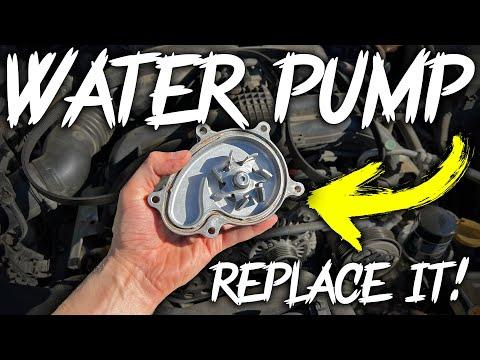







How to Replace the Water Pump on a 2013 Subaru Forester 2.5L (DIY Repair Guide)
Step-by-step timing-belt or external-pump instructions with tools, parts list, and key torque specs for 2012, 2013
How to Replace the Water Pump on a 2013 Subaru Forester 2.5L (DIY Repair Guide)
Step-by-step timing-belt or external-pump instructions with tools, parts list, and key torque specs for 2012, 2013


🔧 Forester - Water Pump Replacement
On your Forester, the water pump is driven from the front of the engine. Depending on which 2.5L engine you have, the pump is either behind the timing belt covers (most common for 2013) or mounted externally (less common).
Difficulty Level: Advanced | Estimated Time: 4-7 hours
⚠️ Safety & Precautions
- ⚠️ Work on a completely cool engine to avoid burns from hot coolant.
- ⚠️ Support the vehicle with jack stands; never rely on a jack alone.
- ⚠️ Keep fingers/hair/clothing away from belts and pulleys.
- ⚠️ If you remove the timing belt, engine timing must stay aligned (misalignment can cause a no-start and engine damage).
- ⚠️ Disconnect the negative battery cable if you’ll be working near the radiator fans (they can turn on unexpectedly).
🔧 Required Tools
You'll need the following tools for this repair:
- Safety glasses
- Nitrile gloves
- Floor jack (rated 3-ton minimum)
- Jack stands (rated 3-ton minimum)
- Wheel chocks
- Drain pan (at least 10-quart)
- Funnel
- Spill-free coolant funnel kit
- 10mm socket
- 12mm socket
- 14mm socket
- 22mm socket
- 3/8" ratchet
- 1/2" breaker bar
- 3/8" torque wrench (10–80 Nm range)
- 1/2" torque wrench (60–250 Nm range)
- Serpentine belt tool (long-handle) or 14mm wrench
- Flat trim tool
- Pliers (hose clamp)
- Gasket scraper
- Plastic razor scraper
- Brake cleaner spray
- Shop towels
- Crank pulley holding tool (specialty)
- 3-jaw puller (specialty)
- Paint marker
🔩 Required Parts
HowToo sells all the parts you need for this repair:
- Water pump - Qty: 1
- Water pump gasket - Qty: 1
- Engine coolant (Subaru-compatible, premix 50/50) - Qty: 2-3 gallons
- Thermostat with gasket - Qty: 1
- Radiator cap - Qty: 1
- Accessory drive belt - Qty: 1
- Timing belt kit (timing belt, idlers, tensioner) - Qty: 1 Strongly recommended if timing-belt engine.
📋 Before You Begin
- Park on level ground, set the parking brake, and chock the rear wheels.
- Let the engine cool fully (at least 2-3 hours).
- Disconnect the negative battery terminal using a 10mm socket if you’ll be near the fans.
- Raise the front of the vehicle with a floor jack and support it on jack stands.
- Place a drain pan under the radiator drain area.
🔨 Step-by-Step Instructions
Follow these steps in order:
Step 1: Drain the coolant
- Remove the undertray/splash shield using a 10mm socket and flat trim tool.
- Open the radiator cap (only if cool) by hand.
- Open the radiator drain (petcock) and drain into a drain pan.
Step 2: Remove the radiator fans (gives needed space)
- Unplug fan electrical connectors by hand.
- Remove fan mounting bolts using a 10mm socket.
- Lift fans straight up and out carefully.
Step 3: Remove the accessory drive belt
- Relieve tension using a serpentine belt tool (long-handle) or 14mm wrench.
- Slip the belt off the pulleys and remove it.
Step 4: Determine which pump setup you have
- If you see large black plastic timing covers across the front of the engine, follow Steps 5–12 (timing-belt style).
- If the water pump is visible externally (front of engine, accessible without timing covers), skip to Step 13 (external pump style).
- Most 2013 2.5L Foresters are timing-belt style.
Step 5: Remove the crank pulley
- Hold the crank pulley using a crank pulley holding tool (specialty).
- Remove the crank bolt using a 22mm socket and 1/2" breaker bar.
- Torque spec (reinstall): Torque to 177 Nm (130 ft-lbs)
- Remove the pulley. If stuck, use a 3-jaw puller (specialty) carefully.
Step 6: Remove timing covers
- Remove timing cover bolts using a 10mm socket.
- Set covers aside in order so they go back the same way.
Step 7: Set engine to timing marks
- Rotate the engine clockwise using a 22mm socket until timing marks line up.
- Mark belt and sprockets with a paint marker for extra reference.
- Do not rotate counterclockwise.
Step 8: Release timing belt tension
- Remove the tensioner mounting bolts using a 12mm socket.
- Torque spec (reinstall): Torque to 31 Nm (23 ft-lbs)
- Remove the timing belt.
Step 9: Remove water pump
- Remove the water pump bolts using a 10mm socket.
- Pull the pump straight off and let remaining coolant drain into the drain pan.
Step 10: Clean the sealing surface
- Scrape old gasket material using a plastic razor scraper and gasket scraper.
- Wipe clean using brake cleaner spray and shop towels.
- Do not gouge the aluminum surface.
Step 11: Install the new water pump
- Place the new gasket on the pump.
- Install the pump and hand-start all bolts.
- Tighten evenly using a 10mm socket and finish with a 3/8" torque wrench.
- Torque spec: Torque to 12 Nm (9 ft-lbs)
Step 12: Reinstall timing components (critical)
- Install timing belt (and idlers/tensioner if replacing) using 12mm socket and 14mm socket as needed.
- Verify all timing marks align before pulling the tensioner pin (if applicable).
- Rotate engine clockwise 2 full turns using a 22mm socket and re-check marks.
Step 13: External pump style (if equipped) - Remove and replace pump
- Remove pump mounting bolts using a 10mm socket and 12mm socket (as equipped).
- Remove pump, clean the surface using a plastic razor scraper, then install the new pump with a new gasket.
- Tighten evenly with a 3/8" torque wrench.
- Torque spec: Torque to 12 Nm (9 ft-lbs)
Step 14: Reinstall covers, pulley, fans, and belt
- Reinstall timing covers using a 10mm socket.
- Reinstall crank pulley and crank bolt using a 22mm socket, crank pulley holding tool (specialty), and 1/2" torque wrench.
- Torque spec: Torque to 177 Nm (130 ft-lbs)
- Reinstall accessory drive belt using a serpentine belt tool (long-handle) or 14mm wrench.
- Reinstall radiator fans using a 10mm socket and reconnect electrical plugs.
- Reinstall undertray using a 10mm socket and flat trim tool.
Step 15: Refill and bleed the cooling system
- Close the radiator drain.
- Fill coolant using a funnel or spill-free coolant funnel kit.
- Start the engine and set heat to full hot.
- Let it warm up and top off as air burps out. Watch the temp gauge.
- Shut down, let cool, then recheck level and fill the overflow bottle to the correct line.
✅ After Repair
- Check for leaks around the water pump area with the engine running.
- Verify the heater blows hot (confirms coolant flow).
- Test drive 10–15 minutes, then recheck coolant level after it cools.
- If you removed the timing belt: listen for abnormal whine or slapping, and shut down immediately if heard.
💰 DIY vs Shop Cost
Shop Cost: $650-$1,250 (parts + labor)
DIY Cost: $140-$420 (parts only)
You Save: $510-$830 by doing it yourself!
Shop labor rates vary but typically run $100-$150/hour. This repair takes a shop approximately 4-7 hours.
🎯 Ready to get started?
HowToo makes it easy: same-day/2-day shipping on every part, plus all the tools and specialty tools you need! Check out the parts and tools sections below to add everything to your cart.