









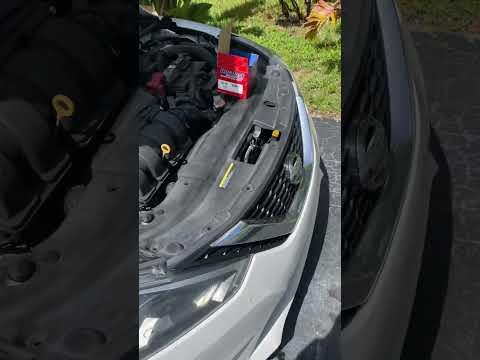







How to Replace the Water Pump on a 2013-2019 Nissan Sentra (Coolant Drain & Belt Removal) (Engine: Inline 4 1.8L)
Step-by-step instructions with required tools/parts, safety tips, coolant refill & air-bleed procedure, and leak checks
How to Replace the Water Pump on a 2013-2019 Nissan Sentra (Coolant Drain & Belt Removal) (Engine: Inline 4 1.8L)
Step-by-step instructions with required tools/parts, safety tips, coolant refill & air-bleed procedure, and leak checks for 2013, 2014, 2015, 2016, 2017, 2018, 2019


🔧 Sentra - Water Pump Replacement
You’ll be draining some coolant, removing the accessory drive belt, unbolting the water pump, and installing a new pump with a fresh gasket/O-ring. This matters because the water pump circulates coolant; a leaking or failing pump can cause overheating and engine damage.
Difficulty Level: Advanced | Estimated Time: 3-5 hours
⚠️ Safety & Precautions
- ⚠️ Never open the radiator cap on a hot engine; hot coolant can spray and burn.
- ⚠️ Support your Sentra with jack stands before working underneath; never rely on a jack alone.
- ⚠️ Keep coolant off belts and electrical connectors; wipe spills immediately.
- ⚠️ Dispose of used coolant properly; it’s toxic.
- ⚠️ Battery disconnect is recommended if you’ll be working near the alternator wiring.
🔧 Required Tools
You'll need the following tools for this repair:
- Safety glasses
- Nitrile gloves
- Floor jack (rated 2-ton minimum)
- Jack stands (rated 2-ton minimum)
- Wheel chocks
- Drain pan (10-quart minimum)
- Trim clip remover
- Flat-blade screwdriver
- Phillips screwdriver
- 3/8" drive ratchet
- 1/2" drive breaker bar
- Socket set: 8mm, 10mm, 12mm, 14mm
- Extension set: 3" and 6"
- Serpentine belt tool (specialty)
- Torque wrench (10-80 ft-lbs range)
- Gasket scraper
- Plastic razor blade scraper
- Brake cleaner spray
- Shop rags
- Funnel
- Spill-free coolant funnel kit (specialty)
🔩 Required Parts
HowToo sells all the parts you need for this repair:
- Water pump - Qty: 1
- Water pump gasket / O-ring (as equipped) - Qty: 1
- Nissan-compatible coolant (blue long-life premix) - Qty: As needed to refill
- Accessory drive belt - Qty: 1 Optional, smart “while you’re in there”
📋 Before You Begin
- Park on level ground, set the parking brake, and place wheel chocks behind the rear wheels.
- Let the engine cool fully (ideally overnight).
- Open the hood and remove the radiator cap only when cool.
- If you choose to disconnect the battery, use a 10mm socket to remove the negative terminal and keep it from springing back.
- Plan access: on your Sentra, the water pump is at the belt side of the engine; you may access it from the top and/or through the right-front wheel well depending on your tool reach.
🔨 Step-by-Step Instructions
Follow these steps in order:
Step 1: Raise and secure the front of the car
- Use wheel chocks at the rear wheels.
- Use a floor jack (rated 2-ton minimum) to lift the front jack point.
- Set the car onto jack stands (rated 2-ton minimum) at the approved support points.
Step 2: Remove the lower splash shield (if equipped)
- Use a trim clip remover and Phillips screwdriver to remove clips/screws.
- Use a 10mm socket for any splash shield bolts.
Step 3: Drain the coolant
- Place a drain pan (10-quart minimum) under the radiator drain.
- Open the radiator drain using a flat-blade screwdriver (if slotted) and let coolant drain.
- Remove the radiator cap to speed draining (only if fully cool).
Step 4: Remove the accessory drive belt
- From the top or wheel well, place a serpentine belt tool (specialty) or breaker bar on the belt tensioner.
- Rotate the tensioner to relieve tension, then slip the belt off a pulley.
- Tip: Take a quick photo of belt routing.
Step 5: Remove components blocking the water pump (as needed)
- If access is tight, remove the right-front wheel using a 14mm socket (lug nuts) and pull back/remove the inner fender liner using a trim clip remover and 10mm socket.
- Remove any small brackets or covers blocking the pump using a 10mm socket or 12mm socket.
Step 6: Unbolt the water pump
- Place the drain pan under the pump area; more coolant will spill.
- Use a 10mm socket or 12mm socket (varies by fastener) with a 3/8" drive ratchet and extensions to remove the water pump bolts.
- Note bolt locations/lengths as you remove them.
Step 7: Separate the pump and clean the sealing surface
- Gently break the seal and remove the pump by hand. If it’s stuck, tap lightly (do not pry hard against aluminum surfaces).
- Use a plastic razor blade scraper and gasket scraper to remove old gasket material.
- Finish-clean with brake cleaner spray on shop rags until the surface is clean and dry.
- Tip: Don’t gouge the aluminum sealing surface.
Step 8: Install the new water pump with new gasket/O-ring
- Install the new water pump gasket / O-ring onto the new pump as it was on the old one.
- Position the new pump and hand-thread all bolts first to avoid cross-threading.
- Tighten bolts evenly in a crisscross pattern using a torque wrench.
- Torque to Nissan service specification for your Sentra water pump bolts (bolt size/length can vary; I don’t want to guess a number and risk damage).
Step 9: Reinstall removed brackets/liners and reinstall the belt
- Reinstall any brackets/covers using a 10mm socket or 12mm socket.
- Route the belt correctly, relieve tension with the serpentine belt tool (specialty), and slip the belt fully onto the last pulley.
- Visually confirm the belt is seated in every pulley groove.
Step 10: Refill coolant and bleed air
- Close the radiator drain.
- Use a spill-free coolant funnel kit (specialty) and add Nissan-compatible coolant (blue long-life premix) until full.
- Start the engine and set the heater to HOT (fan medium) to help purge air.
- Let the engine reach operating temp and watch the coolant level; add as needed.
- Once the radiator fan cycles and heat is steady, shut off, let cool, then top off again.
✅ After Repair
- Check for leaks around the water pump while idling and after a short test drive.
- Verify the heater blows hot and the temperature gauge stays normal.
- Recheck coolant level the next morning (cold engine) and top off if needed.
- If you removed the battery cable, reconnect it using a 10mm socket.
💰 DIY vs Shop Cost
Shop Cost: $650-$1,050 (parts + labor)
DIY Cost: $120-$280 (parts only)
You Save: $530-$770 by doing it yourself!
Shop labor rates vary but typically run $100-$150/hour. This repair takes a shop approximately 3-5 hours.
🎯 Ready to get started?
HowToo makes it easy: same-day/2-day shipping on every part, plus all the tools and specialty tools you need! Check out the parts and tools sections below to add everything to your cart.