









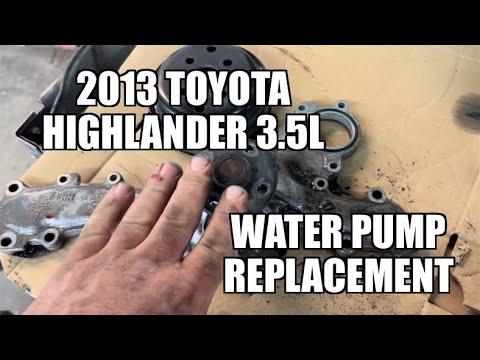



How to Replace the Water Pump on a 2011-2013 Toyota Highlander (Engine: V6 3.5L)
Step-by-step coolant pump repair guide with tools, parts, torque specs, and safety tips for 2011, 2012, 2013
How to Replace the Water Pump on a 2011-2013 Toyota Highlander (Engine: V6 3.5L)
Step-by-step coolant pump repair guide with tools, parts, torque specs, and safety tips for 2011, 2012, 2013


🔧 Highlander - Engine Water Pump Replacement
This guide covers replacing the engine coolant water pump on your Highlander. The water pump circulates coolant through the V6 engine, and a failing pump can cause coolant leaks, bearing noise, or overheating.
Difficulty Level: Advanced | Estimated Time: 4-6 hours
Assumption: This is for the engine mechanical water pump, not the hybrid inverter electric coolant pump.
⚠️ Safety & Precautions
- ⚠️ Your Highlander is a hybrid. Do not touch orange high-voltage cables or hybrid system components.
- ⚠️ Let the engine cool completely before opening the cooling system. Hot coolant can cause serious burns.
- ⚠️ Disconnect the 12-volt battery negative cable before working near the engine accessory drive area.
- ⚠️ Support the engine correctly before removing any engine mount bracket. An engine support bar holds the engine from above so it cannot drop.
- ⚠️ Use only Toyota-compatible coolant. Mixing the wrong coolant can damage the cooling system.
- ⚠️ Keep coolant away from pets and children. It is poisonous.
🔧 Required Tools
You'll need the following tools for this repair:
- 10mm socket
- 12mm socket
- 14mm socket
- 17mm socket
- 19mm socket
- 3/8-inch drive ratchet
- 1/2-inch drive ratchet
- 3/8-inch drive extension set
- 1/2-inch drive breaker bar
- Torque wrench 5-80 ft-lbs
- Serpentine belt tool 14mm
- Flat-blade screwdriver
- Trim clip removal tool
- Pliers
- Plastic gasket scraper
- Drain pan 2-gallon minimum
- Funnel
- Cooling system vacuum fill tool (specialty)
- Engine support bar (specialty)
- Floor jack rated 3-ton minimum
- Jack stands rated 3-ton minimum
- Wheel chocks
- Nitrile gloves
- Safety glasses
🔩 Required Parts
HowToo sells all the parts you need for this repair:
- Engine water pump - Qty: 1
- Water pump gasket - Qty: 1
- Toyota Super Long Life Coolant premixed 50/50 - Qty: 2 gallons
- Serpentine belt - Qty: 1
- Engine mount bracket bolts - Qty: as needed if damaged or corroded
- Coolant drain plug gasket - Qty: 1
📋 Before You Begin
- 🅿️ Park your Highlander on level ground, shift to Park, and set the parking brake.
- 🧊 Let the engine sit until it is fully cool.
- 🔋 Disconnect the 12-volt battery negative cable using a 10mm socket.
- 🚗 Place wheel chocks behind the rear wheels before lifting the front.
- 🛠️ A serpentine belt is the long rubber belt that turns accessories on the front of the engine.
- 🛠️ A torque wrench tightens bolts to the correct tightness so parts are not damaged.
- 🛠️ A vacuum fill tool removes air while refilling coolant. It helps prevent overheating caused by trapped air.
🔨 Step-by-Step Instructions
Follow these steps in order:
Step 1: Raise and Support the Front
- Use a floor jack rated 3-ton minimum to lift the front of your Highlander at the front center jacking point.
- Place jack stands rated 3-ton minimum under the front support points.
- Gently lower the vehicle onto the stands and shake the vehicle lightly to confirm it is stable.
- Wear safety glasses and nitrile gloves.
Step 2: Remove the Lower Engine Covers
- Use a 10mm socket to remove the lower splash shield bolts.
- Use a trim clip removal tool to remove plastic clips without breaking them.
- Set the covers and clips aside in order.
- Take photos before disassembly.
Step 3: Drain the Engine Coolant
- Place a drain pan 2-gallon minimum under the radiator drain area.
- Slowly loosen the radiator cap only after the engine is completely cool.
- Use pliers or your fingers, depending on access, to open the radiator drain cock.
- Allow the coolant to drain fully into the pan.
- Close the radiator drain cock by hand until snug. Do not overtighten plastic drain parts.
Step 4: Remove the Right Front Wheel and Fender Liner Access
- Use a 21mm socket if available, or the vehicle lug wrench, to loosen the right front wheel lug nuts before fully lifting if not already lifted.
- Remove the right front wheel.
- Use a 10mm socket and trim clip removal tool to loosen the right front inner fender liner for side access.
- When reinstalling the wheel later, tighten lug nuts to Torque to 103 Nm (76 ft-lbs).
Step 5: Remove the Serpentine Belt
- Use a serpentine belt tool 14mm on the belt tensioner.
- Rotate the tensioner slowly to release belt tension.
- Slide the belt off the pulleys and remove it.
- Draw or photograph the belt routing before removal.
- Slowly release the tensioner.
Step 6: Support the Engine
- Install an engine support bar across the upper body support points.
- Attach the support chain to the engine lifting point.
- Apply light upward tension only. Do not lift the engine high.
- If using a jack for light backup support, place a wood block between the jack and oil pan. Do not crush the pan.
Step 7: Remove the Right Engine Mount Bracket for Access
- Use a 14mm socket and 17mm socket to remove the right-side engine mount and bracket fasteners as needed for water pump access.
- Use a 3/8-inch drive extension set to reach recessed bolts.
- Keep each bolt grouped by location.
- During installation, tighten typical engine mount bracket bolts to Torque to 64 Nm (47 ft-lbs) unless your replacement mount instructions specify otherwise.
Step 8: Remove the Water Pump Pulley
- Use a 10mm socket to loosen the water pump pulley bolts.
- If the pulley spins, hold it carefully by hand with gloves while loosening the bolts.
- Remove the pulley and set it aside.
- On installation, tighten the pulley bolts evenly to Torque to 21 Nm (15 ft-lbs).
Step 9: Remove the Old Water Pump
- Use a 10mm socket and 12mm socket to remove the water pump mounting bolts.
- Note bolt lengths and locations. Some bolts may be different lengths.
- Gently separate the pump from the engine using a plastic gasket scraper.
- Do not gouge the aluminum engine surface.
- Remove the old gasket.
Step 10: Clean the Sealing Surface
- Use a plastic gasket scraper to clean the engine-side sealing surface.
- Use a clean rag to wipe the area dry.
- Do not use metal scrapers or power sanding discs.
- Clean surfaces prevent leaks.
Step 11: Install the New Water Pump
- Place the new water pump gasket on the new engine water pump.
- Position the pump squarely against the engine.
- Start all bolts by hand first to avoid cross-threading.
- Use a 10mm socket and 12mm socket to snug the bolts evenly in a crisscross pattern.
- Tighten water pump bolts to Torque to 21 Nm (15 ft-lbs).
Step 12: Reinstall the Pulley, Mount Bracket, and Belt
- Use a 10mm socket to reinstall the water pump pulley.
- Tighten pulley bolts to Torque to 21 Nm (15 ft-lbs).
- Use a 14mm socket and 17mm socket to reinstall the engine mount bracket and mount fasteners.
- Tighten mount bracket fasteners to Torque to 64 Nm (47 ft-lbs).
- Use the serpentine belt tool 14mm to rotate the tensioner and install the new serpentine belt.
- Confirm the belt ribs sit correctly in every pulley groove.
Step 13: Refill the Cooling System
- Use a cooling system vacuum fill tool and funnel to refill with Toyota Super Long Life Coolant premixed 50/50.
- If filling without a vacuum tool, pour coolant slowly through a funnel into the radiator until full.
- Fill the coolant reservoir to the Full line.
- Leave the radiator cap off for the first bleed step.
Step 14: Reconnect the Battery and Bleed Air
- Use a 10mm socket to reconnect the 12-volt battery negative cable.
- Start the engine and set cabin heat to maximum temperature with low fan speed.
- Let the engine idle while watching the coolant level.
- Add coolant as the level drops.
- When no more bubbles appear and warm air comes from the vents, install the radiator cap.
- Watch the temperature gauge closely. Shut the engine off if it begins to overheat.
Step 15: Reinstall Covers and Wheel
- Use a 10mm socket and trim clip removal tool to reinstall the fender liner and lower splash shields.
- Reinstall the right front wheel.
- Use a torque wrench 5-80 ft-lbs if it covers the range, or a suitable higher-range torque wrench, to tighten lug nuts to Torque to 103 Nm (76 ft-lbs).
- Lower the vehicle with the floor jack rated 3-ton minimum.
✅ After Repair
- ✅ Let the engine reach normal operating temperature while checking for leaks around the water pump.
- ✅ Test drive gently for 10-15 minutes while watching the temperature gauge.
- ✅ After the engine cools fully, recheck the radiator and reservoir levels. Top off with Toyota-compatible coolant if needed.
- ✅ Recheck under the vehicle for coolant drips after the first drive.
- ✅ If the heater blows cold at idle or the temperature rises, air may still be trapped in the system.
- ✅ Dispose of used coolant at a recycling or hazardous waste facility. Do not pour it on the ground.
💰 DIY vs Shop Cost
Shop Cost: $650-$1,100 (parts + labor)
DIY Cost: $120-$300 (parts only)
You Save: $350-$800 by doing it yourself!
Shop labor rates vary but typically run $100-$150/hour. This repair takes a shop approximately 3.5-5.0 hours.
🎯 Ready to get started?
HowToo makes it easy: same-day/2-day shipping on every part, plus all the tools and specialty tools you need! Check out the parts and tools sections below to add everything to your cart.