









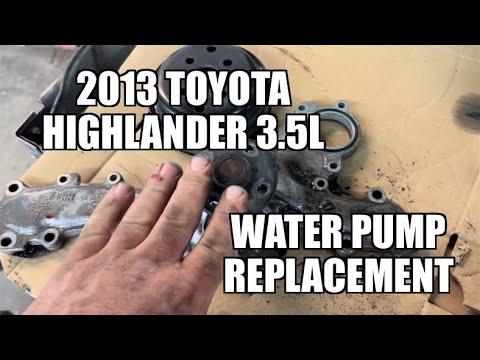




How to Replace the Water Pump on a 2009-2013 Toyota Highlander (Engine: Inline 4 2.7L)
Step-by-step DIY guide with tools, parts, coolant bleeding, torque specs, and safety tips for 2009, 2010, 2011, 2012, 2013
How to Replace the Water Pump on a 2009-2013 Toyota Highlander (Engine: Inline 4 2.7L)
Step-by-step DIY guide with tools, parts, coolant bleeding, torque specs, and safety tips for 2009, 2010, 2011, 2012, 2013


🔧 Highlander - Water Pump Replacement
Replacing the water pump on your Highlander means draining the cooling system, removing the drive belt and pump pulley, then installing a new pump with a fresh gasket. The water pump circulates coolant through the engine, so a leaking or noisy pump should be replaced before it causes overheating.
Difficulty Level: Intermediate | Estimated Time: 3-5 hours
⚠️ Safety & Precautions
- ⚠️ Work only on a completely cool engine. Hot coolant can cause serious burns.
- ⚠️ Keep coolant away from pets and children. It is poisonous and tastes sweet.
- ⚠️ Disconnect the negative battery cable before working near the belt and pulleys.
- ⚠️ Support the vehicle with jack stands if raising it. Never rely on a jack alone.
- ⚠️ Do not run the engine with the radiator cap removed once coolant starts getting hot.
🔧 Required Tools
You'll need the following tools for this repair:
- 10mm socket
- 12mm socket
- 14mm socket
- 19mm socket
- 3/8-inch ratchet
- 1/2-inch breaker bar
- Torque wrench 5-80 ft-lbs
- Serpentine belt tool 14mm
- Flat blade screwdriver
- Plastic trim clip removal tool
- Drain pan 2-gallon minimum
- Coolant funnel kit
- Gasket scraper plastic
- Brake cleaner spray
- Shop towels
- Floor jack rated 2-ton minimum
- Jack stands rated 2-ton minimum
- Wheel chocks
- Nitrile gloves
- Safety glasses
🔩 Required Parts
HowToo sells all the parts you need for this repair:
- Engine water pump - Qty: 1
- Water pump gasket - Qty: 1
- Toyota-compatible pink long-life coolant premix - Qty: 2 gallons
- Serpentine drive belt - Qty: 1
📋 Before You Begin
- 🅿️ Park your Highlander on level ground and set the parking brake.
- 🧊 Let the engine cool for at least 3-4 hours before opening the cooling system.
- 🔋 Use a 10mm socket to disconnect the negative battery cable, then move the cable aside so it cannot touch the battery post.
- 🚗 Place wheel chocks behind the rear wheels before lifting the front.
- 💧 A coolant funnel kit helps remove air pockets from the cooling system. Air pockets can cause overheating after the repair.
🔨 Step-by-Step Instructions
Follow these steps in order:
Step 1: Raise and Secure the Front
- Use wheel chocks behind the rear wheels.
- Use a floor jack rated 2-ton minimum to lift the front of your Highlander at the front center jack point.
- Place jack stands rated 2-ton minimum under the front support points.
- Gently lower the vehicle onto the jack stands and shake it lightly to confirm it is stable.
Step 2: Remove the Lower Splash Shield
- Put on safety glasses and nitrile gloves.
- Use a 10mm socket to remove the lower splash shield bolts.
- Use a plastic trim clip removal tool to remove any plastic retainers.
- Set the splash shield aside.
- Keep clips in a cup.
Step 3: Drain the Coolant
- Place a drain pan 2-gallon minimum under the radiator drain area.
- Slowly remove the radiator cap by hand only if the engine is fully cool.
- Use a flat blade screwdriver to open the radiator drain cock at the bottom of the radiator.
- Let the coolant drain completely into the pan.
- Close the drain cock gently with the flat blade screwdriver after draining.
- Do not overtighten the plastic drain cock.
Step 4: Remove the Serpentine Drive Belt
- The serpentine belt is the long rubber belt that turns the alternator, A/C compressor, and water pump.
- Use a 14mm serpentine belt tool or 14mm socket with a breaker bar on the belt tensioner.
- Rotate the tensioner to release belt tension.
- Slide the belt off the water pump pulley by hand.
- Slowly release the tensioner back to its resting position.
- Remove the belt from the engine bay.
- Take a belt-route photo first.
Step 5: Remove the Water Pump Pulley
- Use a 10mm socket to loosen the water pump pulley bolts.
- If the pulley spins, hold the pulley steady by hand with gloves or apply light belt pressure while loosening.
- Remove the pulley bolts and pull the pulley off the water pump.
- Set the bolts and pulley aside in order.
Step 6: Remove the Water Pump
- Place the drain pan under the water pump area because more coolant may spill.
- Use a 10mm socket and 12mm socket to remove the water pump mounting bolts.
- Note bolt locations. Some bolts may be different lengths.
- Gently tap or wiggle the water pump by hand to break it loose.
- Remove the water pump and old gasket from the engine.
- Do not pry hard against the aluminum engine surface.
Step 7: Clean the Mounting Surface
- The mounting surface is the flat engine surface where the pump gasket seals.
- Use a plastic gasket scraper to remove old gasket material.
- Use brake cleaner spray on a shop towel to wipe the surface clean.
- Do not spray directly into open coolant passages.
- Make sure the surface is smooth, clean, and dry.
- Do not use metal scrapers.
Step 8: Install the New Water Pump
- Position the new water pump gasket on the new water pump.
- Install the water pump onto the engine by hand.
- Start all mounting bolts by hand first to avoid cross-threading.
- Use a 10mm socket and 12mm socket to snug the bolts evenly in a crisscross pattern.
- Use a torque wrench to tighten the water pump bolts to Torque to 9 Nm (80 in-lbs) unless the replacement pump instructions specify otherwise.
- Do not overtighten. The engine cover area is aluminum and threads can strip.
Step 9: Reinstall the Water Pump Pulley
- Place the pulley onto the new water pump.
- Start the pulley bolts by hand.
- Use a 10mm socket to snug the pulley bolts evenly.
- Use a torque wrench to tighten the pulley bolts to Torque to 21 Nm (15 ft-lbs).
Step 10: Install the Serpentine Drive Belt
- Route the serpentine belt around the pulleys using your belt-route photo.
- Use the 14mm serpentine belt tool or 14mm socket with breaker bar to rotate the tensioner.
- Slide the belt over the final pulley by hand.
- Slowly release the tensioner.
- Check that the belt ribs sit fully inside every pulley groove.
- If the old belt is cracked, glazed, or oil-soaked, install the new serpentine drive belt.
Step 11: Reinstall the Lower Splash Shield
- Use the plastic trim clip removal tool to reinstall plastic retainers by hand.
- Use a 10mm socket to reinstall the splash shield bolts.
- Use a torque wrench to tighten small splash shield bolts to Torque to 5 Nm (44 in-lbs).
Step 12: Refill the Cooling System
- Make sure the radiator drain cock is closed.
- Install a coolant funnel kit into the radiator fill neck.
- Pour Toyota-compatible pink long-life coolant premix into the funnel slowly.
- Fill until coolant stays visible in the funnel.
- Fill the overflow reservoir to the “FULL” line by hand.
Step 13: Bleed Air From the Cooling System
- Reconnect the negative battery cable using a 10mm socket.
- Start the engine with the coolant funnel still installed.
- Set the heater controls to full hot and low fan speed.
- Let the engine idle while watching the coolant level in the funnel.
- Add coolant as the level drops.
- When the upper radiator hose becomes hot and heater air is warm, the thermostat has opened.
- Squeeze the upper radiator hose carefully with gloves to help move small air bubbles.
- Turn the engine off once bubbles stop appearing.
Step 14: Final Coolant Level Check
- Let the engine cool until the radiator is safe to touch.
- Remove the coolant funnel kit.
- Install the radiator cap by hand.
- Check the overflow reservoir and top it to the “FULL” line if needed.
- Lower your Highlander from the jack stands using the floor jack.
✅ After Repair
- ✅ Start the engine and inspect around the water pump for leaks.
- ✅ Watch the temperature gauge during the first full warm-up. It should stay in the normal range.
- ✅ Confirm the cabin heater blows warm air. No heat can mean trapped air in the cooling system.
- ✅ After the first drive, let the engine cool completely and recheck the coolant reservoir level.
- ✅ Recheck for drips under the vehicle the next morning.
- ✅ Dispose of old coolant properly at an auto parts store or recycling center. Do not pour it on the ground or into drains.
💰 DIY vs Shop Cost
Shop Cost: $550-$900 (parts + labor)
DIY Cost: $120-$280 (parts only)
You Save: $430-$620 by doing it yourself!
Shop labor rates vary but typically run $100-$150/hour. This repair takes a shop approximately 3-4 hours.
🎯 Ready to get started?
HowToo makes it easy: same-day/2-day shipping on every part, plus all the tools and specialty tools you need! Check out the parts and tools sections below to add everything to your cart.