








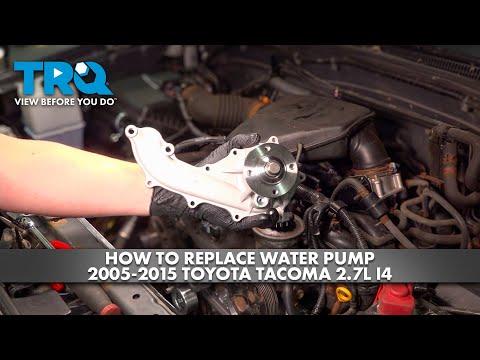




How to Replace the Water Pump on a 2007-2013 Toyota Tacoma (Engine: Inline 4 2.7L)
Step-by-step DIY guide with tools, parts, coolant bleeding, torque specs, and safety tips
How to Replace the Water Pump on a 2007-2013 Toyota Tacoma (Engine: Inline 4 2.7L)
Step-by-step DIY guide with tools, parts, coolant bleeding, torque specs, and safety tips for 2007, 2008, 2009, 2010, 2011, 2012, 2013


🔧 Tacoma - Water Pump Replacement
Replacing the water pump on your Tacoma means draining the cooling system, removing the drive belt and front engine components, then installing a new pump with a fresh gasket. The water pump moves coolant through the engine, so a leaking or noisy pump should be replaced before it causes overheating.
Difficulty Level: Intermediate | Estimated Time: 3-5 hours
⚠️ Safety & Precautions
- ⚠️ Let the engine cool completely before opening the cooling system. Hot coolant can cause serious burns.
- ⚠️ Disconnect the negative battery cable before working near the cooling fan and belt area.
- ⚠️ Support the front of your Tacoma with jack stands if you raise it. Never rely on a jack alone.
- ⚠️ Keep coolant away from pets and children. It is poisonous and often tastes sweet.
- ⚠️ Do not mix random coolant types. Your Tacoma uses Toyota-compatible long-life coolant.
🔧 Required Tools
You'll need the following tools for this repair:
- 10mm socket
- 12mm socket
- 14mm socket
- 17mm socket
- 3/8-inch ratchet
- 1/2-inch breaker bar
- 3/8-inch torque wrench
- 1/2-inch torque wrench
- 3-inch socket extension
- 6-inch socket extension
- 14mm box-end wrench
- Flat-blade screwdriver
- Trim clip removal tool
- Pliers
- Hose clamp pliers
- Plastic gasket scraper
- Drain pan 2-gallon minimum
- Coolant funnel kit
- Floor jack rated 3-ton minimum
- Jack stands rated 3-ton minimum
- Wheel chocks
- Shop towels
- Nitrile gloves
- Safety glasses
🔩 Required Parts
HowToo sells all the parts you need for this repair:
- Water pump - Qty: 1
- Water pump gasket - Qty: 1
- Toyota-compatible pink long-life coolant, premixed 50/50 - Qty: 2 gallons
- Serpentine drive belt - Qty: 1
- Thermostat gasket - Qty: 1
📋 Before You Begin
- 🅿️ Park your Tacoma on level ground, set the parking brake, and place wheel chocks behind the rear wheels.
- ❄️ Start only with a cold engine. Let it sit several hours if it was recently driven.
- 🔋 Use a 10mm socket to disconnect the negative battery cable, then tuck it aside so it cannot touch the battery post.
- 🧰 A torque wrench tightens bolts to an exact force so the new water pump seals correctly without cracking parts.
- 🧰 A serpentine belt is the single long belt that drives accessories like the alternator and power steering pump.
- 🧰 A gasket scraper removes old sealing material without gouging the aluminum engine surface.
🔨 Step-by-Step Instructions
Follow these steps in order:
Step 1: Raise and Protect the Front Area
- Use wheel chocks to secure the rear wheels.
- Use a floor jack rated 3-ton minimum to lift the front of your Tacoma if you need more room underneath.
- Place jack stands rated 3-ton minimum under the frame, then gently lower the truck onto them.
- Use safety glasses and nitrile gloves before draining coolant.
Step 2: Remove the Skid Plate
- Use a 12mm socket and 3/8-inch ratchet to remove the front skid plate bolts.
- Support the skid plate with one hand while removing the last bolt.
- Set the skid plate and bolts aside in order.
- Keep bolts grouped by location.
Step 3: Drain the Coolant
- Place a drain pan 2-gallon minimum under the radiator drain area.
- Use pliers if needed to open the radiator drain cock carefully.
- Remove the radiator cap slowly by hand after confirming the engine is cold.
- Let the coolant drain fully into the pan.
- Close the radiator drain cock by hand when draining slows to a drip.
Step 4: Remove the Engine Covers and Air Intake Ducting
- Use a 10mm socket and 3/8-inch ratchet to remove any upper engine cover fasteners if equipped.
- Use a flat-blade screwdriver to loosen the air intake tube clamps.
- Use pliers to release any small hose clamps attached to the intake duct.
- Lift the intake duct out of the way to improve access to the front of the engine.
Step 5: Remove the Fan Shroud
- Use a trim clip removal tool to remove the plastic clips at the top of the fan shroud.
- Use a 10mm socket to remove the fan shroud bolts.
- Lift the shroud upward slightly and leave it loose around the fan if it cannot come out yet.
- Plastic clips break easily; go slow.
Step 6: Remove the Mechanical Fan and Clutch
- Use a 12mm box-end wrench or 12mm socket to loosen the four fan clutch nuts at the water pump pulley.
- Hold the pulley steady by hand while breaking the nuts loose.
- Remove the four nuts and lift the fan and fan clutch out together with the shroud.
- Store the fan upright. Do not lay the fan clutch flat for a long time.
Step 7: Remove the Serpentine Drive Belt
- Find the belt routing diagram under the hood, or take a clear phone photo before removal.
- Use a 14mm socket and 1/2-inch breaker bar on the belt tensioner.
- Rotate the tensioner to release belt tension, then slide the belt off one pulley.
- Slowly release the tensioner back to its stop.
- Remove the belt from the remaining pulleys.
Step 8: Remove the Water Pump Pulley
- Use a 12mm socket and 3/8-inch ratchet to remove the water pump pulley bolts.
- If the pulley spins, hold it by hand or reinstall two fan nuts loosely and use them for grip.
- Remove the pulley from the water pump nose.
Step 9: Move Hoses and Brackets Out of the Way
- Use pliers or hose clamp pliers to slide coolant hose clamps away from the pump connections if hoses block access.
- Twist hoses gently by hand to break them loose, then pull them off.
- Use a 10mm socket or 12mm socket to remove any small brackets attached near the pump.
- Do not pry hard against aluminum sealing surfaces.
Step 10: Remove the Old Water Pump
- Place shop towels below the water pump to catch remaining coolant.
- Use a 10mm socket, 12mm socket, and 3/8-inch ratchet to remove the water pump mounting bolts.
- Note bolt lengths and locations as they come out.
- Gently tap the pump by hand or wiggle it loose. Do not gouge the engine surface.
- Remove the old water pump and gasket.
Step 11: Clean the Gasket Surface
- Use a plastic gasket scraper to remove old gasket material from the engine surface.
- Use shop towels to wipe the surface clean and dry.
- Check that no gasket pieces fall into the coolant passages.
- The surface should feel smooth with no raised debris.
- Clean sealing surfaces prevent leaks.
Step 12: Install the New Water Pump
- Place the new water pump gasket onto the new water pump.
- Position the pump against the engine by hand.
- Start all bolts by hand first to avoid cross-threading.
- Use a 10mm socket or 12mm socket to snug the bolts evenly in a crisscross pattern.
- Use a 3/8-inch torque wrench to tighten the water pump bolts to Torque to 21 Nm (15 ft-lbs).
Step 13: Reinstall Hoses and Brackets
- Use hose clamp pliers or pliers to reinstall coolant hose clamps in their original positions.
- Use a 10mm socket or 12mm socket to reinstall removed brackets.
- Tighten small bracket bolts snugly, then verify hoses are fully seated past the bead on each fitting.
Step 14: Reinstall the Water Pump Pulley
- Place the water pump pulley onto the new pump.
- Start the pulley bolts by hand.
- Use a 12mm socket to snug the pulley bolts evenly.
- Use a 3/8-inch torque wrench to tighten the pulley bolts to Torque to 21 Nm (15 ft-lbs).
Step 15: Install the Serpentine Drive Belt
- Route the belt over the pulleys using the belt routing photo or under-hood diagram.
- Use a 14mm socket and 1/2-inch breaker bar to rotate the tensioner.
- Slip the belt over the final pulley, then slowly release the tensioner.
- Look at every pulley and confirm the belt ribs sit fully in the grooves.
Step 16: Reinstall the Fan, Fan Clutch, and Shroud
- Lower the fan clutch and fan shroud into position together.
- Start the four fan clutch nuts by hand.
- Use a 12mm socket or 12mm box-end wrench to tighten the fan clutch nuts evenly.
- Use a 3/8-inch torque wrench if access allows and tighten the fan clutch nuts to Torque to 18 Nm (13 ft-lbs).
- Use a 10mm socket to reinstall the fan shroud bolts.
- Use the trim clip removal tool by hand to seat the plastic clips.
Step 17: Reinstall the Intake Ducting
- Set the air intake duct back into place.
- Use a flat-blade screwdriver to tighten the intake tube clamps.
- Use pliers to reconnect any small hose clamps removed earlier.
- Use a 10mm socket to reinstall the engine cover if equipped.
Step 18: Refill the Cooling System
- Install a coolant funnel kit on the radiator neck.
- Pour Toyota-compatible pink long-life coolant, premixed 50/50, into the radiator slowly.
- Fill the overflow reservoir to the FULL mark.
- Use shop towels to wipe spilled coolant immediately.
Step 19: Bleed Air From the Cooling System
- Reconnect the negative battery cable using a 10mm socket.
- Set the cabin heater to full hot and fan to low.
- Start the engine and let it idle with the coolant funnel installed.
- Watch for air bubbles rising through the funnel as the engine warms up.
- Squeeze the upper radiator hose carefully by hand to help move trapped air.
- When the thermostat opens and bubbles slow down, top off the radiator as needed.
- Install the radiator cap by hand once the level stabilizes.
Step 20: Reinstall the Skid Plate
- Use a floor jack rated 3-ton minimum if needed to safely position the skid plate.
- Start all skid plate bolts by hand.
- Use a 12mm socket and 3/8-inch ratchet to tighten the skid plate bolts.
- Lower your Tacoma from the jack stands using the floor jack.
✅ After Repair
- ✅ Let the engine reach normal temperature and confirm the temperature gauge stays steady.
- ✅ Check around the new water pump, hoses, radiator drain, and lower engine area for leaks.
- ✅ Take a short test drive, then let the engine cool completely.
- ✅ Recheck the coolant level in the radiator and overflow reservoir when cold.
- ✅ Add coolant if the level drops after trapped air works out.
- ✅ Dispose of old coolant at a proper recycling center or repair shop. Do not pour it on the ground.
💰 DIY vs Shop Cost
Shop Cost: $650-$1,050 (parts + labor)
DIY Cost: $140-$300 (parts only)
You Save: $510-$750 by doing it yourself!
Shop labor rates vary but typically run $100-$150/hour. This repair takes a shop approximately 3-4 hours.
🎯 Ready to get started?
HowToo makes it easy: same-day/2-day shipping on every part, plus all the tools and specialty tools you need! Check out the parts and tools sections below to add everything to your cart.
Guide for Engine Water Pump replace for these Toyota vehicles
| Year Make Model | Sub Model | Engine | Body Style |
|---|---|---|---|
| 2013 Toyota Tacoma | - | V6 4.0L | - |
| 2012 Toyota Tacoma | - | V6 4.0L | - |
| 2011 Toyota Tacoma | - | V6 4.0L | - |
| 2010 Toyota Tacoma | - | V6 4.0L | - |
| 2009 Toyota Tacoma | - | V6 4.0L | - |
| 2008 Toyota Tacoma | - | V6 4.0L | - |
| 2007 Toyota Tacoma | - | V6 4.0L | - |