









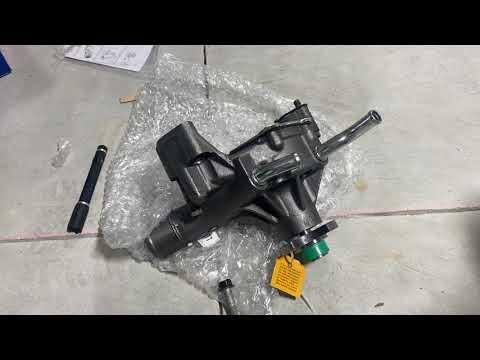




How to Replace the Water Pump on a 2007-2013 Chevrolet Silverado 1500 (Engine: V8 6.0L)
Step-by-step DIY water pump replacement with tools, parts list, torque specs, safety tips, and cost savings
How to Replace the Water Pump on a 2007-2013 Chevrolet Silverado 1500 (Engine: V8 6.0L)
Step-by-step DIY water pump replacement with tools, parts list, torque specs, safety tips, and cost savings for 2007, 2008, 2009, 2010, 2011, 2012, 2013


🔧 Silverado 1500 - Water Pump Replacement
You’ll be removing the belt‑driven water pump from the front of your 6.0L engine, swapping it with a new unit, and refilling the cooling system with fresh coolant. This fixes leaks, bearing noise, or overheating caused by a failing pump.
Difficulty Level: Intermediate | Estimated Time: 3–5 hours
⚠️ Safety & Precautions
- ⚠️ Only work on a completely cool engine. Hot coolant can cause serious burns.
- ⚠️ This is a hybrid: avoid any orange high-voltage cables and components; you are working only on the mechanical cooling system at the front of the engine.
- ⚠️ Disconnect the negative battery cable before starting so the engine cannot crank while your hands are near the fan or belt.
- ⚠️ Support the truck with jack stands if you raise the front. Never rely on a jack alone.
- ⚠️ Coolant is poisonous to people and animals. Use a drain pan and dispose of used coolant properly.
🔧 Required Tools
You'll need the following tools for this repair:
- 🛠️ 10mm socket
- 🛠️ 13mm socket
- 🛠️ 15mm socket
- 🛠️ 3/8" drive ratchet
- 🛠️ 1/2" drive ratchet
- 🛠️ 1/2" drive breaker bar (long handle for leverage)
- 🛠️ Torque wrench (10–80 ft-lbs range)
- 🛠️ 36mm fan clutch wrench (specialty) (thin wrench for the fan nut)
- 🛠️ Fan clutch holding tool (specialty) (holds the pulley while loosening the fan)
- 🛠️ Belt removal tool or 1/2" drive breaker bar (for the belt tensioner)
- 🛠️ Hose clamp pliers (pliers designed to squeeze spring-style hose clamps)
- 🛠️ Flathead screwdriver
- 🛠️ Plastic gasket scraper (to clean gasket surfaces without scratching aluminum)
- 🛠️ Shop towels or rags
- 🛠️ Coolant drain pan (at least 3–4 gallons)
- 🛠️ Funnel
- 🛠️ Coolant fill/burping funnel (specialty) (helps bleed air out of the system)
- 🛠️ Floor jack (rated 3-ton minimum)
- 🛠️ Jack stands (rated 3-ton minimum)
- 🛠️ Safety glasses
- 🛠️ Mechanic gloves
🔩 Required Parts
HowToo sells all the parts you need for this repair:
- 🔩 Engine water pump assembly with gasket - Qty: 1
- 🔩 Thermostat housing gasket or thermostat with gasket - Qty: 1 (recommended while you are there)
- 🔩 Serpentine drive belt (6.0L hybrid, main drive) - Qty: 1 (recommended)
- 🔩 Dex-Cool compatible engine coolant (concentrate) - Qty: 2 gallons
- 🔩 Distilled water - Qty: 2 gallons (to mix 50/50 with concentrate)
- 🔩 Upper radiator hose clamp - Qty: 1 (if old clamp is weak or rusty)
- 🔩 Lower radiator hose clamp - Qty: 1 (if needed)
- 🔩 Throttle body/intake duct clamp - Qty: 2 (only if existing clamps are damaged)
📋 Before You Begin
- Park the truck on level ground, set the parking brake, and put the shifter in Park.
- Let the engine cool for several hours until the upper radiator hose is cold to the touch.
- Open the hood and remove the engine cover if fitted (pull up firmly).
- Using a 10mm socket, disconnect the negative battery cable and secure it away from the terminal.
- Inside the cab, set the heater temperature to full hot. This helps coolant flow through the heater core when you bleed the system later.
🔨 Step-by-Step Instructions
Follow these steps in order:
Step 1: Raise and prepare the front of the truck
- Use the floor jack to lift the front of the truck slightly if you want easier access underneath (optional but helpful).
- Place the truck securely on jack stands under the frame rails.
- Slide the coolant drain pan under the radiator drain area (bottom of the radiator, driver side).
Step 2: Drain the coolant
- From underneath, locate the radiator drain petcock (small plastic valve at the lower radiator).
- Carefully open it by hand or with a flathead screwdriver and let coolant drain into the pan.
- Remove the radiator cap slowly to help the coolant flow out faster.
- When flow stops, close the petcock by hand. Do not overtighten plastic valves.
Step 3: Remove intake ducting for room
- Loosen the clamps on the intake tube between the air filter box and throttle body using an 8mm socket or flathead screwdriver.
- Unplug any electrical connectors or breather hoses attached to the duct (press on tabs and pull gently).
- Lift the intake duct out and set it aside.
Step 4: Remove fan shroud and fan clutch
- On the top of the radiator, remove the plastic fan shroud bolts using a 10mm socket.
- Unclip any wiring harnesses attached to the shroud.
- Use the fan clutch holding tool to hold the water pump pulley in place.
- Use the 36mm fan clutch wrench to loosen the large nut that holds the fan to the water pump (turn counter-clockwise to loosen).
- Spin the fan and clutch off the pump by hand and lift it up and out with the shroud. You may need to wiggle it carefully.
Step 5: Remove the serpentine belt
- Draw a simple diagram of the belt routing, or take a clear photo. This saves big headaches later.
- Locate the belt tensioner (spring-loaded pulley with a square hole for a tool).
- Insert the 1/2" drive breaker bar into the tensioner’s square hole.
- Rotate the tensioner to relieve tension and slide the belt off one pulley with your other hand.
- Slowly release the tensioner back to its rest position, then remove the belt completely.
Step 6: Disconnect hoses from the water pump
- Place the drain pan under the front of the engine to catch any remaining coolant.
- Use hose clamp pliers to squeeze and slide the clamp back on the upper radiator hose at the water pump neck.
- Twist the hose gently to break it free, then pull it off the water pump. Use shop towels to wipe up any spills.
- Repeat for the lower radiator hose and any small bypass or heater hoses attached directly to the water pump.
Step 7: Remove the old water pump
- Using a 13mm socket and 3/8" ratchet, remove the water pump mounting bolts. There are long and short bolts—note where each came from.
- Support the pump with one hand as you remove the last bolt to avoid dropping it.
- Pull the water pump straight forward off the engine. Some coolant will still come out—catch it in the drain pan.
- Remove the old gaskets from the engine block surface.
Step 8: Clean the gasket surfaces
- Use the plastic gasket scraper to gently clean the mating surfaces on the engine where the pump mounts.
- Do not use metal scrapers or sandpaper; they can gouge the aluminum and cause leaks.
- Wipe the surfaces with shop towels until clean and dry.
Step 9: Prepare and install the new water pump
- Set the new gaskets onto the new water pump. Most GM-style pumps have locating tabs or dowels; make sure they sit flat.
- Position the new pump onto the engine, lining up the bolt holes.
- Install all the bolts by hand using a 13mm socket, threading them a few turns to avoid cross-threading.
- With a 3/8" ratchet, snug all bolts evenly in a crisscross pattern.
- Torque the bolts with a torque wrench as follows:
- Long water pump bolts: Torque to 30 Nm (22 ft-lbs)
- Short water pump bolts: Torque to 15 Nm (11 ft-lbs)
Step 10: Reconnect hoses
- Slide the upper radiator hose back onto the pump neck, all the way to the stop.
- Use hose clamp pliers to move the clamp back into its original position over the hose and fitting.
- Repeat for the lower radiator hose and any small bypass/heater hoses you removed.
- Double-check that all clamps are centered and tight.
Step 11: Reinstall the serpentine belt
- Route the new or reused belt according to your diagram or photo, leaving it off one easy-to-reach pulley (often the alternator) last.
- Use the 1/2" breaker bar to rotate the tensioner again.
- Slip the belt fully onto the last pulley, then slowly release the tensioner.
- Visually inspect every pulley to ensure the belt is sitting in the grooves correctly.
Step 12: Reinstall fan and shroud
- Carefully lower the fan and clutch assembly back into position with the shroud.
- Thread the fan clutch nut onto the new water pump shaft by hand.
- Use the fan clutch holding tool and 36mm fan clutch wrench to snug the nut. A firm pull is enough; it will self-tighten as the engine runs.
- Reinstall the shroud bolts with a 10mm socket. Torque to 10 Nm (89 in-lbs).
- Reclip any wiring harnesses into the shroud.
Step 13: Reinstall intake ducting
- Set the intake duct back between the air box and throttle body.
- Reconnect any breather hoses and electrical connectors you removed earlier.
- Tighten the duct clamps with an 8mm socket or flathead screwdriver until snug. Do not overtighten plastic parts.
Step 14: Refill and bleed the cooling system
- Mix a 50/50 blend of Dex-Cool concentrate and distilled water in a clean container (if you did not buy premixed).
- Place the funnel or coolant fill/burping funnel in the radiator neck.
- Slowly fill the radiator until full, then fill the overflow reservoir to the “COLD” mark.
- Reconnect the negative battery cable using a 10mm socket. Torque to 5 Nm (44 in-lbs).
- Start the engine and let it idle. Keep the heater set to full hot and fan on low.
- Watch the coolant level in the funnel; as the thermostat opens, you may see bubbles and the level drop.
- Add more 50/50 coolant mix as needed to keep the radiator full until bubbles stop.
- Once the engine reaches normal operating temperature and the level stabilizes, shut the engine off and install the radiator cap firmly.
Step 15: Final checks and clean-up
- Inspect around the new water pump, hoses, and radiator for any leaks while the engine is running and after it’s shut off.
- Lower the truck off the jack stands using the floor jack.
- Pour used coolant into sealed containers for proper disposal; do not dump it on the ground.
✅ After Repair
- Take a short test drive, watching the temperature gauge. It should stay in the normal range.
- After the drive, let the engine cool completely, then recheck the coolant level in the radiator (if accessible) and overflow reservoir. Top off with 50/50 mix if needed.
- Listen for any unusual noises from the front of the engine (squealing belt, grinding, or ticking). Recheck belt routing if anything sounds off.
- Over the next few days, glance under the truck for any new coolant drips and monitor the coolant level.
💰 DIY vs Shop Cost
Shop Cost: $650–$900 (parts + labor)
DIY Cost: $180–$300 (parts + coolant)
You Save: $350–$700 by doing it yourself!
Shop labor rates typically run $100–$150/hour. This repair takes a shop about 2–3 hours.
🎯 Ready to get started?
HowToo makes it easy: same-day/2-day shipping on every part, plus all the tools and specialty tools you need! Check out the parts and tools sections above to add everything to your cart.
Guide for Engine Water Pump replace for these Chevrolet vehicles
| Year Make Model | Sub Model | Engine | Body Style |
|---|---|---|---|
| 2013 Chevrolet Silverado 1500 | - | V8 4.8L | - |
| 2013 Chevrolet Silverado 1500 | - | V8 5.3L | - |
| 2013 Chevrolet Silverado 1500 | - | V8 6.0L | - |
| 2013 Chevrolet Silverado 1500 | - | V8 6.2L | - |
| 2012 Chevrolet Silverado 1500 | - | V8 4.8L | - |
| 2012 Chevrolet Silverado 1500 | - | V8 5.3L | - |
| 2012 Chevrolet Silverado 1500 | - | V8 6.0L | - |
| 2012 Chevrolet Silverado 1500 | - | V8 6.2L | - |
| 2011 Chevrolet Silverado 1500 | - | V8 4.8L | - |
| 2011 Chevrolet Silverado 1500 | - | V8 5.3L | - |
| 2011 Chevrolet Silverado 1500 | - | V8 6.0L | - |
| 2011 Chevrolet Silverado 1500 | - | V8 6.2L | - |
| 2010 Chevrolet Silverado 1500 | - | V8 4.8L | - |
| 2010 Chevrolet Silverado 1500 | - | V8 5.3L | - |
| 2010 Chevrolet Silverado 1500 | - | V8 6.0L | - |
| 2010 Chevrolet Silverado 1500 | - | V8 6.2L | - |
| 2009 Chevrolet Silverado 1500 | - | V8 4.8L | - |
| 2009 Chevrolet Silverado 1500 | - | V8 5.3L | - |
| 2009 Chevrolet Silverado 1500 | - | V8 6.0L | - |
| 2009 Chevrolet Silverado 1500 | - | V8 6.2L | - |
| 2008 Chevrolet Silverado 1500 | - | V8 4.8L | - |
| 2008 Chevrolet Silverado 1500 | - | V8 5.3L | - |
| 2008 Chevrolet Silverado 1500 | - | V8 6.0L | - |
| 2007 Chevrolet Silverado 1500 | - | V8 4.8L | - |
| 2007 Chevrolet Silverado 1500 | - | V8 5.3L | - |
| 2007 Chevrolet Silverado 1500 | - | V8 6.0L | - |